





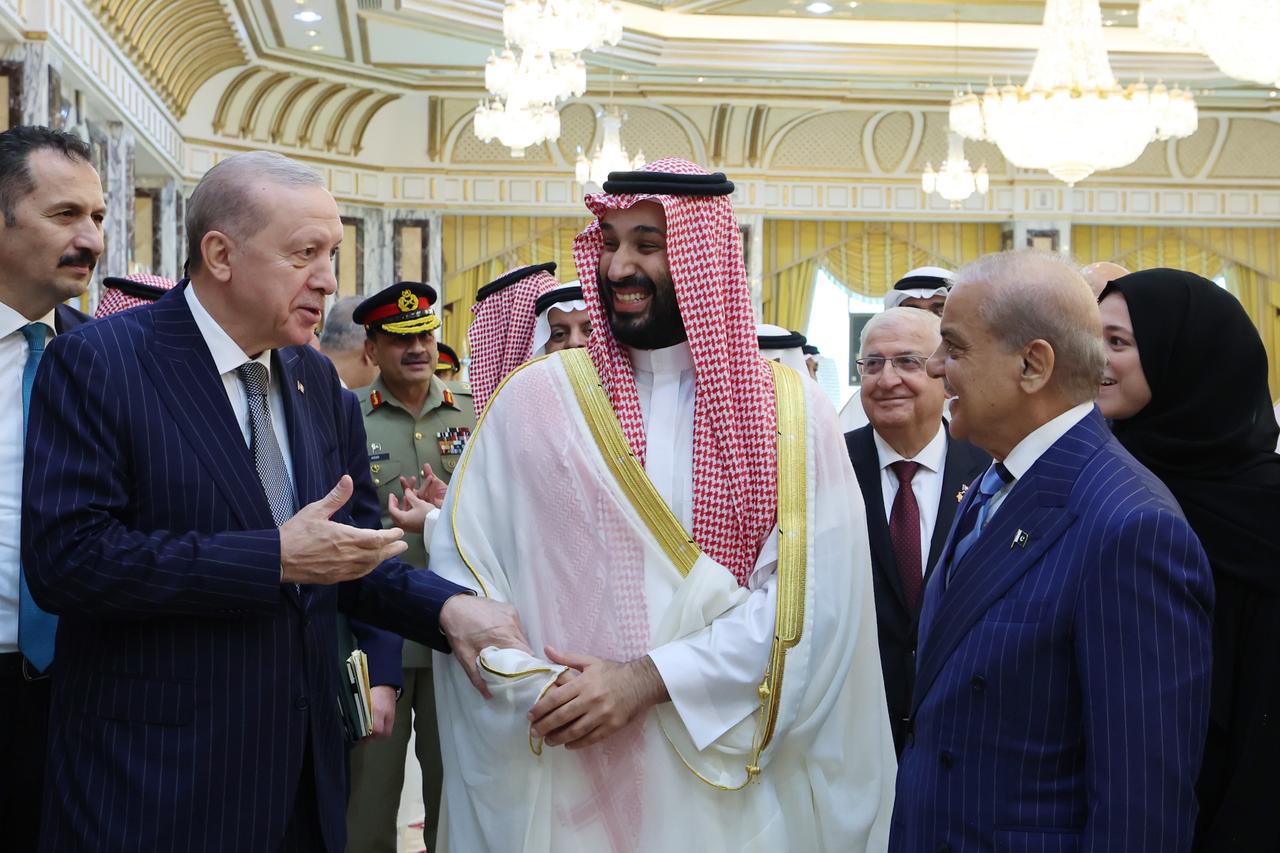
Makkah Defence Pact Heads to Turkish Parliament as Alliance Locks Members Into Ten-Year Commitment
Makkah defence pact ratification has moved a step closer in Ankara, where the government has formally placed the trilateral agreement with Saudi Arabia and Pakistan before parliament. If lawmakers approve it, NATO’s second-largest military will be bound to a mutual defence pledge with Riyadh at the very moment the kingdom is under sustained attack from Yemen’s Houthis.
The timing is no coincidence. Saudi cities have been hit repeatedly in recent weeks, and the pact’s partners are now working out what their obligations mean in practice.
What the Agreement Says
Pakistan, Saudi Arabia and Turkiye signed the Makkah Joint Defence Agreement in August. Its central clause borrows directly from the logic of NATO’s Article 5: an armed attack on any one member is treated as an attack on all three.
The text, reviewed by Reuters, anchors that commitment in Article 51 of the UN Charter, which recognises the right of states to defend themselves individually or collectively. The members pledge to use every necessary means to counter threats to one another’s territory, sovereignty or recognised borders.
Several structural features stand out:
The agreement takes effect once each member deposits its ratification documents with a secretariat based in Riyadh.
It has no expiry date.
No member may withdraw during the first ten years.
That decade-long lock-in is what gives the pact its weight. Unlike looser cooperation arrangements, it commits signatories to one another regardless of changes in government or shifts in the regional climate.
Beyond mutual defence, the deal envisages deep collaboration on defence industry, intelligence exchange, logistics and counterterrorism, including at the operational level.
Why Turkiye Needs a Parliamentary Vote
The three members are at different stages of formal approval, largely because their constitutions treat treaties differently.
Pakistan has already ratified. Under its executive-led system, set out in Article 90 of the Constitution, approval by the prime minister and federal cabinet is sufficient for matters on the federal legislative list. Islamabad has stated that collective deterrence measures under the pact are already in play.
Turkiye, by contrast, requires separate parliamentary authorisation for any deployment of troops abroad, regardless of what an international agreement provides. That constitutional requirement means the Makkah pact must pass through the legislature before Ankara can act on it.
Parliament Speaker Numan Kurtulmus, currently on a visit to Kyrgyzstan, is expected to refer the agreement to the foreign affairs commission on his return. The commission could begin debate as soon as Friday.
Ahead of the submission, Turkish state broadcaster TRT Haber published the full text of the agreement for the first time.
Ankara Frames Its Role Narrowly
Turkish officials have been careful to manage expectations about what the alliance will actually require of them.
Burhanettin Duran, communications director to President Recep Tayyip Erdogan, described the parliamentary submission as a milestone in institutionalising strategic cooperation among the three countries. The partnership, he said in a post on X, aims to strengthen collective deterrence, build joint defence capabilities and protect regional stability.
But a Turkish official speaking anonymously to Reuters indicated that Ankara’s contribution is expected to be confined to military hardware, weapons systems and intelligence sharing. No deployment of forces has occurred under the alliance to date.
Foreign Minister Hakan Fidan reinforced that message when asked how Turkiye might help Saudi Arabia counter the Houthis. The Makkah Agreement, he stressed, is not offensive in nature, and Turkiye will not dispatch troops to attack targets on another country’s soil.
Turkiye’s Practical Support for Riyadh
Even without boots on the ground, Ankara has positioned itself as a useful partner. Turkiye has condemned the Houthi strikes on Saudi Arabia, signalled readiness to supply military technology to meet the kingdom’s needs, and agreed to participate in a Saudi-led coalition protecting shipping in the Red Sea.
With a defence industry that has grown rapidly over the past decade, producing drones, armoured vehicles and missile systems, Turkiye has considerable capacity to contribute even in a non-combat role.
Egypt Weighs Its Own Response
Egypt is not a member of the Makkah alliance, but its parliament is also preparing to vote on October 26 on whether to authorise military support for Saudi Arabia. The vote has already been postponed twice, suggesting some reluctance in Cairo to commit to a conflict that is drawing in a growing list of regional and international players.
A Second Agreement in Doha
The Makkah pact is not the only defence arrangement taking shape this week. Turkiye, Qatar, Pakistan and Indonesia are expected to sign a memorandum on defence industry cooperation in Doha on Wednesday, according to TRT World.
Qatar is simultaneously expected to announce plans for a domestic defence production hub, a move flagged by Minister of State for Defence Affairs Sheikh Saoud bin Abdulrahman Al Thani at the Global Security Forum earlier in the week.
Turkish Defence Minister Yasar Guler will travel to Doha for the ceremony. Pakistan is expected to be represented by Interior Minister Mohsin Naqvi, who was already in the Qatari capital for the forum.
Naqvi also held talks with his Qatari counterpart, Sheikh Khalifa bin Hamad bin Khalifa Al Thani, who commands the country’s Internal Security Force. The two agreed to expand security cooperation between their nations and discussed regional peace and internal security matters in detail.
A Shifting Security Map
Taken together, these developments point to an emerging network of defence ties among Muslim-majority states stretching from Southeast Asia to the Gulf and Anatolia. The Makkah pact provides the hardest commitment, with its binding mutual defence clause and ten-year lock-in. The Doha memorandum adds an industrial layer.
Whether Turkiye’s parliament endorses the agreement, and how narrowly Ankara ultimately interprets its obligations, will determine how much deterrent force the alliance carries in practice.
Author