Iran War Updates: Saudi Coalition Claims Houthi Drone Intercept Near Mecca as Tankers Hit Mines in Hormuz
The Iran war has taken another unsettling turn, with fresh reports of drone activity over Saudi Arabia, burning tankers in one of the world’s most important shipping lanes, and unrest spilling onto the streets inside Israel. The past several hours have delivered a cluster of developments that highlight just how many fronts this conflict now touches at once.
Here is a closer look at what has happened, what remains disputed, and why each of these moments matters for the wider region.
Saudi Coalition Says It Shot Down a Houthi Drone Over the Mecca Region
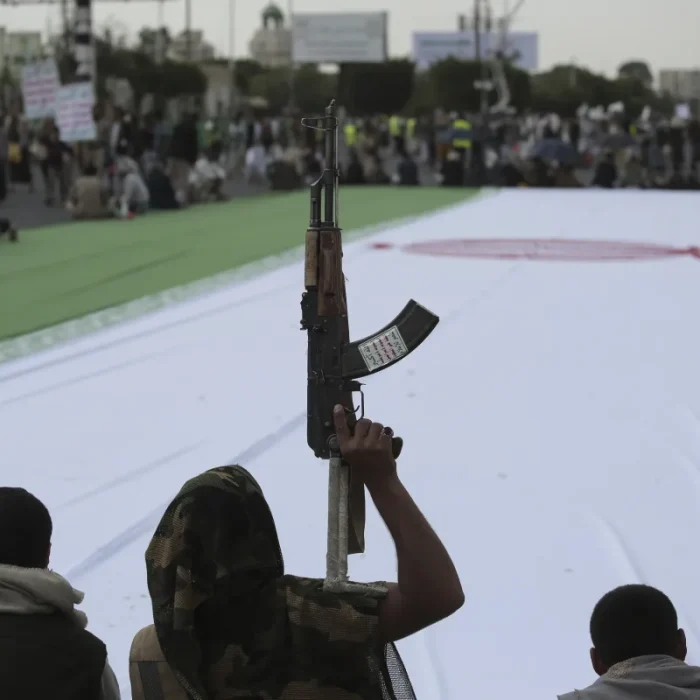
The Saudi-led coalition announced that its air defence systems detected, intercepted, and destroyed an unmanned aircraft it attributed to Yemen’s Houthi movement. According to the coalition’s spokesperson, the drone was heading toward the Mecca region before it was brought down.
The location alone makes this claim significant. Mecca is home to Islam’s holiest site, and any suggestion of a weapon being aimed in that direction carries enormous symbolic weight across the Muslim world. For Riyadh, framing the incident this way sends a clear message about who it believes is responsible and how serious it considers the threat.
No casualties or ground damage were reported, and the coalition did not share further details about the type of drone or exactly where the interception took place.
Houthis Flatly Reject the Accusation
Within hours, the Houthi side pushed back. Military spokesperson Yahya Saree stated that the group had not launched any operation against Saudi territory on the day in question. He went further, insisting that the movement’s attacks are directed at energy infrastructure and military installations rather than civilian or religious areas.
The denial sets up a familiar standoff. Over the years, the Houthis and the Saudi coalition have repeatedly offered contradictory accounts of the same event, and independent confirmation is often slow to arrive, if it comes at all. Several possibilities remain open:
The coalition correctly identified a Houthi drone, and the group is distancing itself because of the sensitivity of the Mecca region.
The drone came from a different source, or the coalition misattributed it.
The intercept occurred, but the intended target was not the holy city itself.
Until clearer evidence surfaces, readers should treat both accounts as claims rather than settled facts. What is not in doubt is that tension between the two sides remains high and that the airspace over western Saudi Arabia is once again a point of concern.
Why the Mecca Angle Matters
Any incident involving Mecca is about far more than one drone. The city’s religious importance means that even an alleged attempt to strike nearby can inflame public opinion well beyond the Gulf. The Saudi government, as custodian of the two holy mosques, has strong reasons to publicise such interceptions, while the Houthis have equally strong reasons to deny any connection.
That dynamic helps explain why Saree’s statement focused so heavily on the nature of the group’s targets. By stressing oil facilities and military bases, the Houthis are attempting to shape how their campaign is perceived, both at home and among potential sympathisers abroad.
Tankers Catch Fire After Striking Mines in the Strait of Hormuz
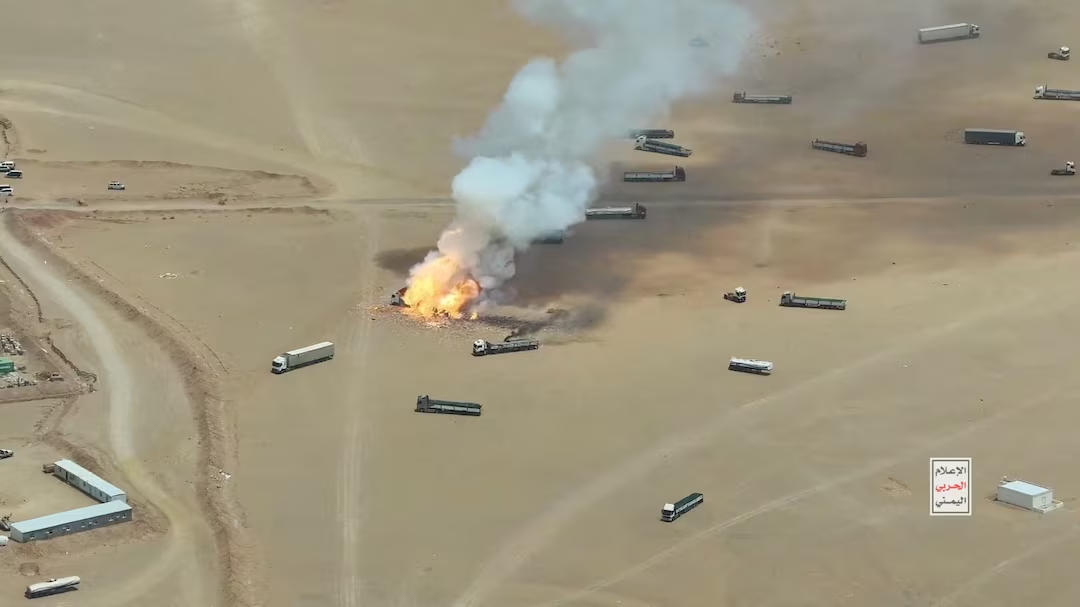
Meanwhile, at sea, the situation looks increasingly dangerous. The naval wing of Iran’s Islamic Revolutionary Guard Corps reported that three tankers caught fire in the Strait of Hormuz after hitting mines. A fourth vessel reportedly struck naval mines in the eastern section of the waterway.
The IRGC statement did not identify the ships, their flags, their cargo, or who may have laid the mines. There was also no immediate word on the condition of the crews.
Even so, the implications are hard to overstate. The Strait of Hormuz is a narrow chokepoint through which a large share of the world’s seaborne oil passes every day. A confirmed mine threat in those waters would:
Raise insurance costs for shipping companies almost overnight.
Push some operators to delay transits or reroute entirely.
Add upward pressure on global energy prices.
Increase the risk of accidental escalation between naval forces operating in close quarters.
Mines are especially worrying because they are indiscriminate. Unlike a targeted missile strike, a sea mine does not distinguish between a warship, a commercial tanker, or a fishing boat. Once reports of mining spread, the uncertainty alone can be enough to disrupt traffic.
Questions That Remain Unanswered at Sea
Because the information comes from a single military source, several key questions linger. Who placed the mines, and when? Were they drifting or anchored? Is the eastern part of the strait now considered unsafe for routine passage? Are search and rescue efforts under way for the affected crews?
Shipping companies, insurers, and regional navies will be watching closely for any independent verification. In past crises, confusion over who was behind attacks on tankers has fuelled accusations and counter-accusations for weeks. This episode may follow the same pattern.
Unrest Inside Israel: Police Clear Anti-Conscription Protest
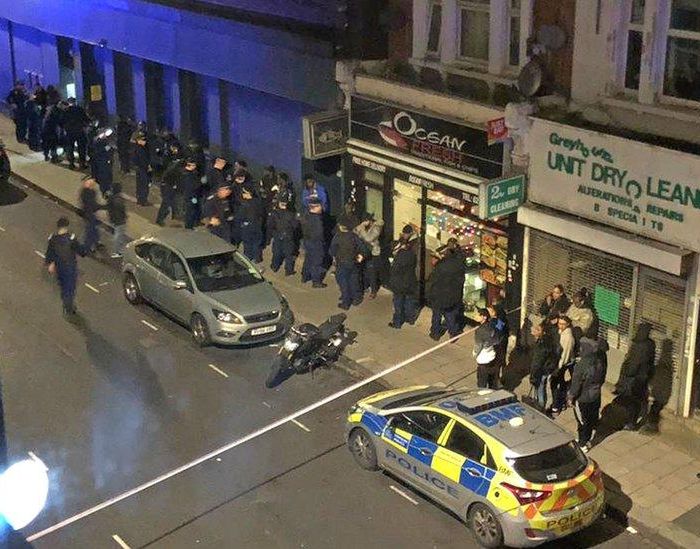
While attention is largely focused on the Gulf, Israel is dealing with friction of a different kind. Police moved in to break up a sit-in staged by ultra-Orthodox Jewish demonstrators opposed to military conscription.
The protest reflects a long-running domestic dispute. Many in the ultra-Orthodox community have historically been exempt from mandatory service so they can pursue religious study, and efforts to change that arrangement have repeatedly sparked demonstrations. During a period of active conflict, when the military is under strain and the question of who serves becomes more emotionally charged, these protests tend to intensify.
Images from the scene showed officers physically removing participants who had gathered to block or occupy the area. Details about arrests or injuries were not immediately available.
The Bigger Picture
Taken together, these three threads paint a picture of a conflict that is simultaneously aerial, maritime, and political. A disputed drone intercept near one of the holiest cities in the world, burning tankers in a vital oil corridor, and domestic protests in Israel over who should be fighting all point to a war whose consequences are spreading in multiple directions.
For now, much of what has been reported rests on statements from parties with a clear interest in how events are framed. The coming days should bring more clarity on the drone incident and the tanker fires. Until then, the safest conclusion is that risk, both on land and at sea, is rising.
Author