US midterm elections 2026 take place on Tuesday, with more than 230 million eligible Americans able to cast ballots that will shape the balance of power in Washington. Every one of the 435 seats in the House of Representatives is on the line, along with 35 of the Senate’s 100 seats. Voters in 36 states will also choose their governors. Republicans currently control both chambers of Congress, and the outcome will determine whether that remains the case for the final two years of Donald Trump’s term.
Here is a guide to how the day will unfold, from the first polling stations opening to the moment the last votes are counted.
When Do Polls Open?
There is no single national opening time. Each state sets its own voting hours, which means polling begins in a staggered fashion from east to west.
Vermont is first out of the gate, with polls opening at 5am local time, equivalent to 10:00 GMT. An hour later, at 6am local time (11:00 GMT), voting gets underway in New Jersey, Virginia, Connecticut and Kentucky.
Georgia, Florida, Pennsylvania and New York open their polling stations between 6am and 7am local time (11:00 to 12:00 GMT), depending on the jurisdiction. Ohio and North Carolina begin at 6:30am local time (11:30 GMT). In Michigan, one of the most closely watched states this cycle, voting starts at 7am local time (12:00 GMT).
When Do Polls Close?
Closures follow a similar wave pattern. Indiana and Kentucky are the earliest to shut their doors, at 6pm local time (23:00 GMT).
Michigan’s polls close at 8pm local time and Kansas’s at 7pm local time, both of which fall at 01:00 GMT on Wednesday. Iowa follows at 8pm local time (02:00 GMT Wednesday).
Alaska is the final state to finish, with polls closing at roughly 1am Eastern Time, or 06:00 GMT, on Wednesday morning.
When Will Results Be Known?
The earliest numbers will begin to surface on Tuesday evening as the first states close. Reporting will continue through the night and into Wednesday as later states wrap up voting and officials release their tallies.
A crucial point to remember is that early figures do not equal a declared winner. Election officials publish counts as ballots are processed, but it falls to news organisations such as the Associated Press to analyse those numbers and decide when a race can responsibly be called.
Tight contests may take hours or even several days to resolve. It is entirely possible that control of one or both chambers of Congress will remain uncertain well beyond election night.
How Midterm Voting Works
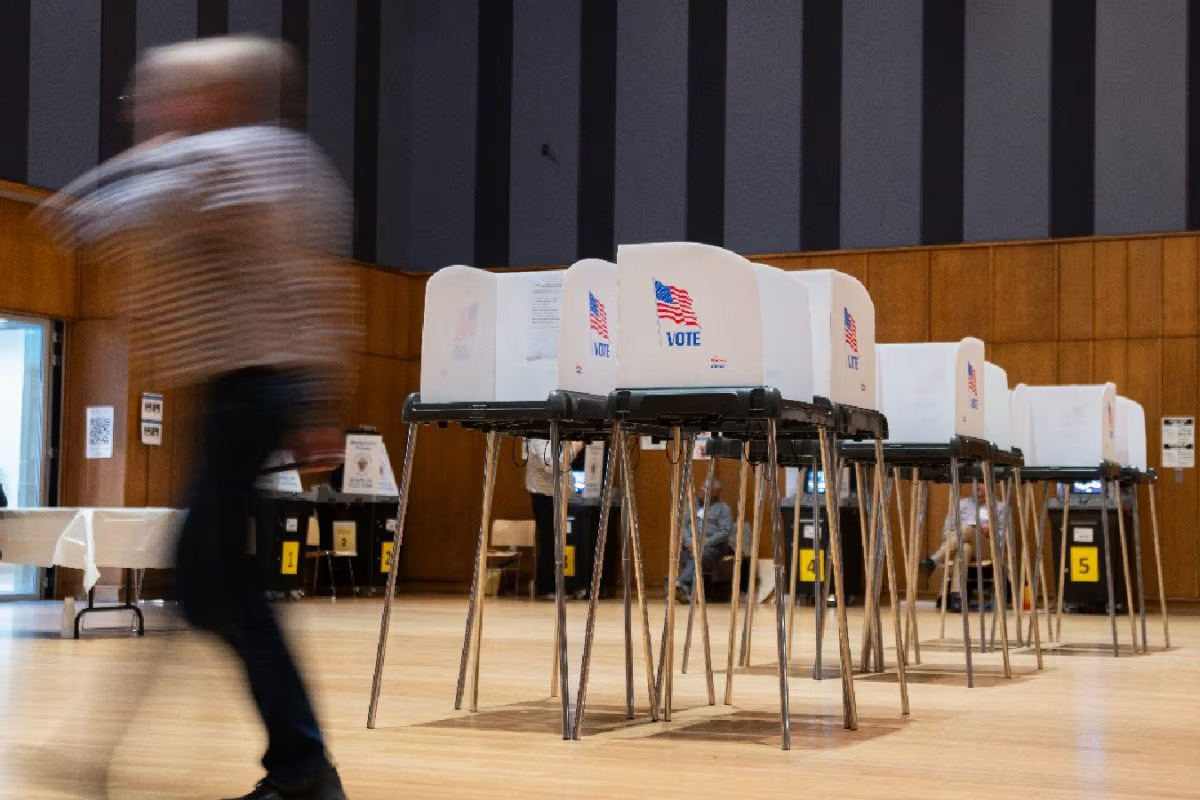
Americans have several options for casting their ballots. They can vote by mail, take part in early in-person voting or show up at their polling place on election day itself.
Mail-in ballots, provisional ballots and certain other categories are often processed after election night, which explains why final tallies can take days or sometimes weeks to be certified. This lag is a normal part of the process rather than a sign of irregularity.
What Each Party Needs
The arithmetic for a change in control is relatively tight. In the Senate, Democrats require a net gain of four seats to secure a majority. In the House, they need to pick up three seats.
Those margins mean a handful of competitive races could decide the overall outcome, placing enormous attention on a small number of states.
Key Races to Watch
Several Senate contests stand out as potential tipping points.
In Michigan, Democrat Abdul El-Sayed faces Republican Mike Rogers in a race that drew extra scrutiny on Sunday when Democratic Representative Haley Stevens broke ranks to endorse Rogers. The cross-party endorsement added a surprising twist to an already competitive contest.
In Florida, Democrat Angie Nixon is taking on Republican Senator Ashley Moody.
Georgia sees Democratic Senator Jon Ossoff defending his seat against Republican Mike Collins, in a state that has become a perennial battleground.
In Maine, long-serving Republican Senator Susan Collins is being challenged by Democrat Troy Jackson.
New Hampshire pits Democratic Representative Chris Pappas against Republican John Sununu, a former senator seeking a return to Washington.
In North Carolina, Democrat Roy Cooper and Republican Michael Whatley are competing for a seat that both parties view as winnable.
Why These Midterms Matter
Midterm elections traditionally serve as a referendum on the sitting president and his party. With Republicans holding both the White House and Congress, the results will indicate how voters feel about the direction of the country at the halfway point of Trump’s term.
A Democratic takeover of either chamber would hand the opposition significant power to shape legislation, conduct oversight and block presidential priorities. Continued Republican control would give the administration a freer hand for its remaining two years.
The 36 gubernatorial races add another layer, as governors wield considerable authority over state policy on everything from education to election administration.
Patience Required
For those following the results, the most important advice is to expect a gradual picture rather than an instant verdict. Early returns can shift as different types of ballots are counted, and close races will not be called until officials and analysts are confident in the outcome.
By Wednesday, the broad shape of the new Congress may be clear. In the tightest contests, however, the final answer could take considerably longer.
Author