Trump Iran options have narrowed to three sharply divergent paths, according to a report from Axios, and the president’s closest advisers are pulling him in different directions as he prepares to decide the future of the eight-month conflict. With the midterm elections now behind him, Trump faces a choice between negotiating an end to the war, restarting large-scale strikes, or maintaining the current state of economic siege without either a deal or renewed fighting.
Option One: A Negotiated Settlement
Vice President JD Vance and Special Envoy Steve Witkoff are pressing Trump to bring the war to a close through diplomacy. Vance has been leading renewed contacts with Tehran, including a direct channel to Iranian security chief Mohsen Rezaei, and has spoken publicly about progress and optimism.
This camp argues that the conflict has already achieved what military force can deliver and that continued hostilities carry diminishing returns and rising political costs. Qatari and Pakistani mediators have intensified their efforts to bring the two sides into direct talks, and according to Axios, Qatar has drafted an agreement setting out a three-day sequence of confidence-building steps designed to pave the way for formal negotiations. Both Washington and Tehran are yet to respond.
Option Two: Resume the War
At the other end of the spectrum, Israeli Prime Minister Benjamin Netanyahu and Defense Secretary Pete Hegseth are advocating a return to full-scale military operations. Netanyahu lobbied Trump directly during a weekend call for a swift but extensive air campaign once the elections were over.
This view holds that Iran remains dangerous, that its nuclear and missile capabilities have not been fully eliminated, and that only further force will compel genuine concessions. Netanyahu also has domestic incentives: having lost his parliamentary majority, a renewed war could strengthen his case for an emergency government.
Option Three: Neither War Nor Peace
A third group, comprising Secretary of State Marco Rubio, Treasury Secretary Scott Bessent and CIA Director John Ratcliffe, is urging Trump to hold the current course. Under this approach, the United States would keep its naval blockade and economic pressure in place, neither striking a deal nor resuming strikes, and wait for Iran to accept American terms.
Ratcliffe has reportedly told the president that sustained economic hardship could generate enough internal instability to spark an uprising against the Islamic Republic. Observers have long suggested that provoking domestic revolt was an underlying premise of the war from the outset.
Where Trump Stands
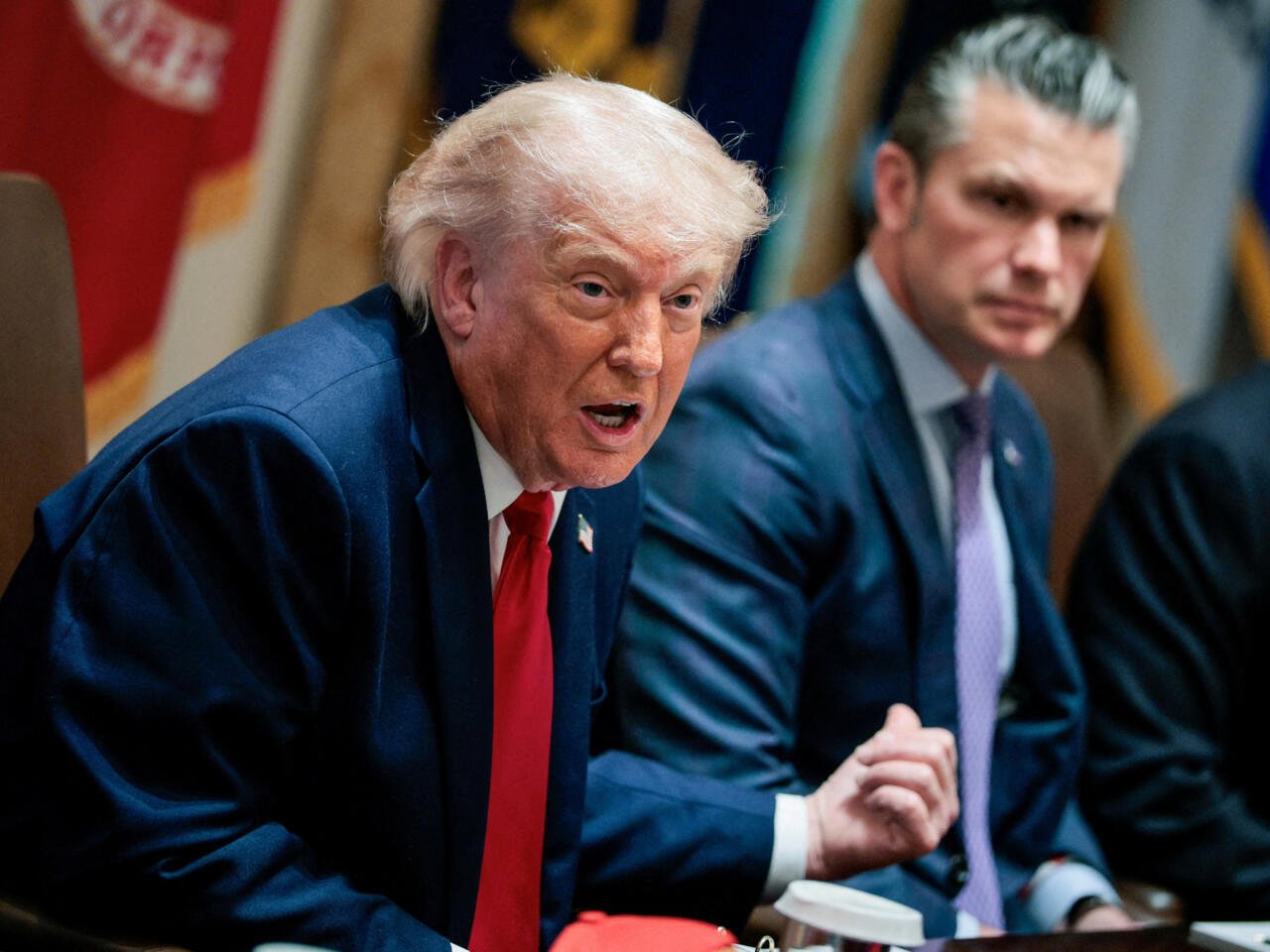
The president has given little indication of which way he is leaning. In recent weeks he has repeatedly threatened new attacks and ordered additional troops, aircraft and warships to the region. At the same time he authorised Vance to lead talks and has spoken of a deal coming together.
Trump told Axios there is no rush to decide. He said the United States would act one way or another but that Iran had been crippled financially, lacked money and fuel, and faced a population growing weary of the situation. Ahead of election day he observed that Iran appeared less urgent about a deal than before, yet insisted Tehran wanted an agreement more than ever.
The Shadow of Qeshm Island
The Axios report landed shortly after The Wall Street Journal revealed that US forces had struck Qeshm Island in the Strait of Hormuz on Monday, the latest in a series of limited attacks that have continued for weeks. Those strikes, described by an American official as defensive action against Iranian surface-to-air missile positions, show that the “no war” label on the status quo is somewhat generous. Low-level military engagement persists even as diplomats exchange drafts.
The Political Cost at Home
The midterms delivered a harsh verdict on the war. Rising fuel prices, driven by the conflict’s disruption of Gulf shipping, fed into a broader cost-of-living crisis that voters laid at Trump’s door. Polling showed the economy as the dominant concern, and the war’s contribution to inflation became a liability Republicans could not escape.
As Trump defended the conflict and brushed aside economic worries rather than addressing them, the backlash grew to the point where some Republican candidates and voters distanced themselves from him. Democrats retook the House and made significant Senate gains, outcomes widely attributed in part to the war’s unpopularity.
That electoral damage strengthens the hand of those advocating a settlement. A president who has just absorbed a congressional defeat tied to an unpopular war has reason to seek an exit.
Iran’s Position
Tehran, for its part, has condensed its seven-step proposal so it could be implemented within two days, calling for the blockade to be lifted and sanctions eased before nuclear talks begin. Supreme Leader Mojtaba Khamenei has authorised the government to pursue dialogue, while Iranian officials privately believe a renewed American attack remains more likely than an agreement.
Trust is the central obstacle. Iran has been struck twice during previous negotiations and wants guarantees that any deal will hold.
What Comes Next
The Qatari draft offers a concrete starting point. If both sides accept the three-day sequence, direct talks could follow quickly. If Trump instead sides with Netanyahu and Hegseth, the region faces a return to intensive conflict. If he chooses the Rubio-Bessent-Ratcliffe path, the stalemate continues, with its attendant risks of miscalculation in the Gulf.
Trump’s professed lack of urgency suggests the third option may prevail by default, at least in the short term. But with allies divided, the economy strained and a draft agreement on the table, the decision cannot be deferred indefinitely.
Author