SpaceX Starship V3 Launch 2026: A Largely Successful Debut With Lessons Still to Learn
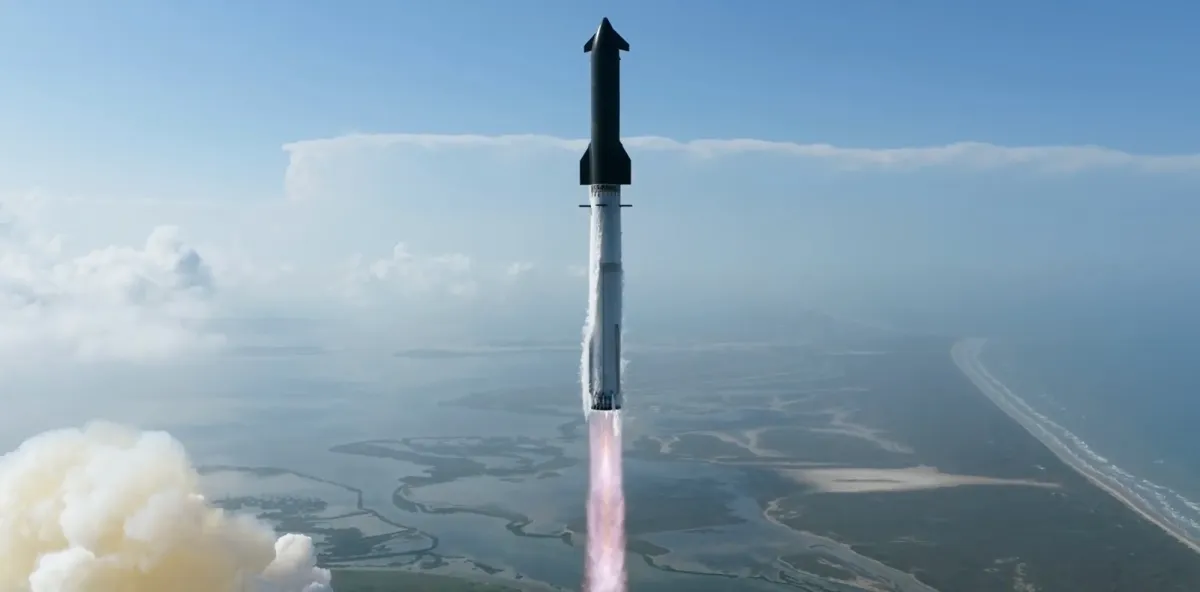
The SpaceX Starship V3 Launch marked a major milestone for the world’s most ambitious rocket program. On Friday evening, SpaceX successfully lifted off the first test flight of its newest Starship generation, paired with the powerful Super Heavy booster. While not flawless, the mission delivered some of the most promising results yet for the company’s vision of fully reusable interplanetary travel.
A Towering Liftoff From Starbase
At 5:30 pm CDT on Friday, the colossal 408-foot-tall rocket roared to life at SpaceX’s Starbase facility in South Texas. Powered by 33 methane-fueled Raptor engines, the world’s largest rocket cleared the launch tower within seconds and gracefully banked east over the Gulf of Mexico.
About an hour later, Starship completed its journey halfway across the globe, splashing down precisely on target in the Indian Ocean. Considering that earlier versions — Starship V1 in 2023 and V2 in 2025 — broke apart during their inaugural flights, this debut was a significant leap forward.
Reactions From the SpaceX Team
The performance brought celebration from the SpaceX leadership and the broader space community. CEO Elon Musk congratulated his team on X, calling the launch and landing an “epic” achievement and a milestone for humanity.
President Gwynne Shotwell echoed the excitement, calling the test flight an “incredible” debut for a brand-new vehicle. NASA Administrator Jared Isaacman, who personally watched the launch in Texas, also praised the team for an outstanding performance.
NASA’s interest is not casual — the agency is depending on Starship to serve as its human-rated Moon lander for the upcoming Artemis missions, making every successful test flight critical to America’s lunar ambitions.
What Went Right
SpaceX had plenty to celebrate. Among the most impressive achievements was the strong performance of Starship’s heat shield. During earlier flights, the heat shield and aerodynamic flaps had often suffered damage during reentry, but this time they held up impressively under intense atmospheric stress.
Other major successes included:
- A precise series of banking maneuvers during reentry, simulating future return paths to Starbase
- A controlled flip from horizontal to vertical orientation for landing
- A successful descent and landing burn that downshifted from three Raptor engines to just one
- A pinpoint splashdown northwest of Australia, captured by drones and buoy cameras
- A dramatic post-landing tipover and fireball that punctuated a smooth flight
Beyond the heat shield, Starship V3 also showcased its upgraded payload deployment mechanism. The system, designed to release SpaceX’s next-generation Starlink satellites, performed flawlessly. During the flight, it deployed 20 satellite mockups along with two small inspection spacecraft equipped with flashlights and cameras to capture footage of Starship in space.
The rocket climbed to a peak altitude of 121 miles above the South Atlantic Ocean. SpaceX says this latest version can haul up to 100 metric tons of payload into low-Earth orbit, more than double what Starship V2 could carry.
The newly built launch pad at Starbase also performed well under the immense forces of liftoff. With no significant damage detected, the success bodes well for the company’s plans to build similar pads at Cape Canaveral in Florida.
What Still Needs Work
Despite the strong overall performance, SpaceX engineers still have plenty to improve. Two of the Raptor engines failed during the flight — one on the Super Heavy booster and one on Starship itself. This was the first major use of the upgraded Raptor 3 engines, which offer higher thrust, reduced weight, and improved efficiency.
Engine failures are not new for SpaceX, and the rocket’s engine-out capability allowed both stages to continue functioning. However, the booster was unable to perform a clean return to its planned offshore splashdown near Starbase. Instead, it impacted the Gulf at high speed.
Officials have not yet identified whether the booster’s malfunction came from a propulsion issue or a complication during stage separation.
SpaceX also missed one important test objective — restarting one of Starship’s Raptor engines in space. Due to the earlier engine failure during ascent, mission controllers chose to skip the in-space relight to avoid additional risk.
What This Means for Future Flights
The results from Friday’s flight are largely encouraging for SpaceX. The heat shield held up — a major sign of progress for one of the most difficult engineering challenges in spaceflight. The rocket’s ability to compensate for engine failures was another reassuring outcome.
However, the missed engine relight in space will likely delay SpaceX’s plans to send Starship into a full orbital flight on its next mission. All 12 Starship test flights so far have flown suborbital trajectories. Engineers want to be absolutely sure they can guide Starship safely back to Earth before attempting orbit. An uncontrolled reentry of such a massive spacecraft could pose serious risks to public safety.
If the next flight performs cleanly, SpaceX may be ready to attempt:
- A full orbital flight of Starship
- Bringing Starship back to Starbase for a dramatic tower-arm “catch”
- Beginning critical orbital refueling tests for NASA’s Artemis program
- Deploying actual Starlink satellites from Starship for the first time
A Long Wait Between Flights
The 12th Starship test flight took longer than usual to arrive. The previous flight occurred back in October, making this the longest gap between launches since the program’s first full-scale launch in April 2023.
SpaceX used the seven-month break to construct and activate a second launch pad at Starbase and work through extensive ground testing of Starship V3, which encountered its own complications along the way.
Looking Ahead
Despite a few hiccups, the SpaceX Starship V3 Launch represents a meaningful step forward. The successful heat shield performance, the precise reentry, the smooth landing, and the improved payload system all bring SpaceX closer to its ultimate goal of routine, fully reusable orbital transportation.
The company has additional Starships and Super Heavy boosters already in production, with more flights expected later this summer. As SpaceX continues refining its Raptor 3 engines and pushes toward an orbital mission, the dream of frequent interplanetary travel is inching closer to reality.
For now, Starship V3 has proven that even on its debut, it can deliver where its predecessors stumbled — and that’s a major win for the future of space exploration.
Author