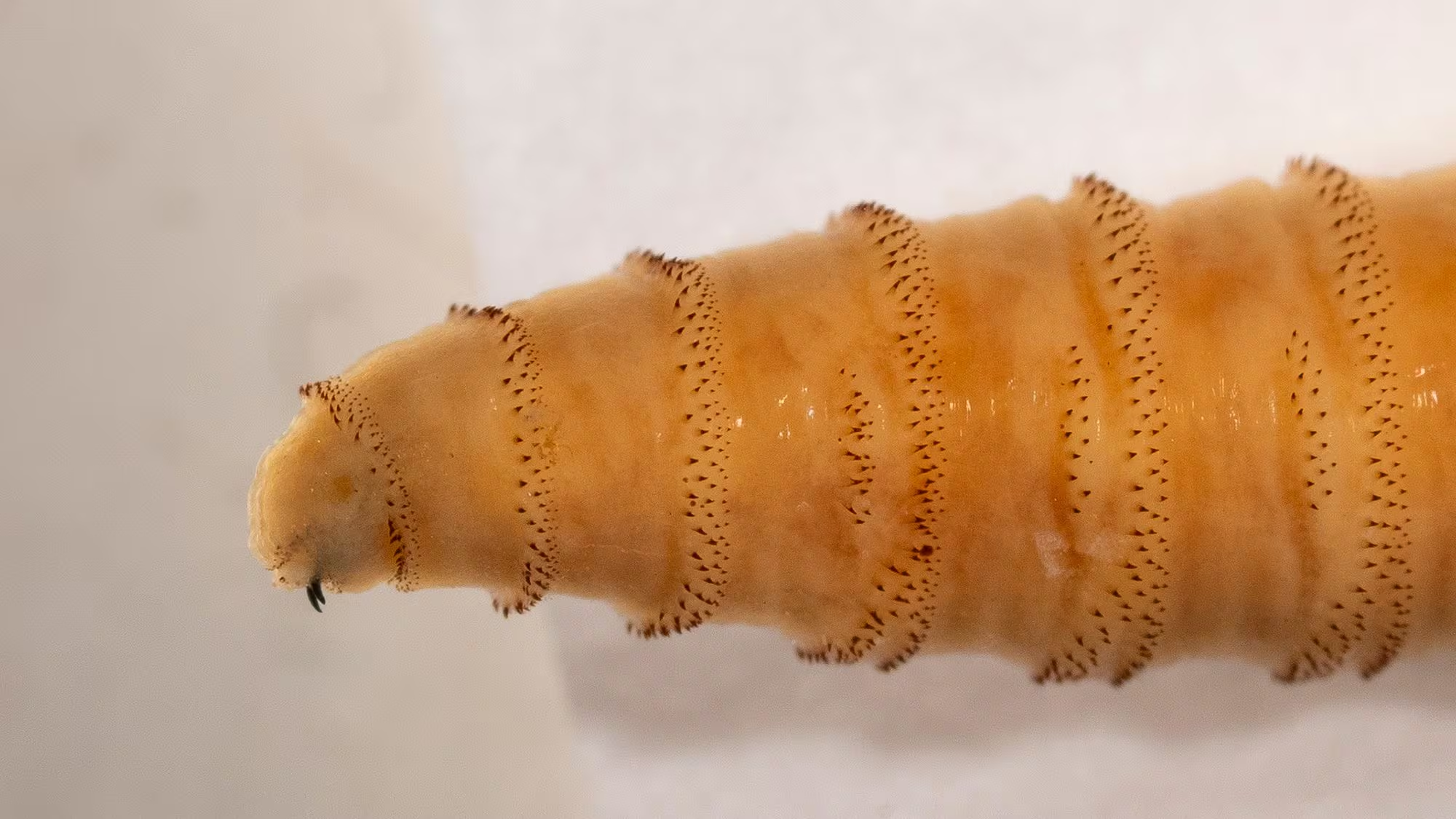
The New World screwworm fly Texas case confirmed this week has revived a threat the United States thought it had largely conquered half a century ago. The U.S. Department of Agriculture announced Wednesday that the parasite, whose larvae feed on living flesh, has reached south Texas, marking the first time in decades that it has menaced the nation’s cattle industry and only the third appearance in the country during that span.
A Single Calf Triggers Alarm
The infestation was discovered in a 3-week-old calf in La Pryor, Texas, roughly 50 miles from the Mexican border. Agriculture Secretary Brooke Rollins confirmed the case, while Texas State Veterinarian Bud Dinges moved quickly to contain it, establishing a 12-mile quarantine zone. Within that perimeter, no warm-blooded animal, including household pets, may be moved out without first passing an inspection.
Officials emphasized that, so far, this is an isolated detection with no other confirmed cases in the U.S. They were also careful to reassure the public on a key point: although the larvae endanger livestock, they do not infest food. With proper treatment, Rollins said, even the affected calf is expected to recover.
Why This Pest Inspires Such Dread
The screwworm is no ordinary fly. A tropical species, it once plagued cattle across the warm-weather regions of the southern United States before being driven out in the 1970s. What sets it apart from most flies is the behavior of its young.
The female deposits her eggs in open wounds or mucous membranes, and the hatching larvae consume living tissue. That makes them a danger not only to cattle but to wild mammals, pets, and even humans. Left untreated, an infestation can prove fatal.
The memory of its destructive past looms large. Before eradication, the fly inflicted tens of millions of dollars in losses, a figure that would translate into the billions today. That history explains why Rollins, along with U.S. and Texas agriculture officials and cattle industry leaders, has been raising public alarms about the pest’s northward march across Mexico for more than a year.
A Threat That Crept Closer
The timing of the discovery was striking. It came just a day after Rollins held an online news conference to underscore how near the danger had become, noting that cases in Mexico had been confirmed as close as 25 miles from the border.
For most of recent history, the fly had been held in check far to the south, contained in Panama until late 2024. Since then, its spread has accelerated. The last notable incidents in the U.S. were limited and quickly controlled. A Maryland resident who had traveled to El Salvador was diagnosed in August 2025 but recovered with no onward transmission, and before that, an outbreak among wild deer in the Florida Keys in September 2016 was contained early the following year.
How Officials Are Fighting Back
The cornerstone of the response is a clever biological strategy that proved decisive decades ago. Female screwworms mate only once during their monthslong lives. If a female pairs with a sterile male, her eggs never hatch, and over time the population collapses.
To deploy this tactic, authorities have been releasing millions of sterile flies into the area to mate with wild females. Rollins expressed confidence in these preparations, stating there is no threat of mass infestation and no reason to believe the incursion will allow the pest to establish itself in the country.
Past success had been so complete that the U.S. shut down its sterile-fly breeding facilities, leaving just one in Panama for decades. That is now rapidly changing. The USDA’s expanded effort includes:
- A $21 million conversion of a fruit-fly breeding facility in southern Mexico into a screwworm breeding center, expected to begin operating next month.
- A new center in southern Texas for dispersing sterile flies bred elsewhere.
- Construction of a $750 million screwworm fly factory.
Surveillance has scaled up as well. Officials have deployed 8,000 fly traps along the U.S.-Mexico border and tested more than 58,000 fly samples along with 19,000 wild animals.
Borders, Pets, and Public Cooperation
As part of the broader containment effort, Rollins closed the U.S.-Mexico border to Mexican livestock imports last year, a decision she defended during her Tuesday news conference. Officials noted that the fly can also travel alongside people, their pets, and wild animals, though Rollins stressed that it does not cover great distances on its own.
That limited natural range is part of why the quarantine matters so much. Dinges urged ranchers and pet owners alike to take the restrictions seriously, framing respect for the quarantine zone as essential to keeping the pest from gaining a foothold.
For now, the message from officials blends caution with reassurance. A dangerous and unwelcome visitor has returned to Texas soil, but the machinery to repel it, refined through decades of hard-won experience, is already in motion.
Author