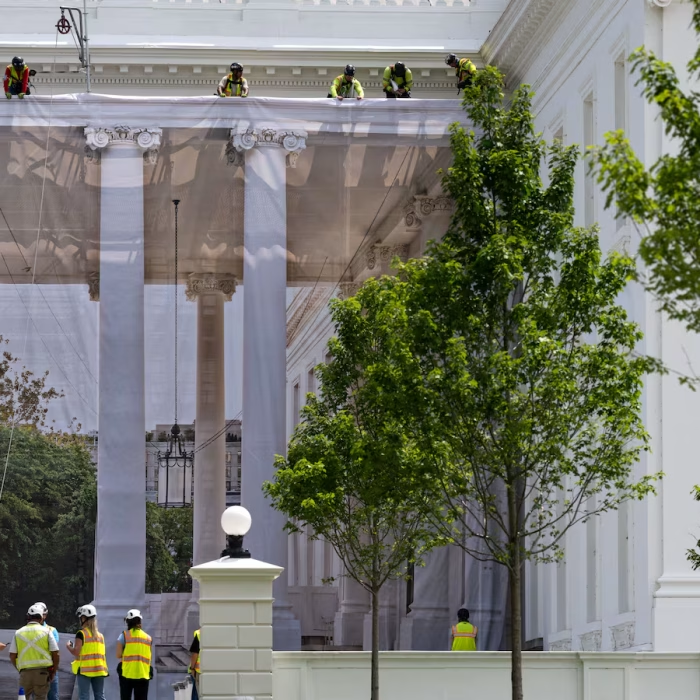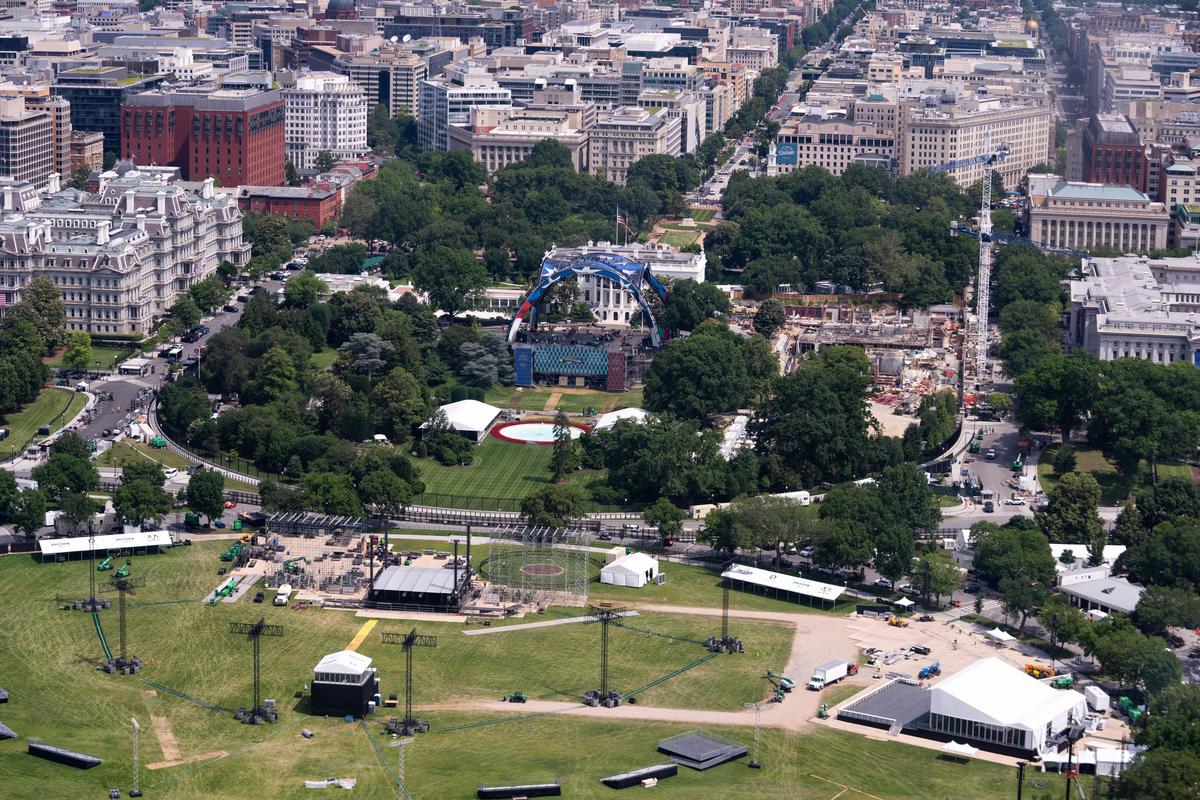
The legal fight over Trump’s White House ballroom construction reached a federal appeals court on Friday, where government lawyers made a striking argument: the project simply cannot be stopped because it’s already underway — and because, they say, it serves critical national security purposes. The case has become a flashpoint over executive power, historic preservation, and who has the authority to halt a presidential project once the bulldozers are running.
At the heart of the dispute lies a $400 million ballroom that the administration insists it can complete without congressional sign-off.
The Government’s Core Argument
Attorney Yaakov Roth, representing the federal government, told the court that only Congress holds the power to stop the project. Speaking during a pointed exchange with U.S. Appeals Court Judge Patricia Millett, Roth maintained that the courts had no standing to intervene.
The administration has been pressing for permission to forge ahead with the ballroom regardless of congressional approval, framing the structure as essential to protecting the White House and its occupants.
How the Case Got Here
The current battle stems from an April 16 order issued by U.S. District Judge Richard Leon, a George W. Bush appointee. Leon directed the administration to halt aboveground work on the sprawling 90,000-square-foot ballroom.
Notably, his order carved out an exception. Leon allowed belowground construction to continue, specifically work on a bunker and other facilities the government described as national security infrastructure.
The lawsuit itself was brought by the National Trust for Historic Preservation back in December. The organization filed suit just one week after the White House completed demolition of the East Wing — clearing the way for a ballroom that Trump has said would accommodate 999 people.
A Tense Courtroom Exchange
The two-hour hearing before a three-judge panel of the U.S. Court of Appeals for the District of Columbia Circuit produced several sharp moments. The central question revolved around standing: who has the right to challenge a government action once it has already been carried out, and whether national security trumps that right.
Judge Millett, an Obama appointee, pushed Roth with a series of provocative hypotheticals. In one striking exchange, Roth agreed that under the government’s logic, officials could theoretically bulldoze the Statue of Liberty and even the White House itself — and the descendants of Ellis Island immigrants or the enslaved people who built the White House would have no legal standing to object after the fact.
Millett then pressed on timing, asking exactly when the ballroom became a done deal. She questioned whether the project became unstoppable once the underground work began — work she described as now completely integral and inseparable from the massive ballroom planned above it.
Roth’s response was unequivocal. He argued that halting the project would have been improper even on the very first day.
The Preservationists’ Case
The plaintiffs did not escape tough questioning either. Attorney Tad Heuer, representing the challengers, faced repeated probing from the judges on the issue of standing and on whether aesthetic concerns could possibly outweigh genuine national security needs.
Heuer worked to clarify the scope of his clients’ objection. He emphasized that they had never opposed the underground bunker construction, which is precisely where the government had long claimed its security concerns rested.
His central demand was procedural rather than absolute. Heuer argued that construction should pause until Congress has the chance to weigh in, acknowledging that lawmakers have every right to approve a ballroom since the property belongs to them.
The Security Justification
The government’s defense leans heavily on the language of protection. In court filings, administration lawyers argued that the project incorporates critical security features designed to defend against a wide array of threats, including:
- Drones
- Ballistic missiles
- Biohazards
They contended that these upgrades and improvements are essential to safeguarding the president, his family, his staff, and the White House itself — asserting that the entire project flows from these security imperatives.
No Resolution Yet
The hearing wrapped up without a ruling, and the eventual outcome remains genuinely difficult to predict. The judges directed hard questions at both sides — challenging the administration over its authority and its shifting explanations, while pressing the preservationists on standing and the limits of aesthetic objections.
For now, the fate of the White House ballroom hangs in legal limbo. The case sits at the intersection of competing principles: the executive branch’s claimed authority to act in the name of security, Congress’s power over federal property, and the courts’ role in policing it all. How the panel threads that needle could carry implications well beyond a single ballroom — touching on the broader question of when, if ever, it becomes too late to challenge what the government has already started building.
Author