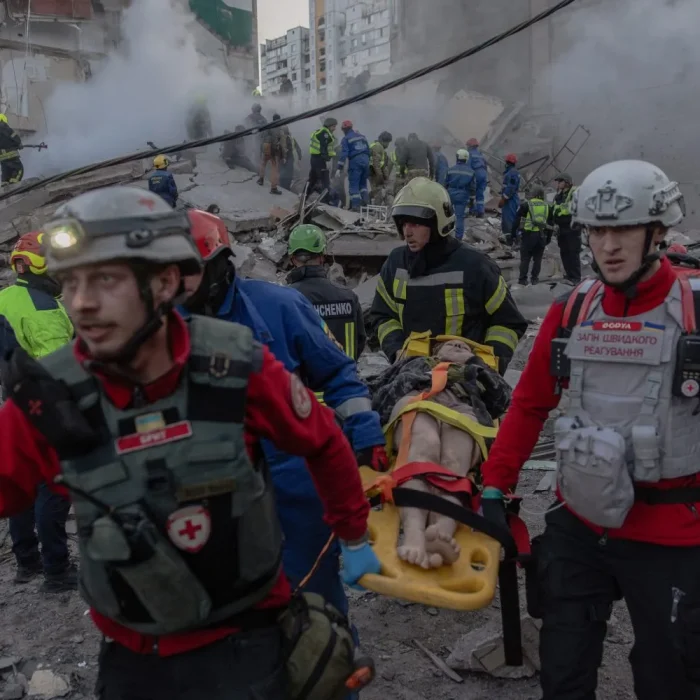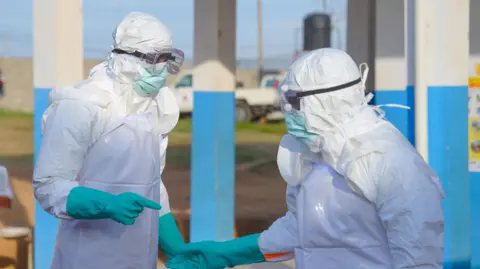
The Ebola outbreak in DR Congo has produced a set of numbers that, on the surface, look like a turning point. Case counts have dropped sharply. But a closer look reveals why the figures are encouraging in one sense and deeply misleading in another — and why health officials are urging caution rather than celebration.
A Dramatic Drop in the Numbers
At the height of the alarm, authorities in the Democratic Republic of Congo spoke of more than 1,000 suspected cases and close to 250 suspected deaths. The latest tally tells a very different story: roughly 380 confirmed cases in DR Congo, including 60 deaths, alongside 15 confirmed cases and a single death in neighboring Uganda.
The drop looks enormous. The catch is in a single word. Earlier figures counted suspected cases, while the new numbers reflect confirmed ones.
Why the Fall Isn’t What It Seems
It would be a mistake to read the smaller numbers as a sign the outbreak has suddenly become less dangerous. The decline mostly reflects better data, not a retreating virus.
As laboratories caught up, they were able to rule out many patients who had fevers but were actually suffering from other illnesses — malaria chief among them, since it’s common throughout DR Congo. In other words, the outbreak didn’t shrink so much as come into sharper focus.
World Health Organization Director General Dr. Tedros Adhanom Ghebreyesus put it plainly, noting that the outbreak got a “big head start” but that response teams are now “catching up.”
The Real Obstacles on the Ground
Even with clearer data, several serious challenges threaten to keep the outbreak going.
Contact tracing remains one of the biggest worries. Right now, only about 45% of people who had direct contact with an Ebola patient are being followed up. The WHO says at least 90% of contacts must be traced to bring an outbreak under control — so the current rate falls dangerously short. Part of the problem is that the epicenter sits in a region scarred by conflict.
Community mistrust is another major hurdle. An Ebola burial team was reportedly attacked this week in South Kivu province, forcing responders to abandon a coffin and raising fears of further spread. The danger here is acute because:
- Traditional burial practices often involve washing and touching the body.
- Funerals tend to draw large crowds.
- Ebola spreads through contact with infected bodily fluids, making such gatherings especially risky.
Tedros stressed that building trust with affected communities is critical to getting the outbreak under control.
A Difficult Setting and a Rare Strain
Geography is working against responders too. The outbreak is concentrated across three provinces in eastern DR Congo — an area roughly the size of the United Kingdom, much of it rural, remote, and hard to reach. It’s also one of the most volatile regions in Africa, with numerous armed groups operating across the landscape.
Compounding matters, this outbreak is caused by the Bundibugyo species of Ebola, which has surfaced only twice before. Because it’s far rarer than other strains, there is no approved vaccine and no proven treatment, though several teams are racing to develop them.
A Warning About the “Invisible Enemy”
Speaking on the BBC’s Today programme, Tedros recalled urging foreign ministers — many planning to boost defense spending — not to forget the “invisible enemy” of disease. He pointed out that the Covid pandemic caused roughly 20 million deaths, far more than any recent armed conflict.
Still, he offered an important reassurance: he does not expect Ebola to spread worldwide, because unlike the coronavirus, the virus is not airborne. The WHO’s current risk assessment reflects that distinction, rating the threat as very high within DR Congo — this is the country’s 17th outbreak in the 50 years since the virus was first identified there — high across the region, but low globally.
What the Models and Funding Show
The outlook still demands vigilance. On Friday, the US Centers for Disease Control and Prevention warned that, without strong public health intervention, the current outbreak could grow as large as — or even larger than — the devastating 2014-16 epidemic in West Africa.
On the funding front, the US announced an additional $38 million (£28 million) for Ebola response efforts, pushing its total direct contribution past $200 million.
Lessons From the Last Outbreak
Some governments are drawing on hard-won experience. British officials said this week they had ruled out airport temperature checks for arrivals from affected regions, citing their limited usefulness. The reasoning is grounded in history: during the 2014 West African outbreak, more than 12,000 passengers were screened at five UK airports, yet the screening failed to catch the only case — that of nurse Pauline Cafferkey.
The Bottom Line
The falling numbers in the Ebola outbreak in DR Congo are best understood as a sign of improving data, not a fading threat. The virus is still spreading in a difficult, conflict-ridden region, contact tracing remains far below the level needed, and a rare strain means there’s no vaccine to fall back on. Encouraging as the headline figures may appear, the people fighting this outbreak know the hardest part may still lie ahead.
This is a serious public health situation that continues to evolve, and reliable, up-to-date guidance from organizations like the WHO and CDC remains the best source for anyone directly affected.
Author