The Venezuela earthquake military response collapsed in the hours that mattered most, according to eight sources familiar with the operation who spoke to Reuters. Delayed orders from senior commanders, missing equipment, and confusion over who was in charge left troops idle while civilians dug through rubble with their hands.
The Scale of the Disaster
Two earthquakes — magnitude 7.2 and 7.5 — struck Venezuela’s coast last month.
The government puts the death toll at roughly 5,000. Experts including the United States Geological Survey have suggested the final figure may approach double that.
La Guaira state absorbed the worst of it. The area contains Venezuela’s main airport, a major port, and hundreds of high-rise residential buildings that collapsed fully or partially.
Who Actually Responded
For the first two days, the answer was largely ordinary people.
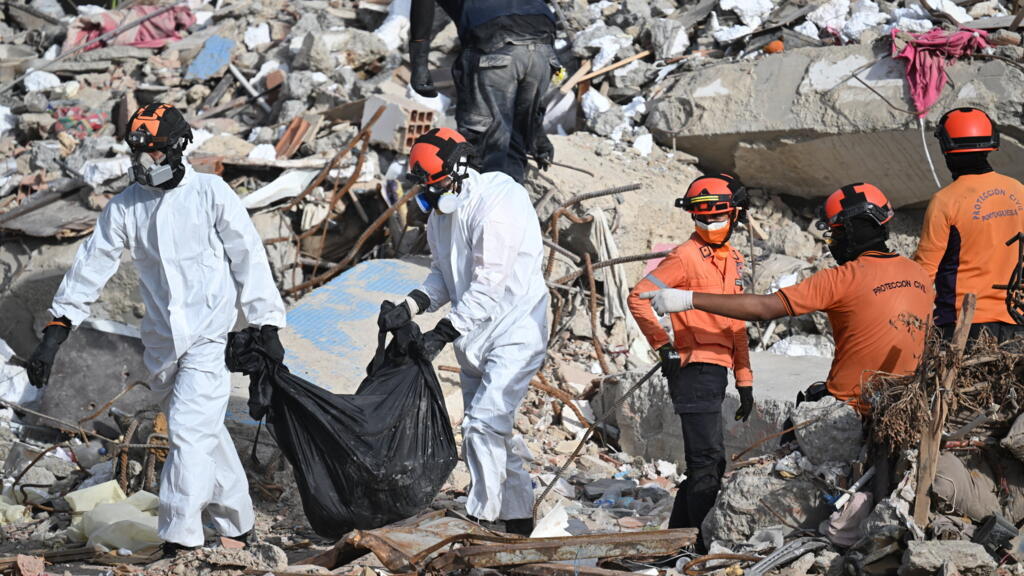
Civilians led the effort — carrying in food, using basic tools to pull both survivors and bodies from collapsed structures. International rescue teams, firefighters and civil protection officials joined later.
A limited number of Venezuelan soldiers did participate. Notably, those who spoke to Reuters said they volunteered for the work rather than being ordered into it.
Residents, Reuters witnesses and multiple sources all described the same thing during the critical early hours: military personnel and police were barely visible.
“We Don’t Act on Our Own”
An active-duty officer speaking anonymously explained the paralysis in institutional terms.
Units receive direct orders and act on them, he said. He could not tell his own unit to head to La Guaira without authorization. And crucially, no plan existed for this scenario — nothing comparable to the detailed contingencies maintained for national defense.
Soldiers from his unit did travel to La Guaira the day after the June 24 quakes, once orders to reinforce arrived. He defended the delay in part, noting that deploying without preparation and logistics would have been irresponsible.
But he drew a line at inaction. Troops already stationed in Caracas, he said, should at minimum have been sent to provide security and assist however possible.
A Chain of Command That Froze
A source familiar with diplomatic circles described the atmosphere bluntly: there was no plan, the chain of command was weak, and many people simply did not know what to do.
The consequences extended to foreign responders. International rescue teams arrived within the first 48 hours but sat waiting as orders failed to materialize, losing hours in which survivors might have been reached.
The source described a culture that produced the delay. Everyone looked upward waiting for an order, preferring inaction to the risk of being reprimanded for acting independently. Search sectors went unassigned. The waste of those hours, the source said, was enormously frustrating.
Ready but Never Called
Specific failures emerged across multiple accounts:
- The Marine Infantry Brigade was prepared to move but never received instructions
- One unit lacked sufficient vehicles to transport personnel to the disaster zone
- Three sources described shortages of equipment ranging from hammers and pickaxes to helicopters with night vision capability
- The vice minister responsible for disaster response reached La Guaira around midnight on the day of the quake without communications gear needed to report the scale of the destruction
The Timing Made It Worse
The earthquakes struck on Army Day, a national holiday. Many military personnel were off duty and away from their units.
That circumstance had an obvious remedy. According to one source, the strategic operational commander and the regional commander should have immediately ordered a recall of personnel.
That order never came.
A Military Built for Something Else
The structural explanation runs deeper than one bad day.
Under the late President Hugo Chávez and his successor Nicolás Maduro — removed by U.S. forces in January — military leadership expanded to include 2,000 generals as a means of consolidating political power. Senior and retired officers were given control over food distribution, raw materials, and the state oil company PDVSA.
Lower ranks, meanwhile, are poorly paid, and many units lack basic equipment.
Sources said years of economic crisis have eroded readiness, with budgets consumed by payroll rather than maintenance and equipment. One source with knowledge of military matters put it in professional terms: the armed forces have a concept called operational readiness, and theirs is limited.
The contrast with history is stark. When a massive mudslide hit La Guaira in 1999, the military mounted a full-scale deployment, using boats and helicopters to rescue and evacuate survivors.
Public Anger
Ana Guedez, a 34-year-old volunteer shoveling rubble, drew the comparison that has circulated widely in Venezuela.
When people went into the streets to protest over the past decade, she said, the armed forces seemed to move very quickly. She asked why they could not move as fast to save lives.
The Government’s Defense
Acting President Delcy Rodríguez, who is backed by U.S. President Donald Trump, has defended the response forcefully.
She stated that 4,000 officials were deployed immediately — an account that residents, witnesses and sources contradict.
Pressed on July 2 about who had issued orders to the military, she blamed what she called media laboratories for manufacturing a perception of chaos, without offering evidence. Days later, at a public event, she said she gave the order and takes responsibility for the Bolivarian National Armed Force.
Venezuela’s Communications Ministry did not respond to a request for comment.
Two People in Charge
Part of the confusion appears to have been structural.
Rodríguez designated National Guard commander Juan Sulbarán Quintero as the single authority overseeing the response. She simultaneously issued a decree granting powers to Interior Minister Diosdado Cabello.
Four sources said the overlapping mandates created genuine uncertainty about who was directing military and police operations — including unresolved debate over whether to deploy military police or national police.
The American Presence
The United States, which has held substantial influence in Caracas since Maduro’s removal, deployed at least 900 personnel to assist with relief.
Venezuela’s defense minister, who remains under U.S. sanctions, met with senior American military officials in Caracas after their arrival.
The Opportunity That Was Lost
The active-duty officer who described the absence of any plan also described what should have happened.
This, he said, was the moment for the military to distinguish itself. Troops should have been on site at dawn with armored vehicles and cables, pulling people from the rubble. The psychological effect of a population watching its own soldiers save lives would have been enormous.
Instead, he said, they had no plan.
That sentence is the one that lingers. Not that the equipment failed or the roads were blocked, but that an institution with 2,000 generals had never worked out what to do when the ground moved.
Author