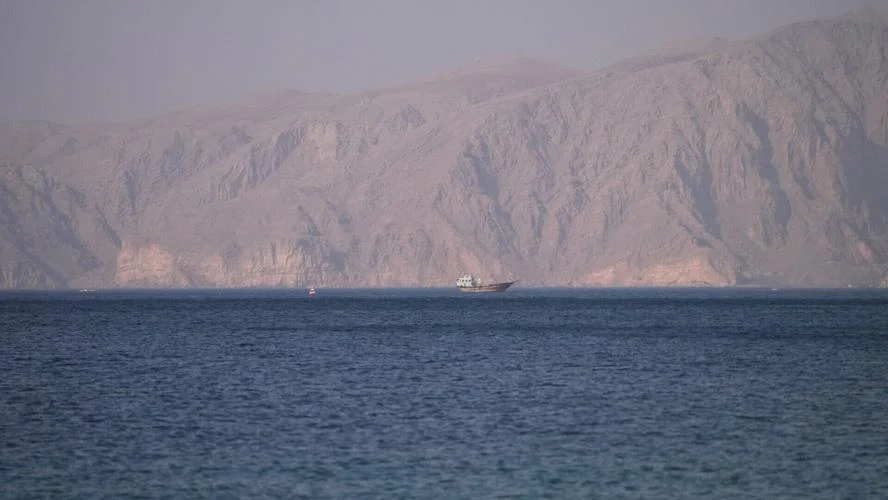
The threatened Bab Al-Mandeb blockade announced by Yemen’s Houthi movement targets the one maritime route the global oil market has left, arriving at a moment when the Strait of Hormuz is already effectively shut by the US-Iran war.
The Houthis, a Shiite militia aligned with Tehran, declared the naval blockade in a video statement, framing it as retaliation for Saudi strikes on a major airport in Sanaa, Yemen’s capital.
The Stated Grievance
The group has accused Saudi Arabia of hitting Sanaa International Airport earlier this month while an Iranian official was traveling through it.
Saudi Arabia condemned the blockade announcement in a statement of its own. The Houthis responded by calling the Saudi government a criminal regime.
The Houthis carry a terrorist designation from the US State Department.
Why This Waterway Matters So Much Right Now
Bab Al-Mandeb links the Red Sea to the Gulf of Aden and onward to the Indian Ocean. For Saudi Arabia, one of the world’s largest oil producers, it is the outlet that allows millions of barrels a day to reach open water and global buyers.
Under normal conditions it is important. Under current conditions it is close to indispensable.
With Hormuz effectively closed by the war, Saudi exports have shifted toward the overland route across the kingdom and out through Red Sea terminals. Bab Al-Mandeb is the final gate on that path.
A functioning blockade there would do more than rattle energy markets already strained by the conflict. It would remove the alternative that has been absorbing some of the damage from Hormuz, and prices would almost certainly climb further.
A Test Beyond Economics
The blockade also poses a political question for the Gulf states.
Saudi Arabia and its neighbors have spent years calibrating how directly to confront Iran and its aligned groups. A blockade on Saudi oil exports, executed by a militia Tehran supports, is about as direct a challenge as could be constructed.
How Riyadh answers will signal how much appetite the Gulf actually has for confrontation.
The Long-Term Workaround
Saudi Arabia, Iraq and the United Arab Emirates have been exploring new pipelines, or expansions of existing ones, that would move crude overland rather than by sea.
The logic is sound. The timeline is not. Those projects would take years to complete, which offers nothing to a market in crisis this month.
Tenth Consecutive Night of Strikes
The United States and Iran exchanged fire for a tenth straight round overnight.
US Central Command said late Monday it had struck Iranian military command centers, maritime capabilities, missile and drone launch sites, and air defense systems.
Iran’s state news agency IRNA said its forces targeted three American bases in Kuwait hosting US personnel and equipment.
By any measure, the fighting has reached its most intense level since the war opened in February.
The Casualty Picture, and What Isn’t Being Said
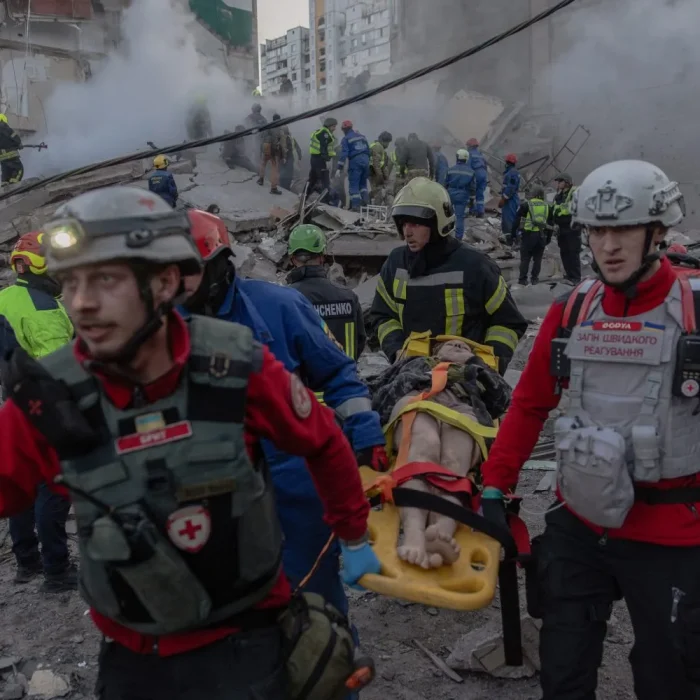
The Pentagon confirmed Monday the identities of two service members killed in Iranian attacks in northern Jordan last Friday, and said another remains missing. It later disclosed a third death in Iraq.
The running totals:
- At least 17 US service members killed since the war began
- 427 people injured according to Pentagon figures
- Roughly 3,000 people killed inside Iran, according to the Iranian government
A US military official, not authorized to speak publicly, told NPR that the Defense Department has been slow-walking casualty information.
That characterization gained credibility this week when the Pentagon spokesman, responding to journalists’ questions, acknowledged that 100 service members had been injured over the previous two weeks. He said the vast majority recovered quickly and returned to duty.
The disclosure came only after reporters pressed for it, which is the substance of the slow-walking complaint.
A Ceasefire That Still Holds
Amid the escalation, one arrangement has survived.
The separate ceasefire between Israel and Hezbollah in Lebanon remains intact, despite continued Israeli strikes on people and sites in Lebanon that Israel identifies as Hezbollah-linked.
That durability is notable given how much else in the region has come apart.
Lebanon’s President Heads to Washington
Lebanese President Joseph Aoun is scheduled to meet Trump in Washington on Tuesday, marking the first Lebanese state visit to the United States since 2009.
The timing is significant. A broad peace roadmap signed in June between Lebanon’s government and Israel calls for the Lebanese army to disarm Hezbollah.
That commitment carries a precondition: Israel must withdraw from the substantial Lebanese territory it has occupied since earlier this year.
No clear timeline for any withdrawal has emerged. Meanwhile roughly 400,000 Lebanese remain internally displaced because their homes are either occupied or destroyed.
Aoun arrives in Washington needing movement on that withdrawal timeline, since without it the disarmament process cannot begin and the agreement stalls.
The Shape of the Crisis
Set the daily developments aside and the structure becomes clear.
Gulf oil has two ways out. Hormuz is closed. Bab Al-Mandeb is now threatened. The pipelines that would provide a third option do not exist yet and will not for years.
Every diplomatic track in the region, from the ceasefire proposals circulating between Washington and Tehran to Aoun’s visit, is operating against that backdrop.
The energy math is doing much of the work that diplomacy usually does. When both exits are blocked, the pressure to find an agreement stops being idealistic and becomes arithmetic.
Author