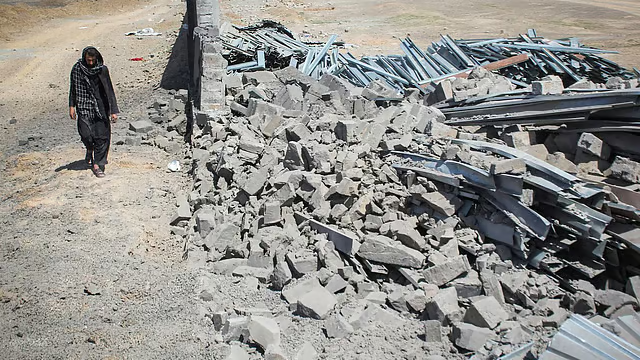
Pakistani airstrikes in Afghanistan have once again pushed the two neighbors toward open conflict, after Taliban officials said at least 13 people, including 11 children, were killed when Pakistan’s military bombed homes across three Afghan provinces. The attacks mark a renewal of fighting that has already claimed hundreds of lives this year.
What Happened
According to Taliban spokesperson Zabihullah Mujahid, the strikes hit civilian homes in the provinces of Kunar, Khost, and Paktika early on Wednesday. He said the operation violated Afghan airspace and left a heavy toll on families in the affected areas.
Alongside the 13 dead, Mujahid reported that at least 14 others were wounded. All of the injured, he said, were women and children, underscoring the civilian impact of the bombardment.
Two Very Different Accounts
The picture offered by Pakistani officials looks markedly different from the Taliban’s version of events.
Security officials told Reuters that the strikes targeted what they described as hideouts and facilities belonging to Pakistani militants, groups they accuse of using Afghan territory to launch attacks against Pakistan. Later, Pakistan’s information minister announced that the military had struck militant positions along the Afghan border and killed at least 26 fighters.
The two narratives stand in sharp contrast:
- The Taliban describes the targets as civilian homes filled with families.
- Islamabad insists it hit militant hideouts and armed fighters.
This gap between official accounts has become a recurring feature of the conflict, making independent verification difficult and deepening mistrust on both sides.
A Dispute Over Militants
At the center of the tension is a long-running disagreement over who is responsible for the militancy spilling across the border.
Pakistan has repeatedly accused the Taliban-led government in Kabul of sheltering militants who plan and carry out attacks inside Pakistan. Kabul firmly rejects that charge. The Taliban maintains that the violence Pakistan faces is an internal problem of its own, not something orchestrated from Afghan soil.
A Fragile Peace Under Threat
The latest violence risks shattering a period of relative calm between the two former allies.
Once close partners, Pakistan and Afghanistan have increasingly become adversaries. Their relationship hit a low point in February, when the two sides fought their most intense battle in years. A shaky ceasefire followed in March, offering a brief pause in hostilities.
China has stepped in to help, attempting to mediate a lasting settlement between the neighbors. But the renewed strikes show just how fragile that truce remains, and how quickly the conflict can reignite.
For now, the bombing of homes in Kunar, Khost, and Paktika threatens to undo months of cautious diplomacy, raising fears that the cycle of cross-border violence is far from over.
Author