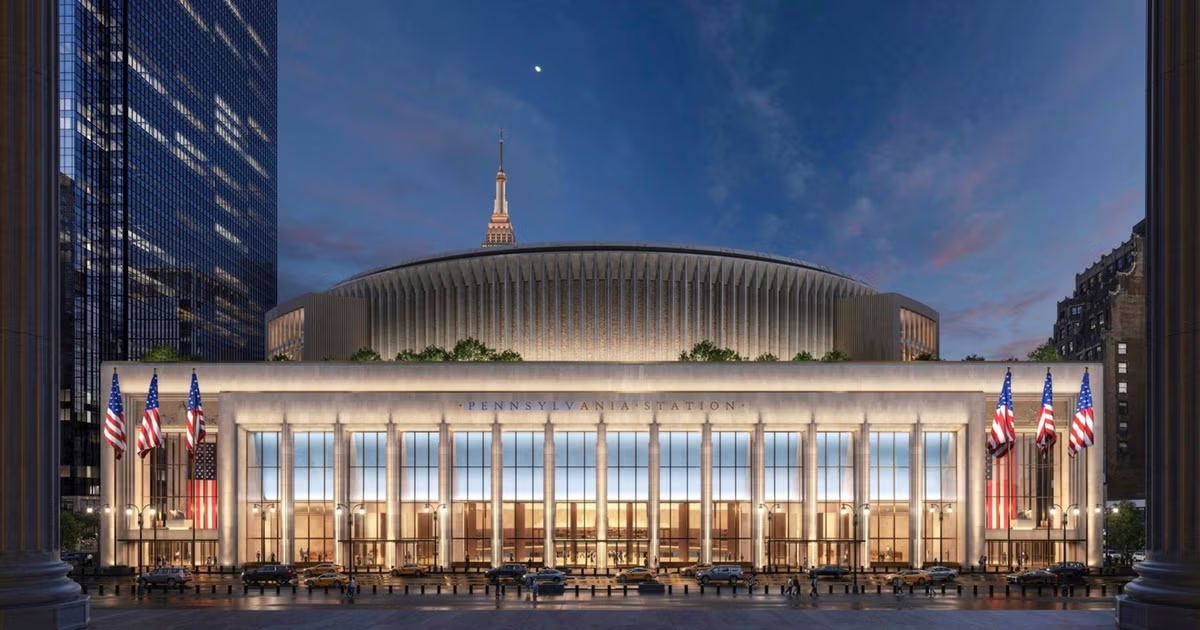
The Penn Station remodel now taking shape in Manhattan promises to transform North America’s busiest transit hub into a grand civic landmark once again, complete with towering columns, sunlit concourses, and an estimated $8 billion price tag. The ambitious plan also carries a notable political twist: the name and seal of President Donald Trump will appear inside one of the station’s entryways.
From Grandeur to Gloom
To understand the scale of this vision, it helps to remember what was lost. When the original Pennsylvania Station was demolished in 1963, it ended the life of one of America’s great public buildings, a monumental Beaux-Arts terminal with Roman-style columns and a vast central waiting area that ranked as the largest indoor space in the city at the time.
In its place came Madison Square Garden, home to the NBA’s Knicks and the NHL’s Rangers, while commuters were pushed underground into cramped, dimly lit corridors once the redesign was finished in 1968. Architectural historian Vincent Scully captured the loss in a now-famous line, contrasting how travelers once entered the city like gods but afterward scurried in like rats.
A Return to the Original Vision
The newly unveiled design aims to recapture the splendor of the 1910 station. Renderings released on Monday show a rectangular stone facade framed by imposing columns along a grand entryway.
Inside, the plans call for a striking transformation:
- A sunlit concourse with ceilings soaring more than 50 feet high in places.
- Bronze finishes and ornamental detailing throughout.
- A bas-relief of the city’s iconic skyline and a large station clock.
One interior wall would bear the seal and name of President Trump, who had Amtrak take control of the long-stalled project last year after decades of political infighting among transit agencies and resistance to relocating MSG from billionaire owner James Dolan. Trump has even floated renaming the station after himself as part of a broader effort to shape his legacy through public works. For now, though, the proposed facade would still read “Pennsylvania Station,” according to the renderings released by Amtrak and the chosen design consortium, Penn Transformation Partners.
Reclaiming an Icon
Lead design architect Vishaan Chakrabarti said the project draws inspiration from the ornate Beaux-Arts style of Grand Central Terminal, along with Art Deco landmarks like the Empire State Building and Rockefeller Center. His goal, he explained, is to restore Penn Station to its rightful place among the city’s greatest landmarks.
Chakrabarti spoke of a bold embrace of ornament and decoration that he believes modern design has largely abandoned, and expressed a desire to bring that sense of craftsmanship back.
The Scale and Timeline
The redesign is expected to cost roughly $8 billion, with construction targeted to begin before the end of 2027. Officials say the station will stay open throughout the work, which will unfold in phases over about six years.
The numbers underscore why the project matters. More than 600,000 commuters pass through Penn Station on a typical workday, more than the combined daily traffic of the region’s three major airports, JFK, LaGuardia, and Newark Liberty.
What Happens to Madison Square Garden
Although past proposals have called for moving MSG, the current plan keeps the “World’s Most Famous Arena” right where it is. A theater owned by MSG and built directly over the tracks, however, would need to be demolished.
According to Andy Byford, the former New York City subway chief now serving as Amtrak’s special adviser on the redevelopment, developers and MSG’s owner have agreed on this key point, though final terms, including payment, are still being worked out.
Concerns Over Secrecy and Spending
Not everyone is convinced. Transit advocates have criticized the process as overly secretive and are pushing for greater public involvement.
Lisa Daglian, who leads a group advising the Metropolitan Transportation Authority, stressed the importance of public input. Danny Pearlstein of the Riders Alliance was blunter, arguing the city does not need another megamall or monument, especially at the cost of billions in local revenue or at the risk of disrupting existing services.
Byford said more details, including a clearer cost breakdown, will emerge in the coming months as designs are refined and the project moves through federal environmental review. He offered two key reassurances: there will be no fare hikes to fund the work, and no plans to seize surrounding properties to expand the station.
Mixed Reactions From Riders
At Penn Station, regular commuters offered a range of views. John Schoen, a 55-year-old Long Island resident, welcomed the idea of a brighter, more inviting commute, saying the aging station needs a fresh look and that the city should move forward.
Others were more skeptical. James Culhane, a 24-year-old opera stagehand and fellow Long Island rider, pointed out that parts of the station have already been upgraded in recent years with new eateries and more natural light. In his view, things are working well enough as they are, and the money might be better spent elsewhere.
Whether seen as a long-overdue revival or an extravagant expense, the Penn Station remodel is poised to reshape one of New York’s most heavily used spaces, and to stir plenty of debate along the way.
Author