The US-Iran deal that could finally bring an end to months of fighting may be just hours away from becoming reality, according to President Donald Trump. Yet even as Washington and key mediators sound confident, Tehran is striking a far more cautious note, leaving the exact timing of the agreement uncertain.
A Sunday Signing, Trump Says
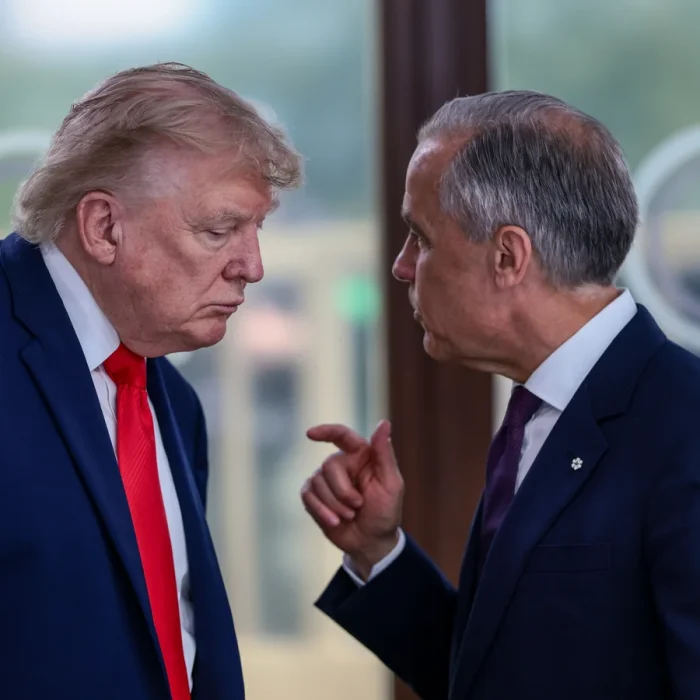
Trump announced that the long-awaited US-Iran deal is set to be signed on Sunday, marking what could be a turning point in a conflict that has rattled global energy markets for months. He added that the Strait of Hormuz will be opened immediately after the signing. CNBC
In a post on his Truth Social platform, Trump declared that “The Deal is scheduled to get signed tomorrow, and immediately after it is signed, the Hormuz Strait is OPEN TO ALL.” The reopening of this narrow but vital waterway would be a major relief for the world economy, given how much of the planet’s oil depends on it. CNBC
Tehran Urges Patience
Not everyone shares Trump’s confidence about the calendar. Iranian officials have been noticeably more guarded, with state media signaling that the country remains cautious about when exactly the agreement will be finalized.
Iran’s foreign ministry spokesman, Esmaeil Baghaei, suggested that people should not expect a signature overnight. While the memorandum of understanding may well be on its way, he indicated that the precise date could not be pinned down just yet — and certainly not as soon as some were predicting.
This gap between American optimism and Iranian caution has become a familiar pattern. Over the past several months, versions of an agreement have appeared close to completion more than once, only to stall in the final stretch.
Pakistan Steps In as Mediator
One of the more striking elements of these negotiations has been Pakistan’s role as a central go-between. Pakistani Prime Minister Shehbaz Sharif said early Saturday that a peace deal was closer “than ever before,” with finalization “likely expected in the next 24 hours.” NBC News
Sharif went further, describing concrete preparations already underway. “Pakistan is preparing for the electronic signing of the peace deal immediately after, followed by technical level talks next week,” he posted on X. Trump amplified those remarks by resharing them on his own account, underscoring how closely the two leaders are coordinating. NBC News
Pakistan’s involvement hasn’t stopped there. Deputy Prime Minister Mohammad Ishaq Dar reportedly discussed the impending agreement with Saudi Arabia’s foreign minister, a sign that several regional powers are invested in seeing the conflict resolved.
What’s Actually in the Deal
Beyond the headlines, the substance of the agreement is beginning to take shape. According to a US official, the framework centers on a 60-day ceasefire extension paired with practical steps to ease tensions.
The key components include:
- Reopening the Strait of Hormuz, with ships passing freely and no tolls imposed.
- Iran clearing the mines it had deployed in the waterway to guarantee safe passage.
- Washington lifting its blockade on Iranian ports in exchange.
- Iran being allowed to sell its oil on the open market once again.
- Future negotiations focused specifically on Iran’s nuclear program.
Crucially, US officials have stressed that the economic benefits flowing to Iran will be tied directly to Tehran honoring its commitments. In other words, the relief comes with conditions attached.
The Nuclear Question Looms Large
While the immediate deal tackles shipping and economics, the thorniest issue — Iran’s nuclear ambitions — has been pushed to a later stage. Talks on that front are expected to begin only after the initial agreement takes hold.
Trump hinted at his hard line on the matter, suggesting that once tensions cool, the United States intends to deal with Iran’s enriched uranium stockpiles and ultimately see them destroyed. For decades, Western governments have accused Iran of pursuing a nuclear weapon, a charge Tehran has consistently denied. Iran maintains that its program exists purely for peaceful aims, namely generating electricity and supporting scientific research.
A Veiled Warning
For all the talk of peace, Trump’s message carried an unmistakable edge. He cautioned that if the process did not move forward smoothly, Washington still held what he called the “ultimate alternative.” “Hopefully, this process will all work out quickly, easily, and smoothly. If it doesn’t, we have the ultimate alternative, hopefully never to be used again!” CNBC
The remark, widely read as a thinly veiled threat, reflects the high-stakes balancing act of these negotiations — diplomacy on one hand, the looming possibility of renewed force on the other.
How the Conflict Reached This Point
The current crisis traces back to late February, when US and Israeli strikes hit targets across Iran. Tehran retaliated by attacking Israel and US-aligned states in the Gulf, and in a move with global consequences, effectively shut down the Strait of Hormuz.
That waterway is no ordinary shipping lane. Before the war, roughly a fifth of the world’s oil flowed through it, which is why its closure sent energy prices climbing and stoked fears of rising inflation worldwide.
A ceasefire was reached in mid-April, but it has proven shaky. Since then, both sides have traded intermittent fire, including renewed strikes earlier this week even as diplomats inched toward a settlement.
What Comes Next
Markets are already reacting to the prospect of resolution, with oil prices easing as hopes for a breakthrough grow. Still, history counsels caution. Previous reports had even suggested that the conflict between Israel and Hezbollah in Lebanon might be folded into the agreement, with Iran reportedly pressing for its inclusion — a detail that highlights how complex the final terms remain.
Whether Sunday delivers the signature Trump has promised, or whether Tehran’s hesitation pushes the timeline once again, the coming hours will reveal just how durable this fragile diplomacy truly is.
Author