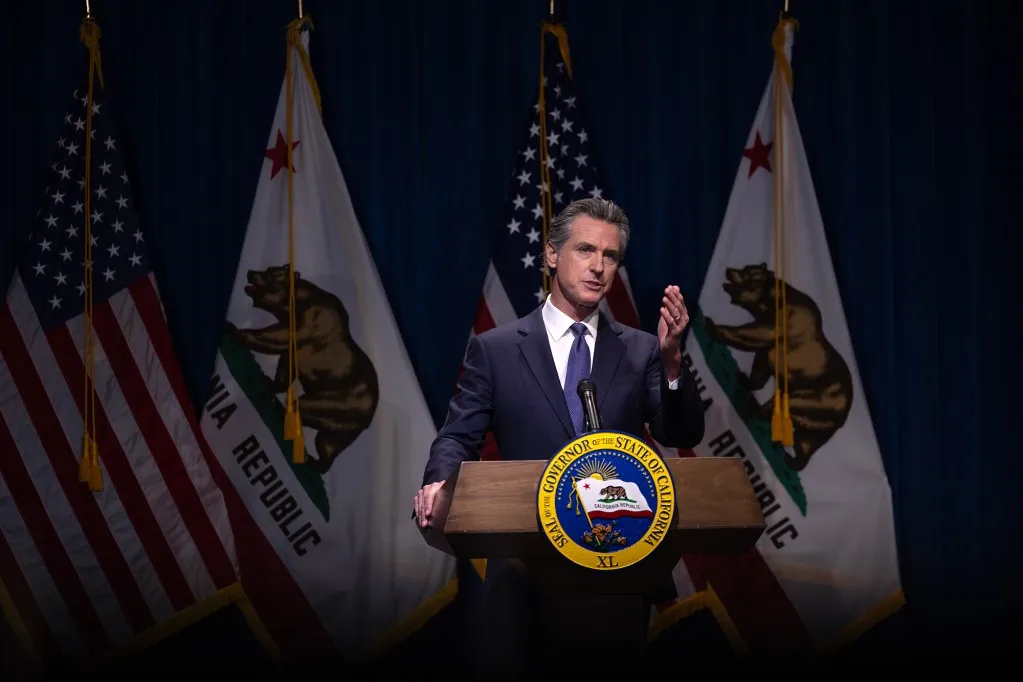
The California state budget cleared a major hurdle late Monday as lawmakers adopted a $356 billion spending plan that would sidestep or postpone billions of dollars in social service cuts proposed by Governor Gavin Newsom. But far from settling the matter, the vote merely sets the stage for the real negotiations to begin.
A Deadline-Driven Vote
The Monday vote was, in many respects, a formality. California’s constitution requires lawmakers to pass a balanced budget by June 15 each year in order to keep collecting their pay. The harder work now lies ahead: legislators have until the end of the month to reach an agreement with Newsom before the new fiscal year starts on July 1.
Democratic leaders cast their plan as a responsible balancing act, one that would shrink future deficits while preserving services for low-income Californians. Assemblymember Jesse Gabriel, who chairs the Assembly budget committee, framed the central tension as a choice between compassion and fiscal responsibility, calling that balance the heart of the conversation.
Where Lawmakers and Newsom Agree
Despite the looming clashes, the two sides have found common ground on several revenue measures. Lawmakers signed off on Newsom-backed plans to:
- Raise taxes on computer software
- Reduce tax credits available to businesses
- Extend a tax on healthcare providers
These measures are notable because they require no voter approval, only a two-thirds vote in each legislative chamber, which matters at a time when California voters rejected most local tax initiatives during the June primary.
The Tax Measures in Detail
Several specific bills are driving the new revenue. Senate Bill 125 would extend the so-called MCO tax on healthcare providers, which the state has long used to qualify for additional federal funding. The administration estimated in May that the renewed tax would bring in roughly $2 billion a year starting next year.
The mechanics are complicated by new federal rules. California has historically taxed Medi-Cal providers at a higher rate than private insurance plans to draw down more federal money, but that practice is being phased out. SB 125 would raise the tax on private plans to match the Medi-Cal rate, a shift critics warn could push up insurance premiums.
Assemblymember LaShae Sharp-Collins cautioned that the added cost would inevitably be passed along, potentially leading businesses to cut coverage or lay off workers at a moment when affordability was supposed to be a priority.
Senate President Pro Tem Monique Limón described the arrangement as a compromise. Senate Democrats had previously rejected the approach, floating a monthly charge on large employers instead, but have since stepped back, asking the next governor to bring forward fully viable options next year. The urgency, Limón said, comes from the need to generate revenue quickly.
A separate measure, Senate Bill 122, would impose a sales tax on most everyday software such as Slack and Microsoft Suites beginning in January 2027, while also capping the tax credits large corporations can claim. The existing $5 million business tax credit limit, in place since 2024, would be extended through 2029, generating an estimated $9 billion. Business groups pushed back hard, with the California Taxpayers Association warning the moves could make software more expensive and chill future investment.
Lawmakers and Newsom also agreed on taxing Californians who receive payouts from a proposed $1.8 billion fund settling claims that the federal government unlawfully targeted certain individuals, a group that could include some January 6 participants.
The Healthcare Standoff
The sharpest disagreements center on healthcare. Confronting federal funding cuts under the tax and spending law President Trump signed last year, Newsom proposed measures to limit coverage for undocumented immigrants as well as refugees, asylees, and human trafficking survivors.
Legislative Democrats are pushing to delay those cuts by a year while searching for gentler alternatives. They also pushed back on other fronts:
- Rejecting Newsom’s plan to reinstate strict Medi-Cal asset tests for seniors and adults with disabilities, proposing a less restrictive limit for fiscal year 2027-28 instead.
- Rejecting, with bipartisan support, his proposed cuts to the In-Home Supportive Services program.
- Declining his proposal to raise the monthly Medi-Cal premium for undocumented immigrants from $30 to $50, preferring to leave that call to the next governor.
Sen. John Laird, who chairs the Senate budget committee, framed the strategy as buying time. The goal, he said, is to stretch as far as possible in the hope of avoiding the cuts altogether. Lawmakers did, however, agree to Newsom’s plan to spend $300 million subsidizing private healthcare for low-income residents.
Restoring Money for Children and Schools
On education and child care, lawmakers leaned toward restoration rather than reduction. Democrats want to add 22,000 state-funded child care slots over the coming years, prioritizing children ages 3 and under, and rejected Newsom’s proposed cut of 6,800 spaces. Advocates say the move fills a gap left by the transitional kindergarten expansion, which reaches 4-year-olds.
Betting on a brighter revenue outlook, lawmakers proposed $2.7 billion more for TK-12 schools and community colleges than Newsom did in May. Even so, educators wanted more, particularly an end to Newsom’s plan to withhold $3.9 billion in constitutionally guaranteed school funding. David Goldberg of the California Teachers Association demanded that leaders stop what he called gimmicks and shell games and fully fund schools.
Help for Counties and the Vulnerable
The legislative plan also directs more money toward counties and struggling residents. It would boost funding to help counties handle the eligibility checks now required under Trump’s spending bill, and set aside $125 million to help restore indigent care programs that largely disappeared under Obamacare.
Lawmakers further proposed $900 million for the state’s homelessness fund, well above the $500 million Newsom included. Assemblymember Sharon Quirk-Silva said the stakes were deeply personal for hard-hit Californians, framing the decisions as the difference between people eating and having a roof over their heads.
Saving for Leaner Times
Both sides agree on the principle of raising the ceiling on what the state can deposit into its rainy day fund; the open question is by how much. Under current law, the balance cannot exceed 10 percent of general fund tax revenue, and changing that would require voter approval. Lawmakers are weighing a November ballot measure to allow larger reserves, facing a tight June 25 deadline to decide what to put before voters.
What Comes Next
With the budget passed, the genuine bargaining now begins. Over the next two weeks, lawmakers and Newsom must reconcile their differences on healthcare, schools, homelessness, and more before the July 1 deadline. The plan adopted Monday reflects the Legislature’s priorities, but the final shape of California’s spending will depend on the compromises struck in the days ahead.
This is a developing story, and the outcome of these negotiations will determine how deeply the state’s most vulnerable residents feel the impact of looming budget pressures.
Author