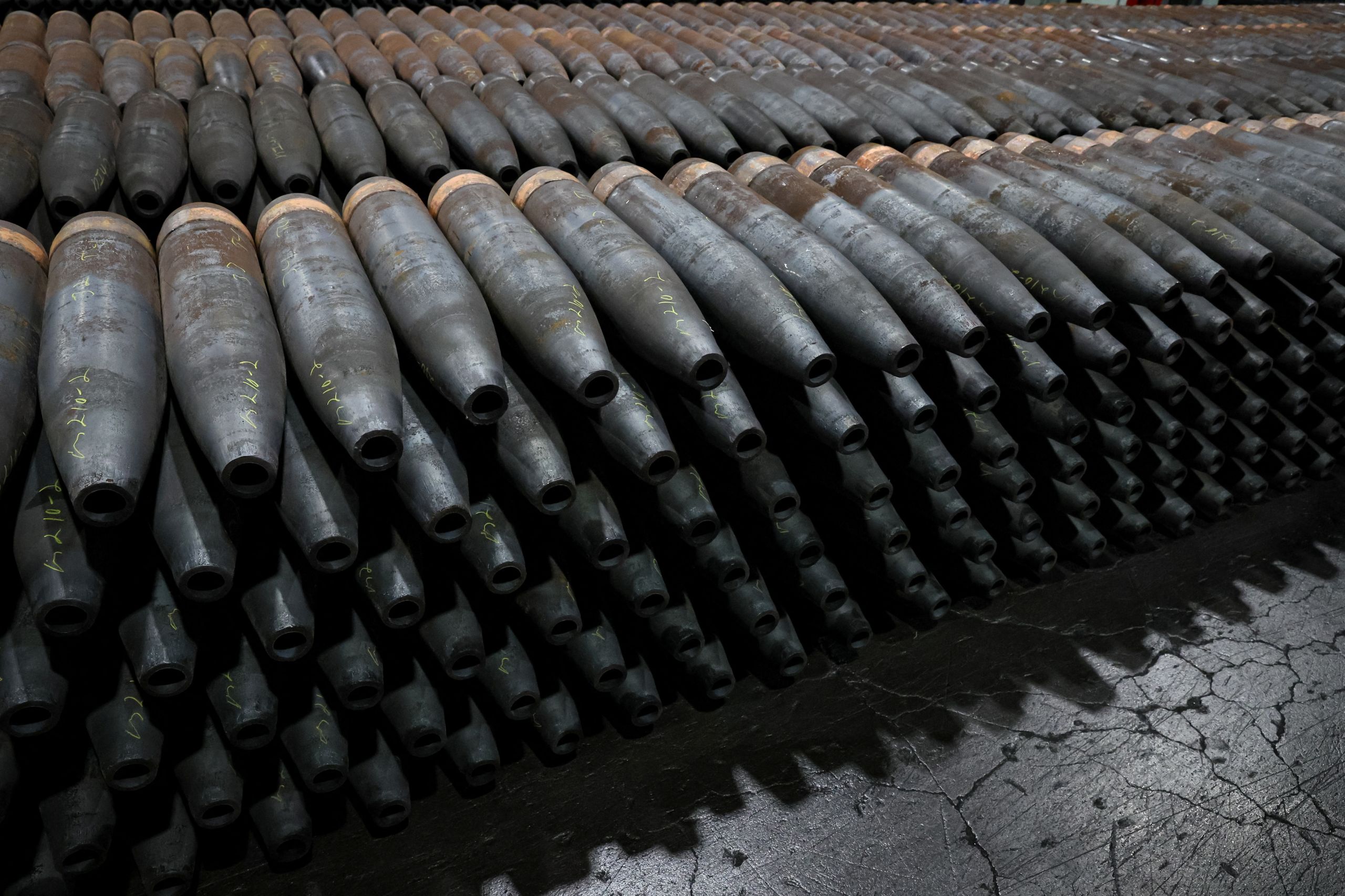
The Defense Production Act, a decades-old law granting the president sweeping power over private industry, has become President Donald Trump’s tool of choice to push American defense companies into rapidly manufacturing more weaponry. The move comes as his administration races to refill military stockpiles drained during the recent US-led conflict with Iran, and as it leans on Congress to approve a massive new wave of defense spending.
A Quiet but Significant Order
Last week, Trump invoked the Defense Production Act with little fanfare, a decision revealed through a memo filed in the Federal Register on Tuesday. The action reflects mounting anxiety inside his administration over a shortage of munitions.
In the memo, addressed to Defense Secretary Pete Hegseth and dated June 11, Trump declared that conditions exist that could directly threaten national defense and its preparedness programs. He warned that production limits and supply chain problems could undermine the country’s ability to produce, sustain, and expand the munitions, missiles, and equipment essential to national security.
In short, the message was that the nation’s arsenal needs to be rebuilt, and quickly.
What This Law Actually Does
The Defense Production Act dates back to the 1950s and hands the president a broad toolkit to expand and speed up the supply of critical materials. Among its powers, it allows the government to order private companies to prioritize federal orders ahead of other business.
It also permits companies to cooperate in ways that might otherwise raise antitrust or anti-competition concerns. Historically, the law has been reserved for emergencies, ranging from natural disasters and terrorist attacks to public health crises like the Covid-19 pandemic. Using it to surge weapons production places the current munitions situation in that same category of urgency.
The Push for $350 Billion
Invoking the law is only half of the administration’s strategy. The other half is money, and a lot of it.
On Tuesday, Hegseth was on Capitol Hill meeting with Senate Republicans to build support for a $350 billion reconciliation package aimed at boosting Defense Department funding, with a specific focus on replenishing munitions.
Sen. John Cornyn of Texas, who met with Hegseth, said the conversation centered largely on funding. He described the Pentagon as running short of the money it needs to acquire the weapons, missiles, and related equipment necessary to protect the country.
A Long-Simmering Concern
Worries about dwindling stockpiles didn’t appear overnight. Top officials have been uneasy about the issue for months, and Trump himself has publicly pressed defense firms to ramp up production.
Back in March, just days into the conflict with Iran, which was dubbed Operation Epic Fury, administration officials had reportedly floated the idea of invoking the Defense Production Act with lawmakers as a way to accelerate munitions output.
Yet the public messaging at the time struck a very different tone. The White House insisted there were plenty of weapons to go around. Trump told reporters the US had effectively unlimited mid- and upper-range ammunition, the type being used in the war, with a White House official later clarifying he was referring to the range of the munitions.
Mixed Signals From the Top
That gap between public reassurance and private concern remains one of the most striking features of the story.
Hegseth has flatly denied any munitions shortage. In an interview that aired Sunday, he insisted the nation’s stockpiles are strong and will only grow stronger over time. He went further, dismissing the shortage narrative as a fabricated story pushed by the media, and maintaining that the stockpiles are in great shape.
The challenge for the administration is that those confident assurances sit awkwardly alongside an emergency invocation of the Defense Production Act and a request for hundreds of billions in additional funding. If everything is fine, critics may ask, why the urgency?
The War and Its Aftermath
The backdrop to all of this is the conflict with Iran, which appears to be winding down, at least on paper.
A planned meeting between Trump and defense industry leaders to discuss the depleted stockpiles, originally expected last Friday, was postponed to this week or next as negotiations to end the war consumed the president’s attention.
The two countries have since agreed to a memorandum of understanding intended to end the fighting and reopen the Strait of Hormuz, while they work toward a broader deal over a 60-day period. The administration has not released the details, though Trump has said they would be made public after a signing ceremony scheduled for Friday.
Still, tensions haven’t fully cooled. Since the agreement was reached Sunday, Iran’s Islamic Revolutionary Guard Corps has launched multiple drones toward commercial ships in the Strait of Hormuz, according to a US official. The official said the US military has been shooting those drones down before they can endanger commercial vessels or American forces in the region.
The Political Hurdles Ahead
Passing the funding package is far from guaranteed, and the obstacles aren’t limited to one party.
According to a source familiar with Hegseth’s discussions, the defense spending measure could potentially advance without Democratic votes. On Tuesday, Hegseth met with at least three Republicans: Cornyn, Senate Majority Whip John Barrasso of Wyoming, and Sen. Lindsey Graham of South Carolina.
But even within his own party, the path isn’t smooth. Cornyn voiced support for the effort while worrying that Democrats wouldn’t back new defense funding. Sen. Lisa Murkowski of Alaska, who had repeatedly sided with Democrats in attempts to force an end to the Iran war, said she remains open to approving funds for war costs but wants the administration to justify the expense first.
Democrats, for their part, haven’t ruled out supporting a supplemental package. However, they are hesitant to do so while the war remains unresolved and without a detailed briefing from administration officials.
Sen. Chris Coons of Delaware, the leading Democrat responsible for Pentagon appropriations, drew a firm line. He said that as long as the country remains at war with Iran, he won’t allow a supplemental spending bill to quietly function as an authorization for that war, a point he’s been arguing with Republican colleagues.
The Bottom Line
What emerges is a portrait of an administration moving aggressively on two fronts at once, compelling private industry to produce more weapons while simultaneously pushing for an enormous funding boost to refill depleted reserves. The contradiction between official reassurances and emergency measures only sharpens the questions surrounding the true state of America’s arsenal.
With a fragile peace deal awaiting signatures, drones still flying over the Strait of Hormuz, and lawmakers divided over how and whether to fund the effort, the fight over America’s weapons supply is likely to remain a flashpoint in Washington for some time to come.
Author