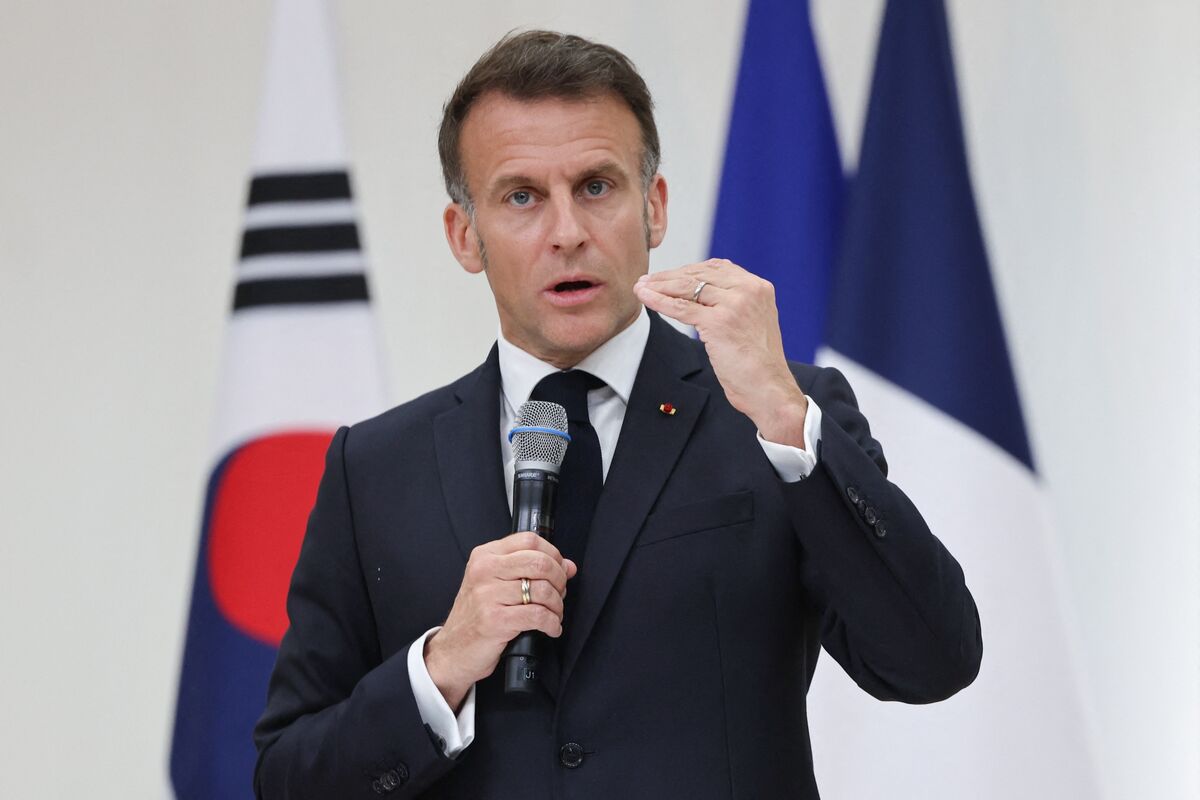
Macron AI regulation democracies emerged as the central theme at this week’s G7 summit in France, where French President Emmanuel Macron urged the world’s wealthy democracies to join forces in governing advanced artificial intelligence. His appeal came against a tense backdrop, as a controversial U.S. directive restricting access to powerful AI models exposed deep anxieties about American dominance over the technology.
A Call for Collective Action
Speaking at a high-level meeting attended by leading AI executives, Macron made a clear case for cooperation rather than isolation.
He argued that the world’s democracies must work together to regulate frontier AI systems, rather than allowing the technology to develop in a fragmented or nationalist manner. His message resonated with several industry leaders present, who echoed concerns about the risks of leaving AI safety unaddressed.
The discussion took place during a G7 working lunch focused on ensuring the safe, rapid, and effective deployment of artificial intelligence.
Industry Leaders Echo the Plea
Macron wasn’t alone in calling for global coordination.
OpenAI CEO Sam Altman delivered a strikingly similar message, arguing that the world needs an “international forum” to establish AI guardrails. Crucially, he stressed that the responsibility for AI safety should not rest solely with the tech companies building these systems.
In his speech to G7 leaders and more than a dozen AI executives, Altman emphasized that the technology’s future must be shaped by:
- People and society as a whole
- Democratic institutions
- Not just the companies developing the most capable systems
He called for an international body that could set globally accepted testing standards, provide impartial analysis of AI capabilities and risks, and serve as a venue for cooperation between nations.
The Anthropic Controversy Casts a Shadow
Looming over the entire discussion was a recent decision by the Trump administration that has rattled allies and rivals alike.
Last week, the administration issued a directive preventing foreign nationals from using Anthropic’s newest and most powerful AI models. As a result, the company was forced to take its latest systems, known as Fable 5 and Mythos 5, offline to comply with the order.
Anthropic pushed back, stating it did not believe the government’s actions were justified by the security concern that had been raised. The episode quickly became a flashpoint, fueling broader unease about how access to cutting-edge AI can be controlled by a single government.
Macron’s Pointed Critique
Macron didn’t shy away from addressing the controversy directly.
While he acknowledged it was a “good thing” that U.S. officials recognized the potential dangers of frontier AI models, he simultaneously criticized the move as a “strictly nationalist” reaction. In his view, restricting access in this way undermined the spirit of democratic partnership.
When asked whether France and other G7 nations had pressed Trump to restore access to Anthropic’s models, Macron said he had made a forceful appeal for the United States not to hoard its most advanced AI.
A Warning and an Insurance Policy
Macron paired his appeal with both a warning and a backup plan.
He cautioned that U.S. firms pioneering this disruptive technology could see their value drop if they abruptly cut off access “like a light switch.” The implication was clear: isolation could ultimately hurt American companies as much as anyone else.
At the same time, Macron offered an insurance policy of sorts. He announced that France would boost funding for its own AI industry, ensuring the country wouldn’t be left behind if international cooperation were to collapse.
His underlying goal, he stressed, was to prevent authoritarian regimes from gaining access to advanced AI systems. “So let us move forward together,” he urged, calling for smooth government-to-government cooperation on security and cybersecurity.
Europe’s Growing Distrust
The Anthropic episode tapped into a deeper, pre-existing anxiety within Europe.
Even before this latest dispute, there was mounting distrust of American companies dominating AI and other tech ecosystems. That concern has manifested in several concrete actions:
- The European Commission recently unveiled a tech sovereignty package in Brussels, aimed at boosting homegrown AI.
- The pope called last month for robust regulation of artificial intelligence from the Vatican.
- European officials increasingly view reliance on foreign AI as a strategic vulnerability.
According to Zach Meyers of the Brussels-based think tank CERRE, Trump’s intervention highlighted just how vulnerable countries like those in Europe, or Canada, can become if cut off from advanced AI models.
A Strategic Vulnerability
Meyers captured the mood of unease spreading across the continent.
He described a general anxiety about Europe’s dependence on other nations for critical strategic infrastructure, alongside a strong desire to do something about it. The Anthropic situation served as a stark reminder of how quickly access to vital technology can be revoked.
This sense of vulnerability is now driving renewed calls for Europe to develop its own competitive AI capabilities.
The Push for a “Second Most Capable AI”
Canadian voices added a practical dimension to the conversation.
Aidan Gomez, CEO of Canada’s Cohere AI, said multiple proposals were discussed around collaborating on AI governance and regulation. The overall consensus, he noted, was that “we need something” in terms of coordinated oversight.
Gomez offered a memorable framing of the challenge. He argued that democracies should ensure the G7 produces not just the most capable AI, but also the “second most capable AI”, a pointed reference to the reality that the United States and China currently stand as the world’s only two major AI powers. The goal, in essence, is to avoid total dependence on either superpower.
A Gathering of Global AI Players
The meeting drew an impressive roster of industry heavyweights.
Among the attendees were the leaders of three of the most powerful AI companies: Sam Altman of OpenAI, Demis Hassabis of Google DeepMind, and Dario Amodei of Anthropic. They were joined by Meta’s chief AI officer, Alexandr Wang, as well as the heads of several smaller but notable labs, including:
- France’s Mistral
- Germany’s Black Forest Labs
- Italy’s Domyn
- Japan’s Sakana AI
- UK-based Synthesia
The G7 itself comprises France, the United States, Canada, Germany, Italy, Japan, and the UK, with guest nations including Brazil, India, Kenya, and South Korea invited to join parts of the discussion.
The Bottom Line
The conversation around Macron AI regulation democracies reflects a pivotal moment in the global governance of artificial intelligence. With Trump’s restrictions on Anthropic crystallizing fears about American control, leaders like Macron and executives like Altman are pushing for a more collaborative, democratic approach to managing this transformative technology.
Yet the path forward remains uncertain. Balancing national security, commercial interests, and the genuine desire for international cooperation will be no small feat. What’s clear is that democracies increasingly recognize they cannot afford to face the AI revolution alone, nor can they allow the technology’s most powerful tools to become instruments of division rather than shared progress.
Author