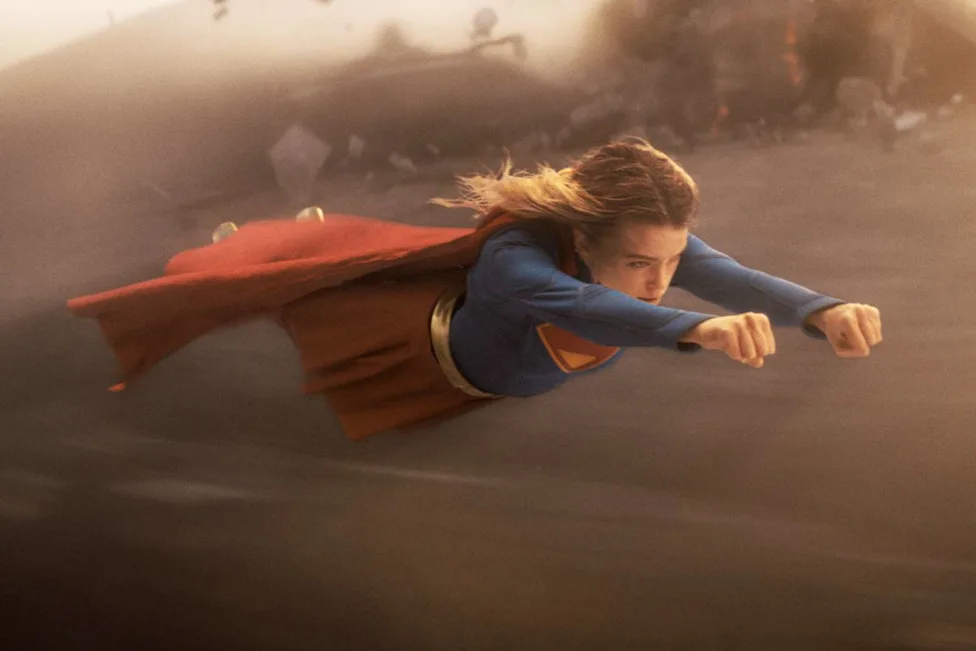
Milly Alcock’s Supergirl isn’t your typical caped do-gooder, and that’s exactly the point. In the new DC space adventure hitting theaters June 26, the 26-year-old Australian actress plays a version of Kara Zor-El who is messy, grief-stricken, irreverent, and deeply human, a hero who feels less like an untouchable ideal and more like a reflection of the rest of us.
A Star-Making Bar Scene
The film wastes no time establishing just how different this Supergirl is. Early on, Kara stops at a cosmic tavern to mark her 23rd birthday, and in one drunken, sprawling moment, she reveals nearly every side of her character at once.
There’s loneliness and self-destruction in her binge drinking, humor in her wild and uninhibited dancing, and a casual irreverence in the way she hangs out with her beloved super-pup, Krypto. Then danger arrives in the form of a massive, intimidating alien. Kara doesn’t hesitate; she steps outside and takes him on.
For director Craig Gillespie, that scene was the moment everything clicked. He recalled being struck by how vulnerable and accessible Alcock was, thinking to himself that they had a genuine star on their hands.
Picking Up Where “Superman” Left Off
Audiences first met this rebooted Supergirl last summer in “Superman,” when an inebriated Kara burst into the Fortress of Solitude and caught her buttoned-up cousin Clark Kent, played by David Corenswet, completely off guard.
Her solo film picks up with Kara on a journey of self-discovery. She finds herself helping a vengeful young girl named Ruthye, played by Eve Ridley, as well as a poisoned Krypto, all while still wrestling with the deaths of her parents and the loss of her entire home planet, Krypton.
Alcock explains that Kara has been shaped by competing influences, the values instilled by her own family alongside Clark’s more rigid definition of what it means to be good. The film, she says, explores the many different ways a person can be good and become a hero in their own fashion.
The Grief Beneath the Armor
Woven throughout the adventure and its many brawls are flashbacks to Kara’s time on Krypton and the story of how she adopted Krypto. Unlike Clark, who was sent to Earth as a baby before Krypton’s destruction, Kara and her parents managed to escape with others, though it proved only a temporary reprieve from their planet’s fate. Her father, played by David Krumholtz, eventually sends her to Earth to reunite with her now-grown cousin.
Those differing upbringings produced two very different personalities. Gillespie says the flashbacks reveal exactly where Kara’s grief and emotional armor come from. Once viewers understand that history, he argues, they become fully invested, grasping why she struggles to connect, why she wields humor as a shield, and why she can turn abrasive in certain moments. At her core, she’s protecting herself.
A Different Kind of Coping
Kara is hardly the only superhero with a tragic origin. But as Alcock points out, she doesn’t channel her pain the way some others do. Rather than, say, dressing up as a bat to fight crime after losing her parents, Kara heads to a dive bar and plays with her dog.
That’s part of what makes her relatable. Alcock describes her as a reflection of who we are rather than some unattainable ideal, noting that everyone is beautifully flawed and that there’s real relatability in how Kara processes her trauma.
Gillespie goes a step further, calling her almost an antihero. When the audience meets her, she doesn’t want to be a superhero at all; the role has been thrust upon her, and she’s actively running from it, shirking the responsibility. To him, that reluctance is what makes her so fascinating.
“You Don’t Have to Be Nice, but You Have to Be Good”
For all her rough edges, Kara’s heart points in the right direction. Her moral foundation traces back to something her mother, played by Emily Beecham, tells her: you don’t have to be nice, but you have to be good.
Alcock loves how the film embraces moral nuance and the gray areas everyone occupies. Good people do bad things, she observes, and bad people do good things, but what matters in the end is doing what feels right, even if it’s accomplished in an unconventional way.
She believes audiences are hungry for fresh ideas about who gets to be a hero. The world has seen flawless heroes countless times, she says, but a flawed and diverse group of people stepping into that role feels far more exciting and new for audiences to watch.
The Role That Hit Closest to Home
Of all her characters, Alcock feels most connected to Kara, more so than the dragon-riding princess of “House of the Dragon” or the aspiring socialite of “Sirens.”
She says every role she’s taken on has been one she needed to play, but Kara is the closest to who she really is, for better or worse. Playing her, Alcock admits, was something she needed in order to believe in herself and trust that she was capable.
Ultimately, she sees a piece of herself in everyone she portrays. Each character, she says, is a part of you reflected in some beautiful facet, before adding with a laugh the one obvious exception: she just can’t fly.
Author