Australia social media ban for children under 16 is set to be strengthened, Prime Minister Anthony Albanese has announced, following mounting evidence that the world-first law has largely failed to keep young people off major platforms. The move signals a renewed push to make the restrictions work as a growing number of countries watch closely.
A World-First Law Under Review
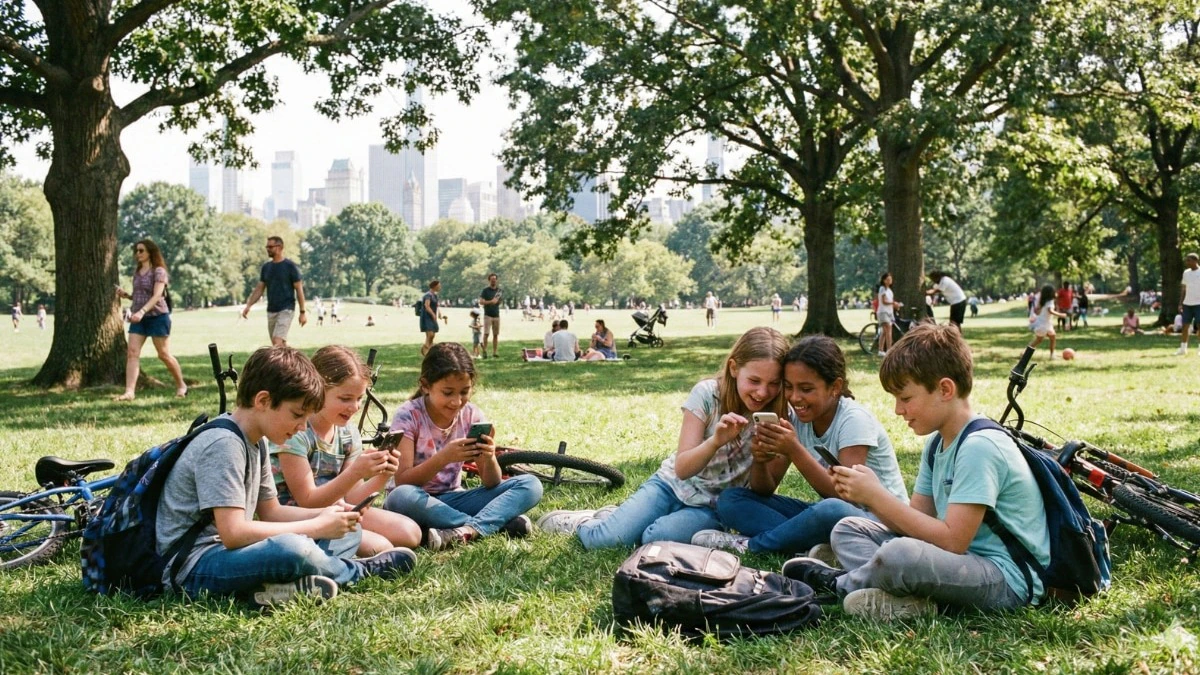
Australia made history when it became the first country to pass legislation keeping children younger than 16 off social media platforms, including Facebook, Instagram, and YouTube. The ban came into force on December 10 last year, and several other nations have since followed its lead.
Now, however, the government is moving to tighten the rules. Albanese told Parliament that his government is actively considering options to strengthen the ban, describing the issue as a priority. He acknowledged the inherent difficulty, noting that this is a challenge previous generations never had to confront, which is part of what makes it so complex.
Speaking to the Australian Broadcasting Corporation, Albanese framed the review around two central questions: whether the laws are as strong as they can possibly be, and whether the eSafety Commissioner has every power available to enforce them.
Evidence the Ban Is Falling Short
The proposed reforms appear to be a direct response to data suggesting the ban simply isn’t working. Experts point to several troubling findings that reveal how many young Australians remain active on restricted platforms.
The numbers tell a stark story:
- The eSafety regulator’s own data, released in March, showed that seven in ten underage children continued to hold accounts on Facebook, Instagram, Snapchat, and TikTok after the December deadline.
- A study published in the British Medical Journal found that 85% of a surveyed group of Australian 12- to 17-year-olds were using restricted platforms.
Lisa Given, an information sciences expert at Melbourne’s RMIT University, said the government’s proposed reform reflects this evidence of failure. She stated plainly that she believes the policy is failing, adding that many children themselves have described it in the media as a failed exercise.
A Regulator Without Enough Power
Part of the problem appears to lie in enforcement. Julie Inman Grant, Australia’s online safety watchdog, said in April that she was considering court action against Facebook, Instagram, Snapchat, TikTok, and YouTube, alleging they were not doing enough to keep young children off their platforms.
The stakes for these companies are significant. Platforms including X, Kick, Reddit, Threads, and Twitch, alongside the others, face fines of up to 49.5 million Australian dollars (about $34 million) if they fail to take reasonable steps to remove the accounts of young children.
Yet the commissioner has signaled frustration with the tools at her disposal. According to a report in the Sydney Morning Herald, Inman Grant said in early June that she did not have potent powers, arguing that a regulator is only as effective as the tools and resources it is given. Her office did not immediately respond to a request to confirm the accuracy of that reporting.
Given emphasized the difficulty of enforcing legislation that platforms are actively resisting. She suggested that either the eSafety Commissioner needs greater powers or the country must adopt a different approach to enforcement altogether. She also expected that courts would ultimately have to determine what counts as the “reasonable steps” the law requires platforms to take.
A Global Movement Taking Shape
Australia’s struggles are unfolding as the rest of the world increasingly moves in the same direction. Britain announced plans just last week to ban children under 16 from a range of platforms, aiming to protect them from harmful content and excessive screen time.
Many other countries are exploring similar measures. Canada, Brazil, and Indonesia have introduced legislation or announced age-based restrictions or requirements for children’s access to social media. Meanwhile, France, Spain, Denmark, Thailand, and South Korea are among those studying or developing comparable approaches. This wave of international action means Australia’s experience could serve as an important test case for governments everywhere.
The Path Forward
To bolster enforcement, Albanese said his government would proceed with digital duty of care legislation. This approach would hold platforms accountable for foreseeable harms caused by their content and algorithms, shifting more responsibility onto the companies themselves rather than relying solely on account removal.
The Bottom Line
Australia’s effort to strengthen its pioneering social media ban highlights both the ambition and the difficulty of regulating children’s online lives. While the country broke new ground by passing the law, the early evidence makes clear that legislation alone is not enough without robust enforcement and genuine cooperation from tech companies. As nations around the world craft their own versions of these protections, Australia’s next steps may offer valuable lessons about what works, what doesn’t, and how to close the gap between good intentions and real-world results.
This topic touches on children’s wellbeing and screen time, areas where families often have questions. Parents or caregivers seeking guidance on healthy social media use for young people may find it helpful to consult resources from pediatric or mental health professionals.
Author