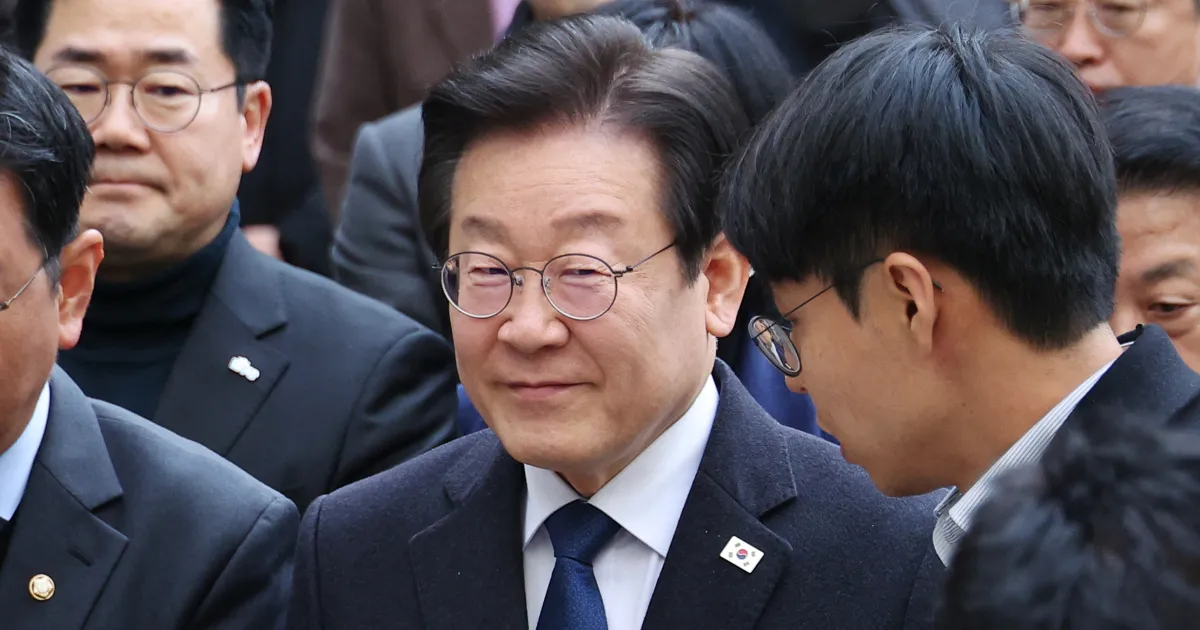
The South Korea local elections delivered a commanding victory for President Lee Jae Myung’s ruling Democratic Party, which captured the vast majority of major races across the country. Yet the celebration came with a sharp edge of disappointment, as the party failed to win back the one prize that carries the heaviest symbolic weight: the mayoralty of Seoul.
A Dominant Showing Nationwide
When the votes from Wednesday’s elections were tallied, the scale of the Democratic Party’s success was hard to miss. The party claimed 12 of the 16 major mayoral and provincial contests held across the nation, leaving the conservative People Power Party with just four.
The outcome hands Lee’s party broad command over local governments a full year into his presidency. It also reinforces the impression that the president continues to enjoy solid backing from voters in much of the country, even as the political landscape remains far from settled.
Among the most striking results was the Democratic Party’s win in Busan, South Korea’s second-largest city and a traditional conservative stronghold. Capturing that city signaled real strength beyond the party’s usual base.
The Seoul Setback
For all those gains, one defeat stood out. Conservative incumbent Oh Se-hoon held on to his post as mayor of Seoul, securing another term in the country’s largest and most politically coveted city.
Losing the capital tempered what would otherwise have been an unqualified triumph. Seoul’s mayoralty is widely seen as the most prized local office in South Korea, and the conservatives’ ability to keep it gives them a crucial foothold as they work to rebuild.
That rebuilding effort follows a turbulent period for the right. The People Power Party is still recovering from the fallout of former President Yoon Suk Yeol’s failed attempt to impose martial law in 2024 and his subsequent impeachment, a scandal that badly damaged the conservative camp.
In his victory remarks, Oh framed the result as a deliberate choice by Seoul’s voters to preserve balance. He suggested that residents had upheld the democratic principle of checks and balances, ensuring the country would not lean entirely in one direction.
Measured Reactions From Both Sides
Speaking on the one-year anniversary of his inauguration, President Lee struck a humble and conciliatory note. He said the government would respectfully accept the will of the people and pledged to work cooperatively with local governments regardless of which party controlled them.
Democratic Party leader Jung Chung-rae expressed genuine gratitude to voters for what he described as a great nationwide victory, but he did not hide his frustration over the capital. He thanked the public warmly while admitting that the failure to reclaim Seoul stung.
What Tipped Seoul
Analysts pointed to specific local frustrations to explain the result in the capital. Shin Yul, a political science professor at Myongji University, noted that the central battle had always been over symbolic strongholds such as Seoul and Busan.
He suggested that dissatisfaction with the government’s housing policy played a meaningful role in shaping Seoul voters’ decisions. Authorities have been trying to cool an overheated property market in the capital, and that effort appears to have generated some backlash among residents.
Even so, the broader picture remained favorable for Lee. His party’s strong overall performance, combined with a booming economy, points to durable national support. Record-setting exports driven by an artificial intelligence chip boom, along with an accompanying stock rally, have given the president an economic tailwind heading into the second year of his term.
A Comeback in the By-Elections
The day also featured 14 parliamentary by-elections held alongside the main local contests, and at least one produced a notable political story.
In Busan’s Buk-A district, Han Dong-hoon, an independent and former leader of the People Power Party, won his race. The victory marked a comeback for a prominent conservative figure who had deliberately distanced himself from the party’s pro-Yoon faction, hinting at possible shifts within the conservative movement.
Chaos Over Ballot Shortages
The elections were not without controversy. Reports emerged of ballot paper shortages at more than a dozen polling stations in Seoul, an issue that quickly escalated into a political flashpoint.
The shortages forced some voters to wait for hours, while others left without casting their ballots at all. Voting was extended at the affected sites in an attempt to manage the disruption, but the damage to public confidence was already done.
The incident sparked protests from frustrated voters and conservative groups. Demonstrators went so far as to block ballots from leaving one Seoul polling station, and the disruption prevented the National Election Commission from officially confirming the Seoul mayoral results as of midday Thursday.
The commission issued an apology and promised a full investigation. At the same time, it maintained that the problems did not justify delaying the election or holding a rerun.
President Lee expressed deep regret over the shortages and called for accountability. He ordered the relevant organizations to identify what caused the failures, hold those responsible to account, and move swiftly to put credible safeguards in place.
A Verdict With Mixed Signals
Taken together, the elections paint a picture of a ruling party that remains dominant nationally but cannot take its grip for granted. The sweeping wins affirm Lee’s standing across most of the country, yet the loss of Seoul, paired with the embarrassment of the ballot shortages, offers the opposition something to build on. For South Korea, the results suggest a political moment defined less by any single outcome than by the tension between a confident government and an electorate still willing to demand balance.
Author