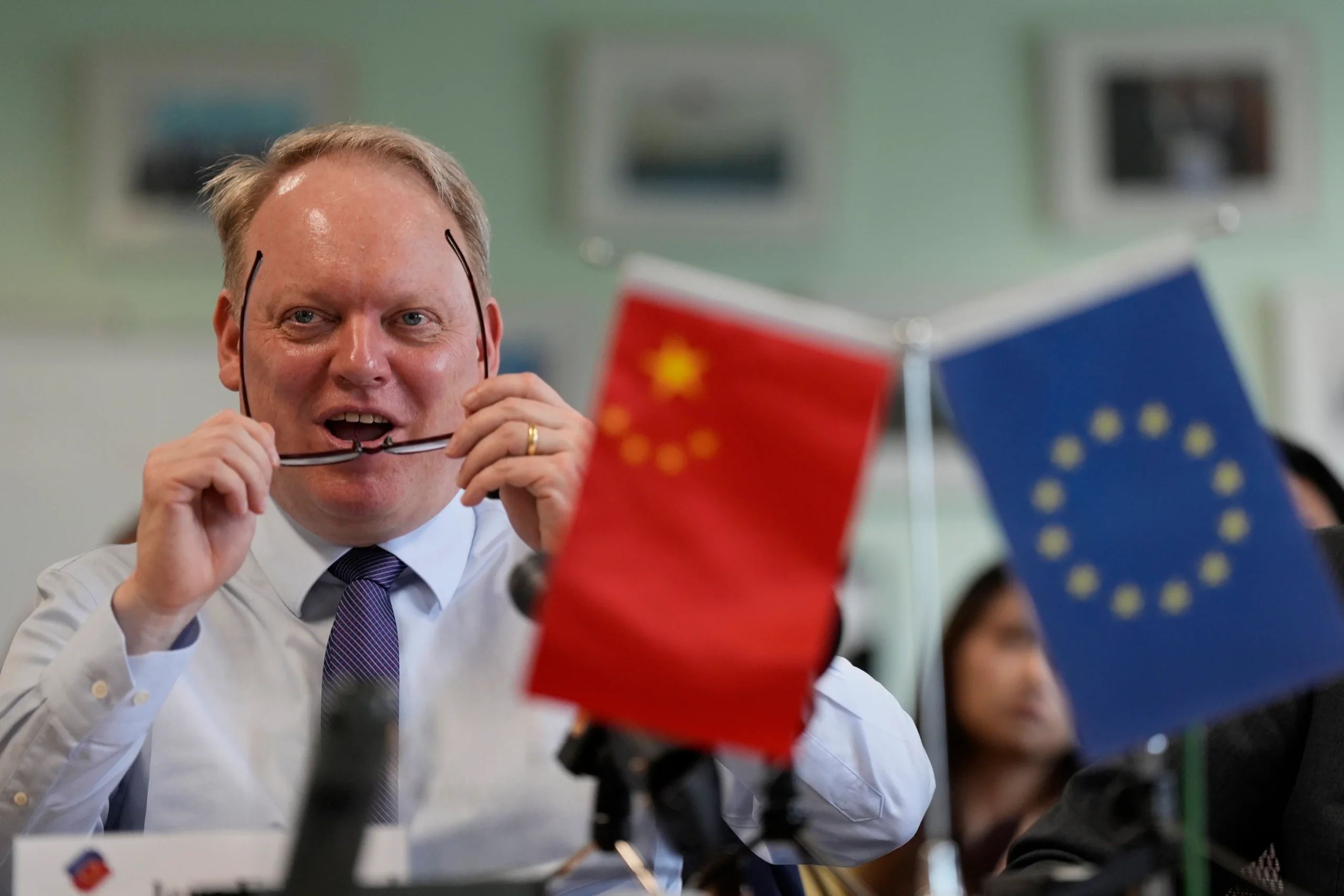
China Warns EU of Firm Retaliation as Trade Tensions Reach a Boiling Point
China EU trade tensions have taken a sharp turn as Beijing issued a stern warning to Brussels just days before high-level talks are due to take place in the Chinese capital.
In a statement released late Tuesday, China’s Commerce Ministry said it would respond firmly if the European Union moves ahead with restrictions targeting Chinese companies or goods. The ministry argued that taking such steps while negotiations are still underway would badly damage trust between the two sides and throw the talks off course.
The message is clear: Beijing is drawing a line in the sand, and it wants Europe to know that any aggressive trade moves will not go unanswered.
Why the Warning Came Now
The timing of China’s statement is no accident. The two economic giants have spent the summer locked in trade discussions, with Europe pushing hard to shrink its record trade deficit with China before October.
European frustration has been building for some time. EU Trade Commissioner Maroš Šefčovič recently made it plain that Beijing needs to produce tangible results by October or be prepared for tougher action from Brussels. He is expected to travel to Beijing next week, making China’s warning a pointed opening move ahead of his visit.
In short, both sides are raising the stakes before sitting down at the table.
The Tool That Worries Beijing
China’s statement specifically referred to Europe weighing “301-style” measures, a reference that reveals exactly what has Beijing on edge.
According to analysts tracking EU-China relations, Europe is exploring options that could effectively shut Chinese businesses out of the bloc. Citing European officials, one China specialist reported that Germany and France are putting the final touches on a joint paper urging the European Commission to accelerate work on a powerful new trade instrument.
One official reportedly described the tool as something that would let Brussels block China from the European market within a single day.
What Is Section 301?
To understand the comparison, it helps to look at the American model. Section 301 is a provision of US trade law that allows Washington to take action, including imposing tariffs, against countries it believes are engaging in unfair trade practices.
The United States famously used this power to slap sweeping tariffs on Chinese goods, sparking a prolonged trade war between the world’s two largest economies.
If Europe were to adopt a similar approach, it would mark a major shift in how the EU handles trade disputes with China, moving from negotiation toward a more confrontational stance.
The Numbers Behind the Tension
At the heart of this dispute lies a massive trade imbalance.
Here is how the relationship stacks up:
- The Association of Southeast Asian Nations overtook the EU in 2020 to become China’s largest trading partner for goods
- Even so, the EU’s trade deficit with China is now the biggest in the world, recently surpassing that of the United States, according to Chinese customs data
- When services are included, the EU says it remains China’s top trading partner overall
- Combined trade between the two reached around 880 billion euros last year, close to $1 trillion
These figures show just how deeply intertwined the two economies are. They also explain why Europe is so concerned. A deficit of this size means Europe is buying far more from China than it sells there, which many European leaders see as a threat to their industries and jobs.
Europe’s Growing Frustration
For years, European businesses and policymakers have complained about uneven access to the Chinese market. Many argue that while Chinese companies enjoy relatively open access to Europe, European firms face more obstacles when trying to operate in China.
The push by Germany and France is particularly significant. As the EU’s two largest economies, their backing gives real weight to the idea of tougher measures. Germany, in particular, has traditionally been cautious about confronting China because of its strong industrial and export ties to the country. A shift in Berlin’s position signals how serious the concerns have become.
What China Stands to Lose
For Beijing, the European market is enormously important. With close to a trillion dollars in annual trade, any tool that could restrict Chinese access to the bloc would pose a serious risk to Chinese exporters and the wider economy.
That helps explain the strength of China’s response. By warning of firm countermeasures, Beijing is trying to discourage Europe from following through, while also signaling that it will not accept pressure without pushing back.
The Risk of Escalation
The biggest danger now is a tit-for-tat cycle. If Europe introduces restrictions and China retaliates, the result could be a damaging trade conflict that hurts businesses and consumers on both sides.
Several outcomes are possible:
- Both sides reach a compromise that addresses Europe’s concerns about the trade gap
- Talks stall, leading Europe to adopt tougher measures and China to respond in kind
- A tense standoff continues, with neither side willing to back down
Much will depend on what happens during Šefčovič’s visit to Beijing and whether China offers concessions that satisfy European demands before the October deadline.
What Comes Next
The coming days will be critical. Europe wants concrete progress on reducing its trade deficit, while China is determined to prevent measures that could lock its businesses out of one of the world’s largest markets.
With both sides raising the pressure, next week’s talks could determine whether the relationship moves toward a negotiated solution or slides into a broader trade confrontation. For businesses and markets watching closely, the stakes could hardly be higher.
Author