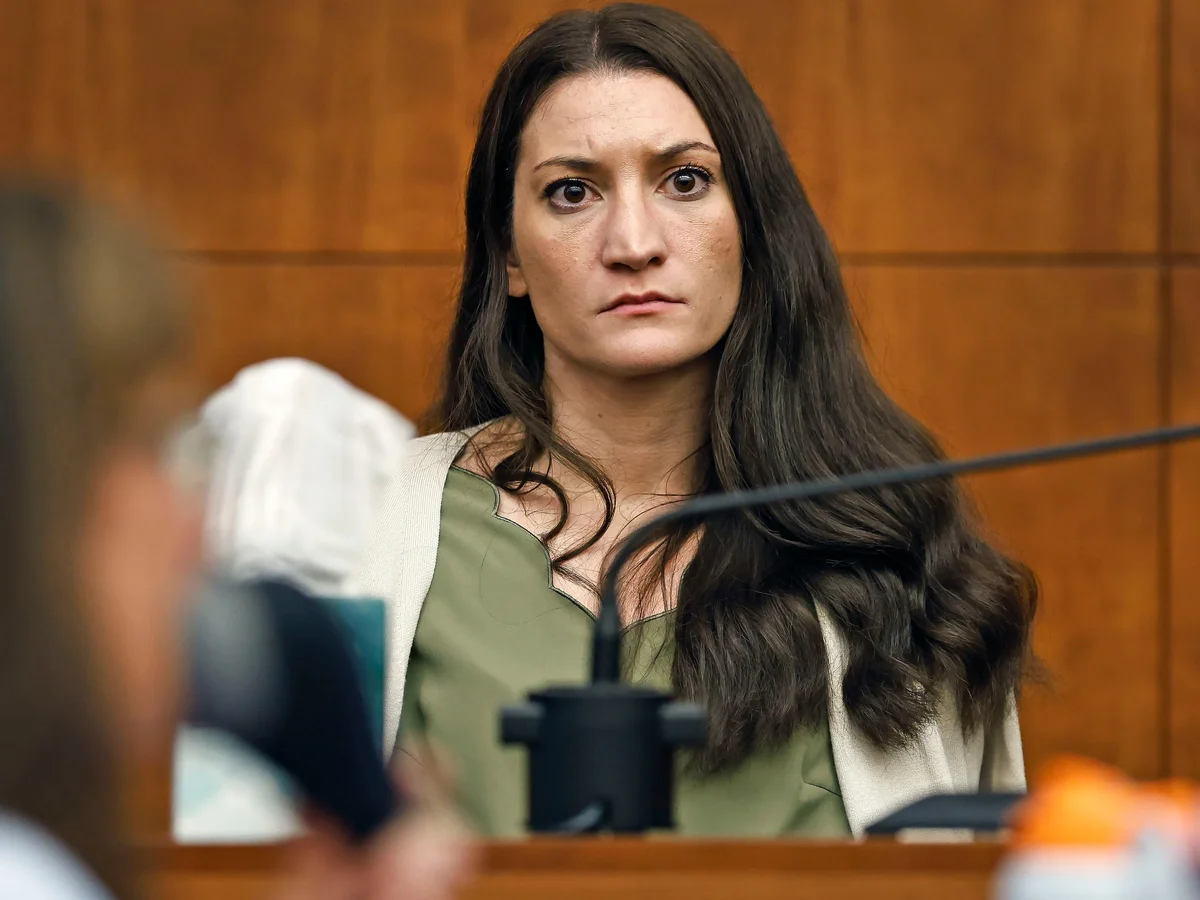
The Lindsay Clancy trial turned Friday to a narrow but pivotal window of time: the roughly five days the Massachusetts mother spent as a psychiatric inpatient just weeks before her three children died.
Both sides need that hospital stay to mean something, and they need it to mean opposite things. For prosecutors, it is evidence that no one saw a woman poised to kill. For the defense, it is evidence that a seriously ill patient passed through a system that never assembled the full picture.
The Charges and What Is Not in Dispute
Clancy, 35, a former labor and delivery nurse, has pleaded not guilty to murder in the January 2023 deaths of her children, Callan, Dawson and Cora. They ranged in age from eight months to five years old.
The children were found in the basement of the family home in Duxbury, a coastal town south of Boston. Their mother was in the yard, gravely injured after going out a second-story window. She remains paralyzed from the waist down.
The defense does not contest that she killed them. What it disputes is whether she can be held criminally responsible, arguing she was experiencing psychosis severe enough that she heard voices instructing her to kill the children and herself.
Prosecutors reject that framing entirely. They describe a deliberate act, pointing to their contention that Clancy arranged for her husband to leave the house on errands before the killings.
Inside the Hospital Stay
Clancy checked herself into McLean Hospital in the early hours of New Year’s Day 2023.
Dr. Alia Goodheart, one of the psychiatrists who treated her, testified Friday about joining her care team on Jan. 3. She described a patient raising specific concerns about an antipsychotic she had been prescribed to address insomnia, including a sense of emotional numbness, which Goodheart noted can occur as a side effect of that class of drug.
Goodheart’s assessment was insomnia accompanied by a mental health condition. She reduced the medication gradually rather than continuing it.
According to her testimony, the response was positive. Clancy reported sleeping again. She expressed a desire to get home in time for a delayed birthday celebration for Cora that had been planned for some time. She arranged her own follow-up outpatient appointments.
She was discharged on Jan. 5 with two prescriptions, one for anxiety and one to aid sleep.
What the Prosecution Emphasized
The prosecutor’s questioning drove toward a single point: what Clancy told her clinicians.
Goodheart testified that Clancy never indicated any thoughts of harming another person. On the question of self-harm, the picture was more layered. Clancy acknowledged having experienced suicidal thoughts, but said she was not having them at that moment.
More significantly, she offered reasons she would not act on them. Goodheart recalled her citing her children, her family and her mother as what kept her here.
For prosecutors, that testimony serves a clear function. It establishes that an experienced psychiatrist, evaluating her days before the killings, found no expressed intent to harm anyone.
What the Defense Pressed On
Defense attorney Kevin Reddington approached the same testimony from the opposite direction, focusing less on what Clancy said and more on what the hospital did not do.
His questioning highlighted several gaps:
- Certain diagnostic tests were not performed, though Goodheart testified they were not clinically necessary
- The care team did not learn that Clancy had contacted a suicide hotline the previous fall
- Providers did not consult the various outpatient clinicians who had treated her in preceding months
The team did speak with her husband.
At one point Reddington put the question plainly, asking whether Clancy had been very sick. Goodheart replied that she did not understand what he meant by that.
The exchange captured the underlying tension. The defense wants jurors to see a fragmented system in which no single provider held enough information to recognize what was happening. The witness declined to characterize the patient in the sweeping terms the question invited.
The Diagnosis Question
Central to the defense case in both this trial and a related medical malpractice suit is the claim that Clancy had bipolar disorder and postpartum psychosis, and that neither was fully identified until after the children died.
Postpartum psychosis is a genuine break from reality affecting a small percentage of women after childbirth. It is distinct from postpartum depression in both severity and presentation, and it is widely regarded as a psychiatric emergency.
The record is not entirely blank on this. One outpatient provider had raised bipolar disorder as a possibility during 2022.
Goodheart testified that Clancy described that opinion during her hospital stay and disagreed with it, a detail that complicates the narrative in both directions. It shows the diagnosis had been floated. It also shows the patient herself pushed back against it.
What the Verdict Would Mean
The two possible outcomes lead to very different places.
A murder conviction carries a sentence of life in prison without the possibility of parole. A finding of not guilty by reason of lack of criminal responsibility would result in commitment to a state mental health facility rather than release.
The jury’s task is not to decide what happened, since that is largely agreed upon. It is to determine whether a woman who spent months moving between providers, cycling through medications, and briefly hospitalized weeks earlier, was capable of criminal responsibility on the day her children died.
Note: This article discusses suicide and severe mental illness. If any of this touches your own situation, support is available and I can help you find appropriate resources.
Author
-
Lucienne Albrecht is Luxe Chronicle’s wealth and lifestyle editor, celebrated for her elegant perspective on finance, legacy, and global luxury culture. With a flair for blending sophistication with insight, she brings a distinctly feminine voice to the world of high society and wealth.