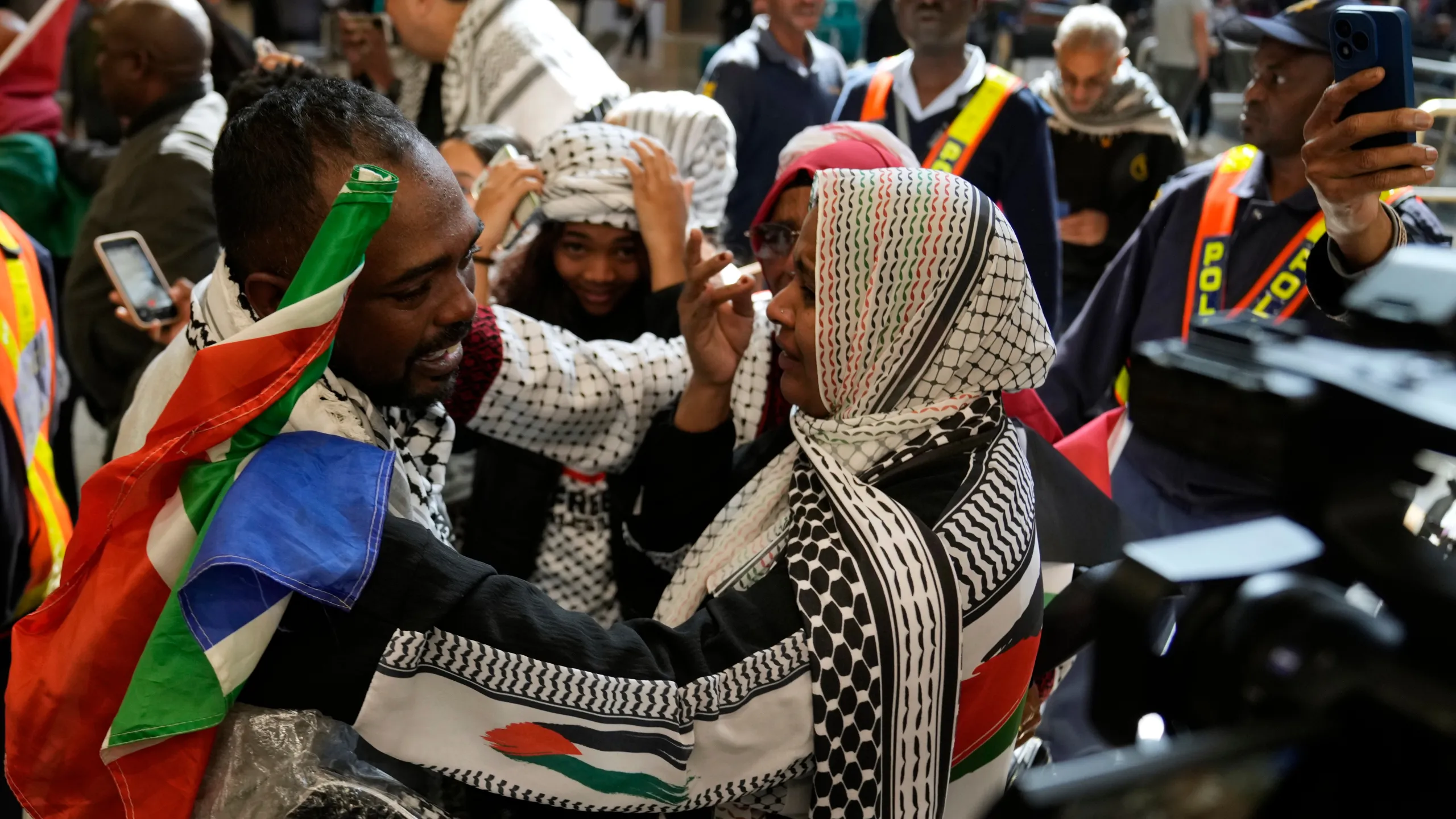
Gaza flotilla activists detained by Israeli forces have come forward with deeply troubling allegations of abuse during their time in custody. South African members of the Global Sumud Flotilla returned home on Saturday with disturbing accounts of beatings, electric shocks, and inhumane treatment they say they endured while held in Israel’s K’tziot prison. Their stories have reignited international scrutiny over Israel’s handling of detainees connected to humanitarian missions targeting Gaza.
The Flotilla Mission and Its Sudden End
The Global Sumud Flotilla, made up of around 50 vessels, set sail with the stated mission of breaking Israel’s longstanding blockade on Gaza and delivering urgently needed humanitarian aid to Palestinians. Activists from across the globe — including South Africa, Ireland, and Chile — joined the convoy in what they described as a peaceful act of solidarity.
However, the mission was abruptly halted on Monday when Israeli forces intercepted the flotilla in international waters, roughly 250 miles (400 kilometers) off the Israeli coast. The activists were taken into custody and transferred to detention facilities inside Israel, where they say their ordeal took a dark turn.
Allegations of Abuse Inside K’tziot Prison
According to multiple returning activists, conditions inside the K’tziot prison were severe. Some claimed they were subjected to electric shocks during interrogation sessions, particularly when questioned about their involvement in the flotilla.
Israeli authorities have firmly denied these accusations, dismissing them as “false and entirely without factual basis.” As of Saturday, there was no formal response from Israel regarding the latest claims made by the South African and Irish contingents.
Harsh Treatment Reportedly Linked to Nationality
Several South African activists said that the treatment they received intensified once Israeli soldiers learned of their nationality. South Africa has been a vocal critic of Israel’s actions in Gaza and notably brought a genocide case against Israel before the International Court of Justice.
Faizel Moosa, a former anti-apartheid activist who fought against South Africa’s white minority rule, described the experience as the worst he has ever endured.
He stated that detainees were:
- Denied access to water for extended periods
- Given food unfit for human consumption
- Restricted from using toilets for many hours
- Shot at with rubber bullets when they protested
For Moosa, who survived apartheid-era imprisonment, the experience felt even more brutal than what he faced under that oppressive regime. He noted that this is the daily reality many Palestinians face, only on a much larger scale.
Irish Activists Recount Dehumanizing Conditions
Among the returning detainees were 15 Irish activists, including Dr. Margaret Connolly, sister of Irish President Catherine Connolly. She described the experience as the most frightening of her life.
According to Connolly:
- Some detainees were physically struck with guns
- Many were stripped of their clothes
- Blankets were withheld, forcing prisoners to huddle together for warmth
- Water and basic hygiene products were severely limited
- Her medical kit was confiscated, preventing her from helping injured detainees
She also claimed that improvised bandages and slings, made from bread bags and shirt sleeves, were later taken away by guards. According to her, the cruelty appeared deliberate.
Connolly recalled that some Israeli soldiers spoke with American accents and reportedly shouted at detainees, blaming them for putting themselves in that situation by joining the flotilla.
Upon their return to Dublin, the Irish activists were welcomed by cheering crowds and family members, but their accounts have sparked outrage across Ireland and beyond.
Chilean Activists Criticize Their Own Government
Three Chilean activists — Víctor Chanfreau, Claudio Caiozzi, and Carolina Eltit — also arrived home Saturday. They were greeted at Santiago’s airport by supporters waving Palestinian flags and offering applause in solidarity.
However, their relief was mixed with frustration. The trio openly criticized the Chilean government, accusing officials of failing to act swiftly to secure their release. Chanfreau called the Chilean Foreign Ministry’s diplomatic efforts “negligent,” suggesting that the government’s response had been disappointingly weak.
Eltit shared her own harrowing details:
- She was beaten while in detention
- One bathroom served around 190 detainees
- She and others were left lying in the sun
- Many were bound by their hands and feet for long periods
Their statements echoed similar accounts from activists of other nationalities.
Calls for Stronger International Action
The returning activists are now urging their respective governments and the international community to take stronger action against Israel.
Connolly criticized the Irish government for rejecting sanctions against Israel, suggesting that diplomatic statements alone are not enough. Meanwhile, South African activist Qutb Hendricks urged Pretoria to ramp up pressure on Israel by banning the export of coal and other key supplies to the country.
These calls reflect a growing wave of public frustration in many parts of the world, particularly in countries with strong pro-Palestinian movements.
A Symbol of Resistance and Controversy
The Global Sumud Flotilla was always going to be a flashpoint mission. Its interception, followed by the activists’ allegations of torture, has now become a significant chapter in the broader narrative surrounding Israel’s blockade of Gaza and the humanitarian crisis unfolding there.
While Israel maintains that the flotilla violated its security policies and disputes claims of mistreatment, the activists’ testimonies have added new fuel to ongoing international debates about human rights, accountability, and the ethical responsibilities of governments worldwide.
Final Thoughts
The accounts shared by Gaza flotilla activists detained in Israeli custody paint a troubling picture that demands serious investigation. Whether their claims are independently verified or contested, the international response in the coming weeks may shape future humanitarian missions and influence diplomatic relations between Israel and the countries whose citizens were part of the flotilla.
For now, the returning activists stand as both survivors and symbols — voices calling for greater transparency, justice, and global attention toward the suffering in Gaza.
Author