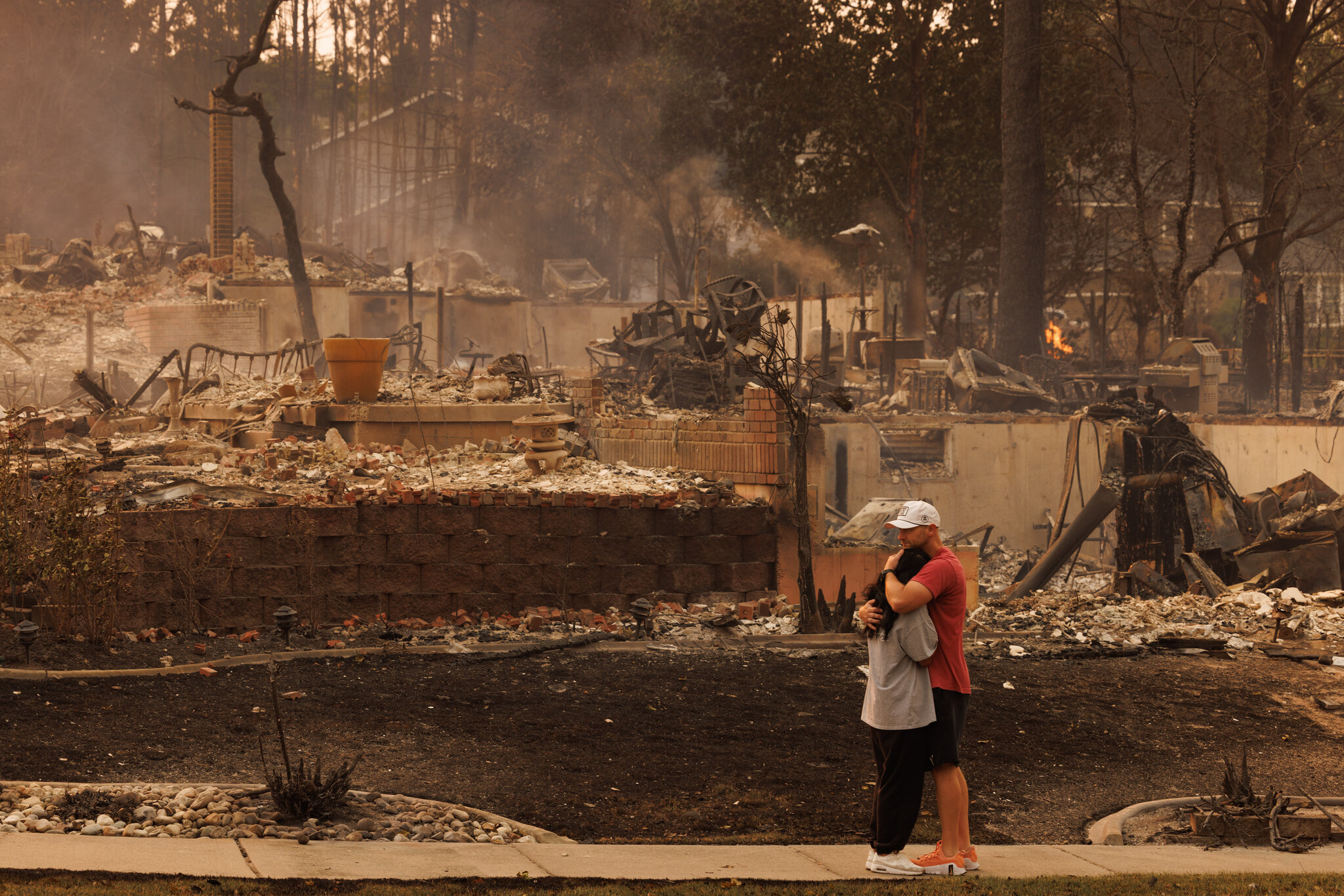
The Spokane wildfires have delivered one of the most disruptive weekends eastern Washington has seen in years, with roughly 60,000 residents ordered out of their homes and at least 600 structures reduced to ash. Officials confirmed the scale of the damage on Sunday, as crews across the region worked to contain flames that had already reshaped entire neighbourhoods.
The Scale of What Burned
By the time the weekend ended, the fires burning in and around Spokane had consumed close to 8.2 square miles, an area equivalent to about 21 square kilometres. That figure covers ground inside and surrounding the state’s second largest city, which makes the destruction unusually concentrated compared with wildfires that tear through remote backcountry.
The 600 structures lost were not limited to a single category. Authorities described a mix of homes, businesses, and other buildings, meaning the damage cuts across both residential life and local commerce. For many families, the loss is total. For business owners, it may mean the end of an income stream with no clear timeline for recovery.
Sixty thousand evacuations is a staggering logistical undertaking on its own. Moving that many people out of harm’s way requires coordinated traffic management, emergency shelters, and communication systems that reach residents quickly enough for the warning to matter.
Why Spokane Is Particularly Vulnerable
Spokane sits in a part of Washington that looks very little like the rain-soaked western half of the state most outsiders picture. Eastern Washington is drier, with grassland and timber that cure into fuel as summer progresses.
Cities in this position face a specific hazard sometimes described as the wildland-urban interface, where developed areas press directly against undeveloped terrain. In that setting, a fire does not need to travel far before it encounters something built. Embers carried on wind can leap ahead of a fire line and ignite roofs, decks, and fences well before flames arrive.
That dynamic helps explain how a burn area of roughly eight square miles could destroy hundreds of structures. In sparsely populated terrain, the same acreage might claim almost nothing.
A Region Stretched Thin
The Spokane fires were not an isolated emergency. Authorities noted they were among dozens of wildfires burning across the Western United States, and that simultaneity is precisely what makes the situation dangerous.
Wildfire response in the US depends heavily on shared resources. Crews, engines, aircraft, and incident management teams move between states as conditions demand. When fires ignite in many places at once, that system comes under strain and difficult prioritisation decisions follow.
The strain described by officials affected federal, state, and local agencies alike. In practice, this can mean:
- Fewer aircraft available for water and retardant drops at any given fire
- Longer waits for reinforcement crews arriving from other regions
- Local departments handling more of the initial attack alone
- Slower deployment of specialised equipment where multiple incidents compete
None of this reflects a failure of planning. It reflects the arithmetic of a fire season where demand exceeds supply.
What Evacuation Actually Looks Like
For residents, an evacuation order arrives as a rupture in ordinary life. People leave with whatever they can gather in minutes: documents, medication, pets, a handful of irreplaceable items.
The scale here compounds the difficulty. Sixty thousand people cannot all move at once without congestion, and roads that serve as escape routes can become bottlenecks precisely when speed matters most. Emergency managers typically stage evacuations in zones to reduce that risk, though conditions can change faster than plans allow.
There is also an aftermath problem that receives less attention. Even once flames recede, returning home is rarely immediate. Downed power lines, damaged gas infrastructure, unstable structures, and air quality concerns can keep areas closed long after the fire itself has stopped advancing.
The Human Toll Beyond the Numbers
Structure counts are useful for reporting but flatten what they describe. Six hundred buildings represents hundreds of separate stories: the family photographs that cannot be replaced, the small shop built over a decade, the rental unit that housed someone with nowhere obvious to go next.
Communities that experience destruction on this scale face months and often years of rebuilding. Insurance claims move slowly. Construction capacity in a disaster zone becomes scarce. Some residents relocate permanently rather than wait.
The psychological weight lingers too. People who have evacuated once tend to experience heightened alertness during subsequent fire seasons, watching smoke on the horizon with an unease that does not fade quickly.
What Comes Next
Attention now turns to containment and assessment. Fire officials will be working to establish perimeters, protect remaining structures, and determine when displaced residents can safely return.
Damage assessments typically follow, and initial structure counts often rise as teams reach areas that were inaccessible during active burning. That means the 600 figure should be treated as a starting point rather than a final tally.
Longer term, questions about cause, response timing, and prevention will follow, as they usually do after an event of this magnitude. Those reviews matter, but they belong to a later stage.
The Broader Picture
What happened around Spokane over the weekend fits a pattern the Western US has grown grimly familiar with: fires that move fast, arrive near populated areas, and overwhelm response capacity because they are far from the only emergency underway.
For now, the immediate priority is straightforward. Keep people away from danger, keep crews supplied, and stop the fire from claiming more than it already has. Everything else can wait.
Author
-
Lucienne Albrecht is Luxe Chronicle’s wealth and lifestyle editor, celebrated for her elegant perspective on finance, legacy, and global luxury culture. With a flair for blending sophistication with insight, she brings a distinctly feminine voice to the world of high society and wealth.