Donald Trump keeps running into the same lesson: a president’s will, no matter how loud the rhetoric or how vast the platform, isn’t enough to single-handedly remake how America runs its elections. On Monday, the Supreme Court delivered yet another stinging rebuke in his years-long campaign, ruling that states may accept mail-in ballots arriving after Election Day as long as they were postmarked by that date.
A Defeat Delivered by His Own Appointee
The decisive blow came from Justice Amy Coney Barrett, one of Trump’s own nominees. Her reasoning was strikingly simple: the electorate makes its choice when voting is complete, not when ballots are physically received.
For a president who has poured enormous energy into restricting mail-in voting, the ruling stung all the more for coming from a justice he placed on the bench. It capped a year in which Trump has tried to force his preferred vision of American elections into reality, pushing strict voter ID rules that critics warn could disenfranchise thousands, seeking to curb mail-in ballots that several states now rely on, and threatening to punish states that refuse to fall in line.
Courts Keep Saying No
At nearly every turn, the courts, and ultimately the Supreme Court, have blocked that vision. Trump acknowledged the tremendous loss on Truth Social Monday, in what appeared to be an attempt to breathe new life into his struggling effort to persuade Congress to rewrite election law in his favor.
The decision offers another signal that the conservative court, while often sympathetic to the administration’s positions across a wide range of issues, has little appetite for Trump’s particular project of reshaping how Americans vote.
A Deeply Personal Fight
For Trump, the matter is personal. He has long spread false claims of election fraud to explain his 2020 loss to Joe Biden, an election that saw mail-in voting surge during the pandemic. He has also nursed lasting bitterness that the Supreme Court, including his three appointees, brushed aside lawsuits challenging Biden’s victory.
Trump has repeatedly pointed to the slow pace of ballot counting in some states, which can stretch days past Election Day, as supposed evidence of manipulation. That claim persists despite the fact that states’ counting procedures are known in advance and despite repeated assurances from election officials, including some of his own Republican allies, that nothing improper was occurring.
In the years since his defeat, Trump rallied his allies behind an overhaul of the election system, and he moved quickly to pursue it upon returning to power last year, casting it as one of his top priorities.
A String of Blocked Orders
That push has run into a wall of judicial resistance. Federal judges, some of them Trump appointees, have repeatedly halted his election-related executive orders. They have stopped his Justice Department from forcing states to hand over their voter rolls, a move critics say could lay the groundwork for purging legitimate voters.
Lower courts have also blocked an attempt to make the Postal Service refuse to deliver ballots in states that wouldn’t share their voter data with the DOJ. They have stopped efforts to compel states to change voter registration requirements and halted plans to strip election funding from states that defied the president’s demands.
Escalating Rhetoric
With each defeat, Trump’s language has grown more extreme. On Monday, he claimed the voting changes were needed to counter what he described as a powerful Communist movement in the country, calling it more dangerous than World War I, World War II, Pearl Harbor, or September 11th. He also singled out five Republican senators by name, accusing them of standing in his way.
Inside the Ruling
The 5-4 decision wrestled directly with Trump’s argument that allowing post-Election Day ballots could feed perceptions of fraud, especially if late-arriving votes flipped the outcome in a key state or race.
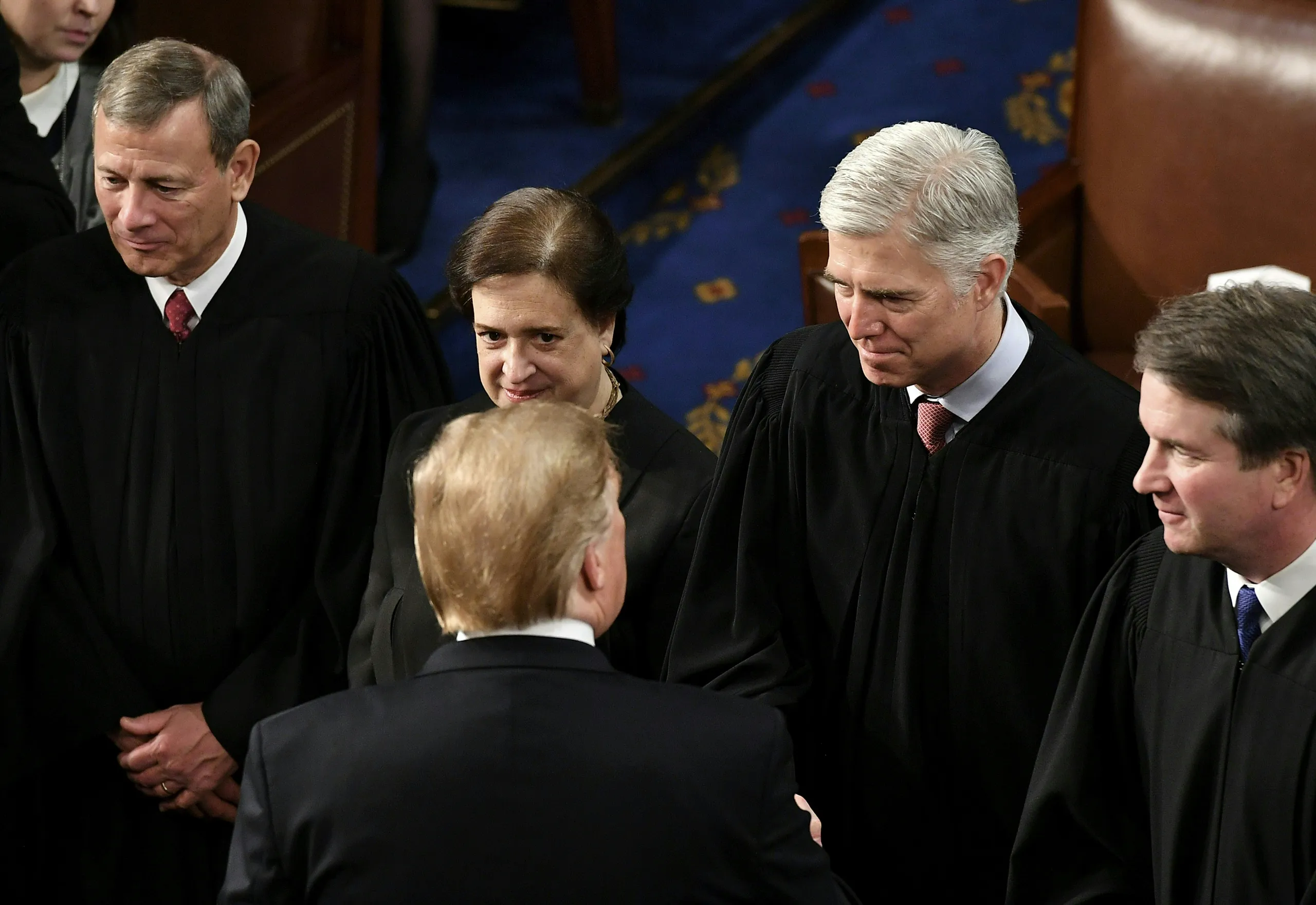
Barrett, joined by the court’s three liberals and Chief Justice John Roberts, acknowledged that election fraud and the perception of it are serious issues. But she made clear that the remedy lies with Congress, not the courts. Such concerns, she wrote, must be worked out through the democratic process, and if differing ballot deadlines call for a national solution, the American people must choose it through their elected representatives.
The Dissent’s Warning
Justice Samuel Alito, writing for the dissent, argued that the slow counting of ballots after Election Day, which can include ballots arriving on or before that day, has eroded trust in election results.
Alito pointed to a study as support, though that same research carried a notable caveat: election officials can ease distrust by explaining ahead of time why counting delays happen. The study also found that the trust gap had been worsened by elite-driven misinformation, including years of rhetoric from Trump himself questioning the validity of votes tallied after Election Day.
Even so, Alito, joined by Justices Clarence Thomas, Neil Gorsuch, and Brett Kavanaugh, predicted the ruling would deepen existing skepticism. By letting states keep receiving ballots during these drawn-out counts, he warned, the decision would only intensify voters’ distrust.
Another Wall, Another Setback
The ruling stands as the latest in a long line of judicial roadblocks to Trump’s election ambitions, reinforcing a pattern that has defined his crusade from the start. Time and again, the courts have made clear that reshaping the nation’s voting system cannot be accomplished by presidential will alone. For Trump, who views the issue as both a political mission and a personal grievance, Monday’s loss is one more reminder that the path he wants runs through Congress and the Constitution, not the force of his own megaphone.
Author