




Xi Jinping’s Sweeping Military Purge Leaves China’s Top Command With Just Two Men
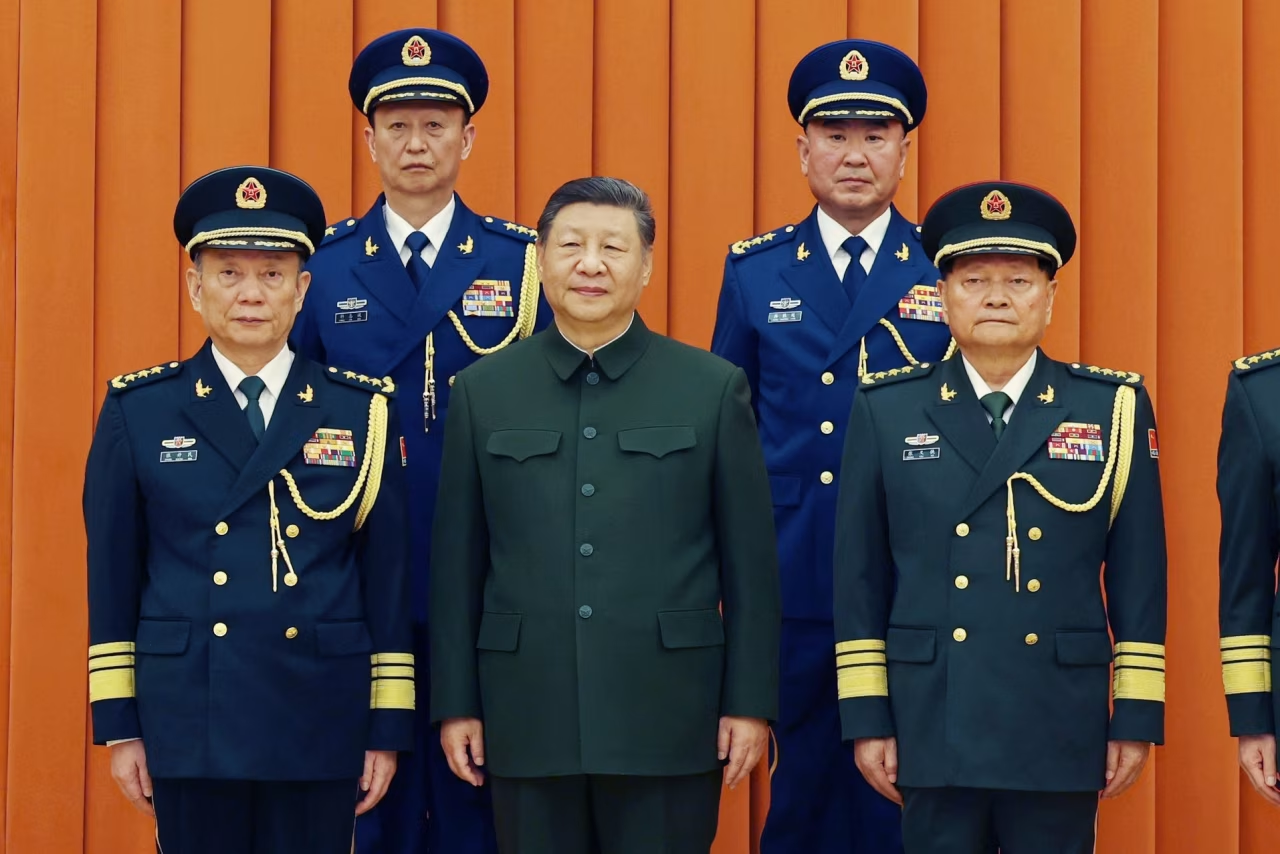
The Xi Jinping military purge has reached a scale that would have seemed unthinkable only a few years ago. At the close of a four-day gathering of the Communist Party’s Central Committee in Beijing, the leadership confirmed the expulsion of 33 senior officials, among them 16 generals and a cluster of executives from China’s defence industry. The fallout has hollowed out the Central Military Commission, the body that commands the People’s Liberation Army, to the point where only two members remain: Xi himself and General Zhang Shengmin.
What the Plenum Decided
The announcements came in the official communique released on Thursday, October 29, at the end of the fifth plenum of the 20th Central Committee. Plenums are closed-door sessions where the party’s roughly 200 full members and their alternates set direction for the country, and they typically revolve around economic strategy, five-year plans, or structural reforms.
This one broke the mould. Discipline, political loyalty, and anti-corruption dominated the agenda. The communique spoke of deepening the party’s capacity to govern itself and of confronting deep-rooted misconduct by, in its own phrase, turning the knife inward.
That language signals that the campaign is not winding down. If anything, it is being formalised as a permanent feature of how Xi intends to rule.
The Numbers Behind the Purge
The latest wave brings the total number of Central Committee members removed during Xi’s third term to 51. For a body of 205 full members, that represents roughly a quarter of its membership expelled in the space of a few years, an extraordinary rate of attrition at the very top of the system.
The military has absorbed the heaviest blows. Sixteen generals losing their positions in a single announcement is remarkable on its own. Combined with earlier removals, the cumulative effect has stripped the PLA of much of its senior leadership and left the Central Military Commission, which normally has several vice chairmen and members, reduced to its chairman and a single general.
Zhang Shengmin, the officer who remains alongside Xi, has been closely associated with the military’s internal discipline apparatus, which suggests the purge is being managed by those most trusted to carry it out.
Empty Seats in the Great Hall
The scale of the clear-out was visible in the room itself. According to the Hong Kong-based South China Morning Post, only 162 of the 205 full members of the Central Committee turned up for the plenum, a participation rate of about 79 percent. Total attendance, including alternates and other participants, fell below 300 for the first time.
Those gaps are not a matter of scheduling. They reflect officials who have been detained, placed under investigation, or already expelled, and whose seats now sit empty until the party chooses replacements.
Why the Military Is the Target
Several factors help explain why the PLA has borne the brunt of Xi’s campaign:
Corruption in procurement: Years of lavish defence spending created opportunities for graft in weapons purchasing, construction, and personnel promotions. Investigations have repeatedly surfaced evidence of kickbacks and falsified capabilities.
Loyalty to Xi personally: The Chinese leader has made clear that the armed forces must answer to the party, and to him as its core, rather than to institutional networks or regional factions.
Combat readiness: Xi has set ambitious modernisation goals for the PLA. Officers suspected of inflating readiness reports or diverting funds undermine those objectives.
The inclusion of defence industry executives in the latest round points to a widening of the net beyond uniformed officers to the state-owned firms that supply them.
A Departure From Precedent
Past plenums under Xi and his predecessors largely avoided such dramatic personnel announcements, treating them as matters for the party’s disciplinary organs rather than for headline communiques. Elevating the expulsions to the plenum itself serves a purpose: it tells the entire party apparatus that no rank offers protection.
It also marks a shift in priorities. With the economy facing persistent headwinds, observers might have expected the leadership to focus on growth and reform. Instead, the message from Beijing is that internal control comes first.
Questions for the PLA’s Future
A top command reduced to two members raises practical concerns. Who will fill the vacant positions, and how quickly? Will the new appointees be chosen primarily for competence or for demonstrated loyalty? Can a military undergoing constant leadership turnover maintain the operational coherence that Xi’s modernisation agenda demands?
There is also the question of morale. Officers at every level now operate under the knowledge that their superiors can vanish overnight. Some analysts argue this breeds caution and paralysis; others contend it enforces discipline in an institution that had grown complacent.
Consolidation or Instability?
Supporters of Xi’s approach frame the purge as a necessary cleansing of a military that had become riddled with corruption and factional interests. Critics see a leader concentrating power to an extent that leaves no room for dissent or independent judgment, even within the armed forces.
What is beyond dispute is the outcome. Xi Jinping now stands at the head of a military command structure that consists, for the moment, almost entirely of himself. Whether that represents the strongest position any Chinese leader has held since Mao, or a sign of deep insecurity at the top, will depend on what he does with the empty chairs.
Author