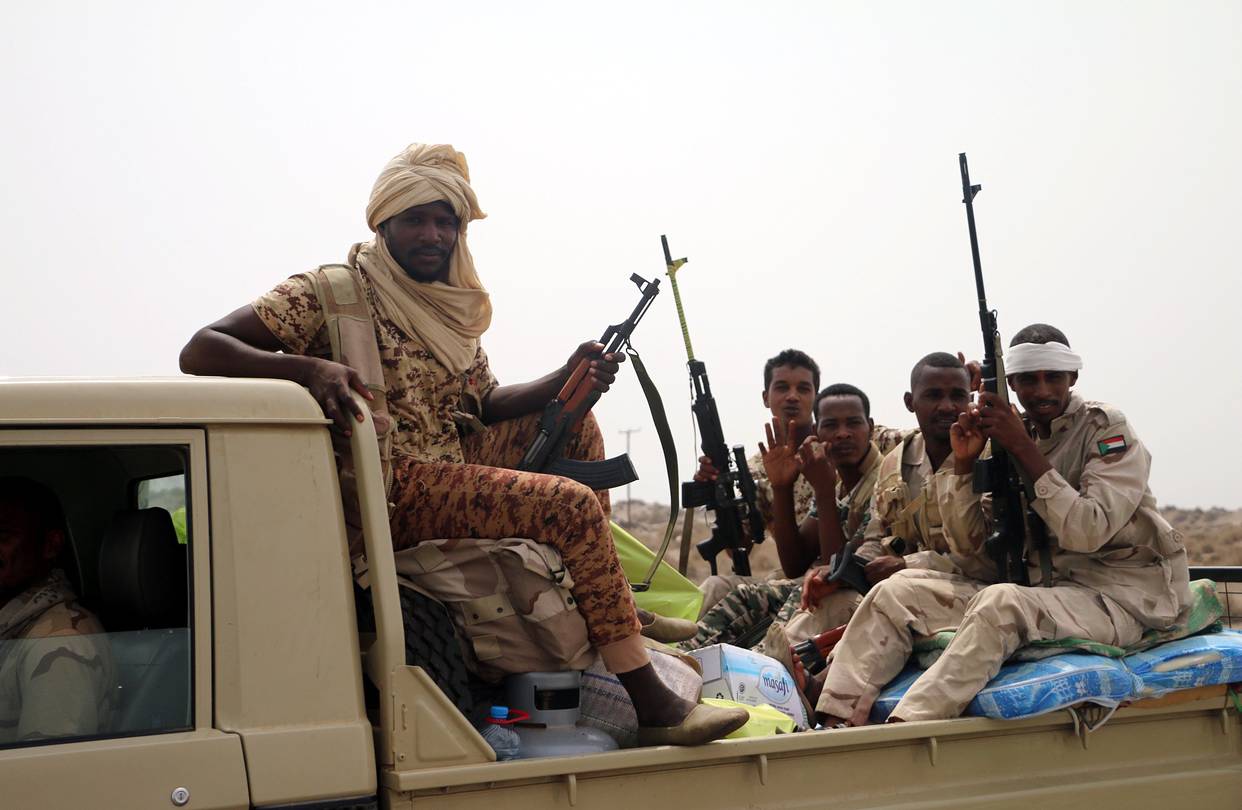
Houthi attacks killed at least 58 Yemeni government troops on Thursday and wounded 11 civilians inside Saudi Arabia, marking one of the deadliest single days in Yemen’s civil war in four years.
A military source, speaking anonymously, provided the casualty figure. Medical sources had earlier reported 38 dead. A military official described the strikes on troop camps as the worst Yemen has seen since 2022.
What Happened
Houthi military spokesman Yahya Saree said the group struck government positions with ballistic missiles and drones, framing the assault as a response to an alleged military buildup backed by Saudi Arabia.
Yemen’s defense ministry said its armed forces would respond at what it called the appropriate place and time.
The Cross-Border Casualties
The escalation did not stay inside Yemen.
Saudi officials said Houthi attacks wounded 11 civilians in the southern Najran region. Major General Turki al-Maliki, spokesman for the Saudi-led coalition supporting Yemen’s internationally recognized government, said early Friday that the injured included seven Saudis, one Yemeni, two Egyptians and one Pakistani national.
Among the wounded was a four-year-old child who suffered second-degree burns.
Maliki accused the Houthis of indiscriminate shelling of civilian areas in violation of international humanitarian law, and said the coalition would continue taking all necessary measures to protect civilians.
The Houthis had already claimed responsibility Tuesday for an attack on Najran airport, part of a broader pattern of strikes against Saudi military, infrastructure and shipping targets.
A Warning About What Comes Next
The most consequential element of the story is not what happened Thursday but what Saudi officials say may be coming.
A senior Saudi official, speaking anonymously, said intelligence gathered by Saudi, American and other regional services indicates the Houthis and Iraqi militias operating under supervision of Iran’s Islamic Revolutionary Guard Corps could soon launch coordinated attacks on Saudi civilian targets, including energy infrastructure, ports and airports.
The official described those reported threats as alarming, particularly as Riyadh has been pushing for de-escalation and a negotiated settlement with Iran. Mediation efforts, the official said, appear to be moving in the right direction.
That framing carries an implication worth noting. The official suggested the planned attacks could be intended specifically to disrupt the diplomacy, meaning the escalation may be aimed at the talks rather than at military objectives.
The official added that Saudi-US cooperation remains very high at all levels, including operationally with US Central Command, and that the kingdom is prepared to respond to any aggression.
How Yemen Became Part of a Larger War
Yemen’s conflict is more than a decade old, but it has been progressively absorbed into the wider confrontation between the United States and Iran.
Iran has struck Saudi Arabia in recent months because the kingdom hosts American military facilities. Houthi actions have compounded that pressure, including a Red Sea blockade that has disrupted Saudi oil exports.
The result is that a regional civil war and a broader interstate conflict now feed each other. Actions taken in one arena produce consequences in the other.
On July 29, Saudi Arabia said it conducted strikes alongside US Central Command against Iran-backed groups in Iraq, blaming them for drone attacks on Saudi oil facilities. Iraqi militias said they would retaliate.
A New Defense Alignment
Against this backdrop, Riyadh is moving to deepen security relationships.
Turkey, Saudi Arabia and Pakistan were scheduled to sign a defense agreement in the kingdom on Friday, according to two regional sources with direct knowledge who spoke to Reuters. Details were not immediately available.
A source close to the Saudi military and government told AFP that the arrangement had been under discussion for a considerable time, but that recent regional developments accelerated it.
Pakistani Prime Minister Shehbaz Sharif and army chief Asim Munir arrived in the kingdom Thursday for a visit running through Saturday. Pakistan’s foreign ministry spokesman, Tahir Andrabi, said the visit carries significance beyond the immediate crisis and short-term calculations.
Saudi Arabia and Pakistan already announced a joint defense pact in 2025, an arrangement that drew attention because Pakistan is the only nuclear-armed state in the Muslim world.
The Diplomatic Layer
Both Turkey and Pakistan occupy unusual positions in the current environment.
Pakistan has worked to mediate an end to the US-Iran war. Turkey has played a diplomatic role in negotiations aimed at ending the war in Gaza.
The Times of Israel reported last month that Munir leveraged a joint oil transport venture with IRGC chief Ahmad Vahidi to secure an agreement under which Tehran would halt attacks against Saudi Arabia.
That reporting, if accurate, indicates back channels operating well outside formal diplomacy, and helps explain why Pakistan’s role in the emerging alignment matters beyond conventional military cooperation.
What This Adds Up To
Three developments converged this week.
The deadliest day of fighting in Yemen since 2022. Civilian casualties inside Saudi territory. And intelligence warnings of coordinated strikes on Saudi economic infrastructure.
Simultaneously, Saudi Arabia is signing new defense agreements while publicly supporting negotiations with Iran.
Those two tracks are not contradictory. Building deterrence while pursuing a settlement is a coherent strategy, particularly when the parties best positioned to disrupt the settlement are proxy forces rather than the state at the negotiating table.
Whether that approach holds depends largely on whether the warned-of attacks materialize, and how Riyadh responds if they do.
Author
-
Lucienne Albrecht is Luxe Chronicle’s wealth and lifestyle editor, celebrated for her elegant perspective on finance, legacy, and global luxury culture. With a flair for blending sophistication with insight, she brings a distinctly feminine voice to the world of high society and wealth.