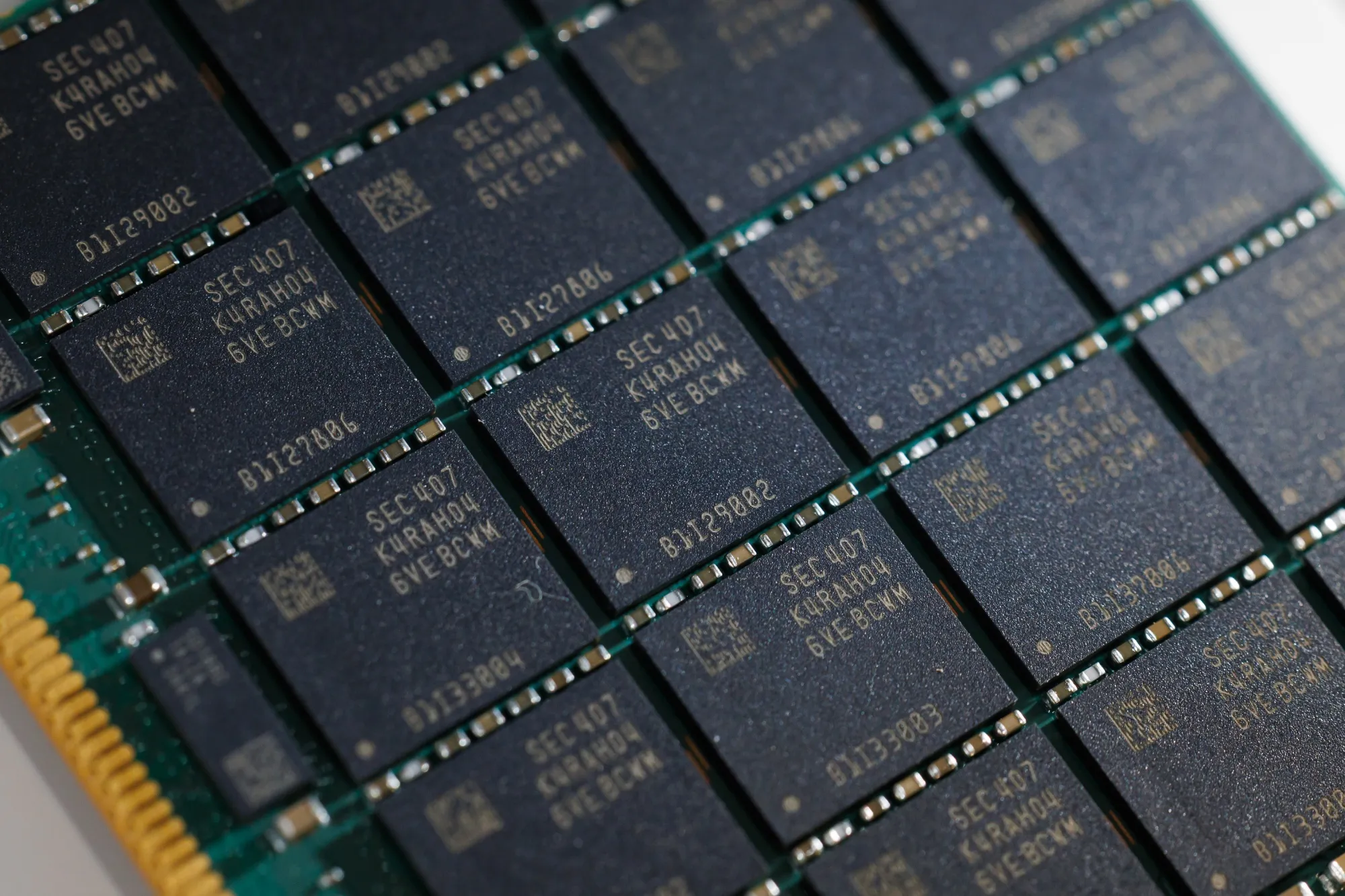
The Samsung results stock rotation has become the talk of Asian markets, as investors seized on the tech giant’s latest earnings report to cash in profits and shift their money elsewhere. What might have seemed like impressive numbers on paper instead triggered a notable pullback in technology shares, revealing growing unease about just how long the artificial intelligence-fueled rally can continue.
A Strong Report That Still Disappointed
At the center of this market shakeup sits Samsung Electronics, the world’s largest memory chipmaker. The company posted a remarkable quarterly performance, with profit surging an astonishing 19-fold thanks to booming demand tied to AI technology.
On the surface, those figures sound spectacular. However, the market reaction told a very different story. The problem wasn’t that Samsung performed poorly, but rather that its results only edged past analyst expectations by a modest 6 percent. In a climate where investors had baked in sky-high hopes, beating estimates by such a slim margin simply wasn’t enough to satisfy the crowd.
The consequences were swift and dramatic. Samsung’s shares tumbled by as much as 7.9 percent in Seoul trading, a steep decline for a company that had enjoyed a stellar run throughout the year. This drop didn’t happen in isolation, as it sent shockwaves across the broader semiconductor landscape.
Ripple Effects Across the Region
Samsung’s stumble dragged down its peers throughout Asia, illustrating just how interconnected the memory chip sector has become. Several major players felt the pain as investors reassessed their positions.
Companies caught in the downdraft included:
- South Korea’s SK Hynix, another heavyweight in the memory chip business
- Japan’s Kioxia Holdings, which had been among the year’s standout performers
The pain extended to broader market gauges as well. An MSCI index tracking technology stocks slid by as much as 2.7 percent during the session. Meanwhile, money didn’t simply disappear from the market. Instead, it flowed into other areas, with financial and consumer shares climbing as investors rotated their capital toward sectors they viewed as safer bets.
Cracks in the AI Enthusiasm
Perhaps the most significant takeaway from this episode is what it reveals about shifting investor sentiment. After enjoying massive gains driven by the AI boom, many market participants are beginning to approach the sector with a more critical eye.
The change in mood is striking. For the past few years, headlines about capacity expansions, technology delays, and rising debt levels barely registered as concerns. Investors largely shrugged them off, confident in the seemingly unstoppable momentum of AI-related stocks.
Now, those same types of news stories are being interpreted quite differently. Rather than dismissing them, investors are increasingly treating such reports as legitimate reasons to sell their technology holdings. This represents a meaningful psychological shift in how the market processes information about the chip industry.
The “Sell the News” Phenomenon
Market experts pointed to a classic trading dynamic to explain the day’s movements. Tim Waterer, chief market analyst at KCM Trade, described what unfolded as a textbook “sell the news” scenario.
According to Waterer, investors had built up extremely high expectations heading into Samsung’s report. When those lofty expectations weren’t dramatically exceeded, traders moved quickly to lock in their profits. He emphasized that even strong results fail to impress when valuations have stretched to demanding levels and a broader rotation is already firmly in motion.
This observation cuts to the heart of the current market environment. When stocks have already climbed to elevated prices, the bar for satisfying investors rises considerably. Good news alone no longer suffices, as the market demands truly exceptional performance to justify continued buying.
The Big Question: Boom or Supercycle?
Beyond the immediate price movements lies a deeper debate that has captivated the investment community. Memory and storage stocks have ranked among the hottest trades of the entire year, delivering extraordinary returns for those who got in early.
The gains have been eye-popping. Kioxia, for instance, soared an incredible 600 percent, topping a Bloomberg gauge tracking Asian chipmakers. Such dramatic appreciation naturally raises questions about sustainability.
While demand for these chips has genuinely skyrocketed, the market remains uncertain about what comes next. The central question dividing investors is whether the current boom will follow the traditional pattern of being succeeded by a painful bust, or whether AI is fundamentally different this time.
Some believe AI could be creating a longer-lasting “supercycle,” a prolonged period of sustained growth that breaks from the usual boom-and-bust rhythm of the semiconductor industry. Others remain skeptical, wary of assuming that this time will defy historical norms.
A More Optimistic Interpretation
Not everyone views Samsung’s results through a pessimistic lens. Some industry observers see genuine reasons for confidence in the numbers, even if the stock price didn’t reflect that optimism on the day.
Albert Yong, managing partner at hedge fund Petra Capital Management, offered a more constructive perspective. He argued that Samsung’s performance actually reinforces confidence in several important areas, including sustained AI-related demand, continued strength in memory pricing, and a positive outlook for the industry over the medium to longer term.
However, Yong also acknowledged the complexity of the situation. He noted that investors may have already factored solid results into stock prices well in advance. As a result, their attention appears to be shifting toward the longer-term trajectory of the memory cycle rather than any single quarter’s earnings.
This nuanced view helps explain the seemingly contradictory market reaction. Even when the underlying business fundamentals appear healthy, stock prices can still fall if expectations were already fully priced in and investors turn their focus toward future uncertainties.
What This Means Going Forward
The events surrounding Samsung’s earnings serve as an important signal for the broader market. After a period of near-euphoric enthusiasm for anything connected to AI, a more measured and discerning mood appears to be taking hold.
This doesn’t necessarily spell doom for the technology sector. Rather, it suggests that investors are becoming more selective, demanding stronger justification for the elevated valuations that many chip stocks now carry. The days of automatically piling into tech shares regardless of the news may be giving way to a more cautious approach.
For those watching the semiconductor industry, the key will be monitoring whether AI demand truly represents a durable, long-term shift or whether the sector will eventually revert to its historical patterns of volatility.
Final Thoughts
The rotation away from chip stocks following Samsung’s earnings highlights a pivotal moment in the ongoing AI investment story. Despite delivering genuinely impressive results, Samsung couldn’t escape the harsh reality of a market with sky-high expectations and stretched valuations.
As investors lock in profits and shift toward less favored sectors offering cheaper valuations and less exposure to earnings surprises, the broader message becomes clear. The AI boom, while far from over, is entering a more scrutinized phase where enthusiasm alone no longer guarantees rising prices.
Whether this proves to be a temporary pause in an ongoing supercycle or the beginning of a more significant cooling remains to be seen. For now, the Samsung episode stands as a compelling reminder that in markets, expectations often matter just as much as results themselves.
Author