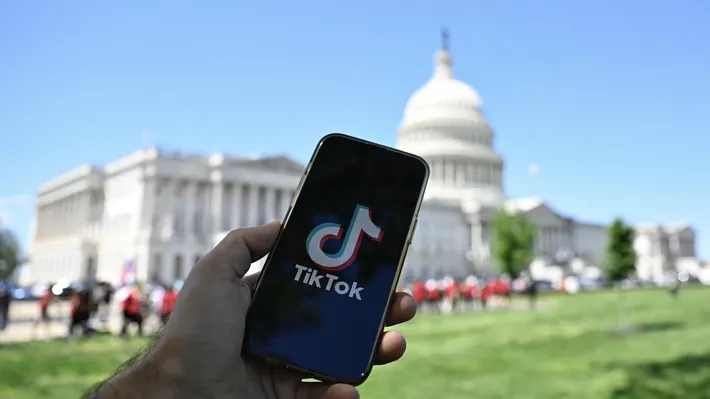
TikTok on government devices is no longer off-limits for federal workers. The Justice Department issued an opinion Friday concluding that a 2022 ban on the app no longer applies, clearing the way for executive branch employees to install it on official phones and laptops.
The reversal ends a restriction that stood for more than three years and was justified on national security grounds.
What the 2022 Law Did
The original prohibition barred federal employees from using TikTok on government-issued devices. The rationale centered on the app’s ownership: ByteDance, a Chinese company, controlled both the platform and the data flowing through it.
The concern wasn’t hypothetical for policymakers. Government devices carry sensitive material, and an app with foreign ownership sitting on those devices represented a potential channel for data exposure.
That reasoning has now been set aside, though not because the law was repealed.
The Deal That Changed the Calculation
The Justice Department’s opinion rests on a corporate restructuring that closed in January.
Under the arrangement, ByteDance transferred control of TikTok’s U.S. user data and operations to a joint venture called TikTok USDS. The ownership split gives American and global investors 80.1 percent of the venture, leaving ByteDance with 19.9 percent.
That minority stake didn’t trouble the department. Its opinion stated that ByteDance’s continued position as a small shareholder in the entity running TikTok USDS makes no practical difference.
In a memorandum addressed to President Donald Trump, the department concluded that TikTok in its current form does not present the risks that motivated the original ban. The memo acknowledged that Trump had directed executive branch agencies to permit downloads — with the caveat that individual agencies retain discretion and that all existing workplace policies still apply.
So the ban is gone, but permission isn’t automatic. Agencies can still say no.
Where the Data and Algorithm Live Now
The technical arrangements are central to the security argument.
TikTok said in January that the joint venture would retrain, test, and update the platform’s content recommendation algorithm using U.S. user data. The algorithm itself is to be secured within Oracle’s U.S. cloud infrastructure.
Oracle isn’t a neutral vendor in this arrangement — it’s one of the venture’s three principal investors, giving it both a commercial stake and an operational role.
ByteDance has said TikTok USDS Joint Venture LLC will safeguard American user data, applications, and algorithms through data privacy and cybersecurity protections.
The structure was reported before it was finalized. In September, Reuters reported, citing sources, that ByteDance would retain ownership of TikTok’s U.S. business operations while surrendering control over the app’s data, content, and algorithm to the joint venture.
That distinction — ownership versus control — is the hinge the entire security case turns on.
The Law That Was Never Enforced
There’s a separate piece of legislation worth understanding here.
In April 2024, Congress passed a law requiring ByteDance to sell its U.S. assets by January of the following year or face a nationwide ban. The Supreme Court upheld that law.
Trump chose not to enforce it.
He has been consistently vocal about his reach on the platform, regularly citing his popularity there. That posture has shaped the administration’s approach throughout — pursuing a restructuring rather than a ban, and ultimately loosening restrictions rather than tightening them.
Roughly 200 million Americans use TikTok, a scale that makes any enforcement action politically fraught regardless of who occupies the White House.
Neither the White House nor TikTok offered immediate comment on the Justice Department’s opinion.
What This Means in Practice
For federal employees, the change is simple: TikTok is now installable on a work phone if the employing agency allows it.
That last condition matters more than it might appear. Agencies with heightened security requirements — intelligence, defense, and law enforcement components among them — may well maintain their own restrictions independent of the DOJ’s conclusion. The opinion removes a government-wide barrier without mandating uniform policy.
Employees should also assume that standard workplace rules on personal app use during working hours remain in effect.
The Unresolved Questions
Skeptics of the arrangement raise a consistent objection: whether ceding control while retaining ownership actually resolves the underlying concern.
ByteDance still holds nearly a fifth of the venture. The algorithm originated with the company. And the practical enforceability of a control-versus-ownership distinction depends heavily on oversight mechanisms that operate largely out of public view.
Supporters counter that the data now sits in domestic infrastructure, the algorithm is retrained on U.S. data within a U.S. cloud environment, and American investors hold the controlling majority.
What’s not in dispute is the trajectory. A platform that was formally treated as a national security threat on government hardware is now permitted on that same hardware, following a corporate reorganization rather than a full separation from its original parent.
Whether that resolves the original concern or simply relabels it is a question the next few years will answer.
Author