Egypt Drawn In, Riyadh Builds a Coalition: A Day the US-Iran War Widened Again
The US-Iran conflict expanded onto new ground Thursday, with Egypt confirming that an unidentified drone caused a fire aboard two vessels at its Mediterranean port of Damietta, and Saudi Arabia unveiling plans for a multinational naval coalition to protect shipping lanes that have become increasingly dangerous.
Neither development involved the two principal combatants directly. Both illustrate how a war now in its sixth month keeps drawing in countries that have worked hard to stay out of it.
The Strike on Damietta
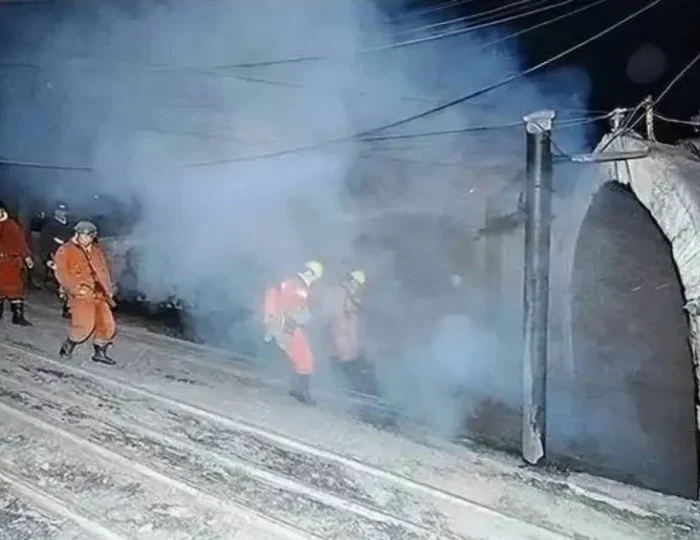
Egyptian authorities said an initial investigation determined a drone was responsible for the fire that broke out Wednesday on two ships at the port.
No party has claimed responsibility. If confirmed as a deliberate attack, it would mark the first time Egypt has been directly pulled into the conflict.
Location matters here more than damage. Damietta sits roughly 40 miles west of Port Said, at the northern entrance to the Suez Canal. An attack at that point raises questions about the security of one of the two exits from the Red Sea — the other being the Bab el-Mandeb strait at the southern end, where Houthi forces have been striking vessels for months.
Reaction came quickly and in unexpected form. Iran’s foreign minister described Egypt on Thursday as an important friend and partner whose security is of the utmost importance — a statement that reads as a deliberate effort to distance Tehran from the incident. The United Arab Emirates condemned the attack.
Saudi Arabia’s Coalition
The same day in Riyadh, the Saudi Defence Ministry announced a proposed Maritime Defense Alliance intended to protect international shipping routes and global trade.
Representatives from 43 countries attended, out of 51 invited, along with an EU delegation. Fourteen countries signed a joint declaration endorsing the coalition, led by Saudi Arabia, Turkey, Egypt and Pakistan, with reported additional signatories including Kuwait, Bahrain, Qatar, Jordan, Djibouti, Somalia, Bangladesh, Yemen, Sudan and the Comoros.
Saudi Arabia would serve as the founding and leading state and host permanent headquarters.
Considerable ambiguity remains. It is not clear how the coalition would actually operate, whether supportive countries will commit military assets to escort vessels, or how it would differ from the EU’s existing Red Sea naval mission.
Why Riyadh Moved
The kingdom has spent the war maintaining open channels with Tehran. That posture has become harder to sustain.
Over the past week, Saudi Arabia has faced pressure from three directions: missile attacks from the Houthis in Yemen, drone attacks on oil infrastructure launched by Iran-aligned militias in Iraq, and renewed threats from Iran itself. American and Saudi aircraft struck militia targets in eastern Iraq on Tuesday in response.
The maritime dimension is what makes this existential for Saudi trade. With the Strait of Hormuz effectively closed since March, the kingdom has kept most of its oil flowing by using the East-West pipeline to reach Yanbu on the Red Sea coast — which means exports must transit Bab el-Mandeb.
On July 20, the Houthis declared a blockade on Saudi-linked shipping through that chokepoint. Traffic has fallen sharply since, and the group has claimed responsibility for multiple attacks on tankers.
Blocking both Red Sea exits while Hormuz remains paralysed would leave Saudi exports with very few routes.
Roughly 10 to 12 percent of global maritime trade passes through Bab el-Mandeb. Hormuz previously carried around 20 percent of global oil and gas exports.
Tehran’s Position
Iran’s Revolutionary Guards said Thursday that the Strait of Hormuz will remain closed as long as American threats and interference with regional shipping continue, and warned that the aggressor would be punished.
Iran said Wednesday it had struck three tankers attempting to transit the strait along what it described as an unauthorised route.
There was one small exception to the closure. A QatarEnergy-controlled liquefied natural gas tanker exited the strait overnight — the first such vessel to do so since July 11 — with Iranian news agency Fars reporting that Tehran had granted permission.
That single transit is worth noting. It suggests the closure functions as a controlled valve rather than an absolute barrier, which has implications for how it might eventually be unwound.
The Exchange of Strikes
The Guards’ warning followed a heavy wave of American strikes late Wednesday, which US Central Command described as targeting Revolutionary Guard command centres, missile and drone facilities, coastal defence sites and maritime capabilities.
Iranian state media reported that a couple and their two-year-old child were killed at their home in the village of Chah Tangu on Qeshm Island, the largest island in the Persian Gulf and situated close to the strait. The Revolutionary Guards separately said three of their members were killed in a strike in the country’s northwest. Those accounts have not been independently verified.
The American strikes were themselves framed as retaliation for Iran’s attempted missile attack on US positions on Tuesday, all of which were intercepted.
Iran has claimed an attack on the Azraq base in Jordan. A worker was reported killed in an Iranian attack on a Chinese company building in northern Kuwait. Bahrain has also been targeted.
Tehran has warned Cyprus and Bulgaria against permitting American use of their bases for operations against Iran.
Diplomacy, Such as It Is
Pakistan, acting as a mediator, said US-Iran negotiations are ongoing on de-escalation and on the strait.
That is the only positive signal of the day, and it comes from a third party rather than either principal.
The Political Context
The war sits awkwardly against the second-term promise President Donald Trump made to be a peacemaker. He is now attempting to wind down two widening conflicts — one with Iran that his administration initiated in late February, and the Russia-Ukraine war he inherited.
Public support is not encouraging. Roughly a third of Americans back the Iran war in recent polling, and approval of his handling of it sits near 28 percent.
Elsewhere in the region, Israel said it destroyed Hezbollah tunnel infrastructure in Lebanon using 700 tons of explosives.
What This Day Actually Showed
Two things, in tension with each other.
The first is centrifugal: a drone at an Egyptian port, casualties in Kuwait, claimed strikes in Jordan, threats aimed at Cyprus and Bulgaria. The conflict is spreading outward faster than any diplomatic track is moving.
The second is a counterweight: 43 countries in a room in Riyadh, and 14 signing something. Whether that coalition amounts to escorted convoys or a communiqué will determine a great deal — for the shipping industry, for oil prices, and for whether Gulf states conclude that collective security is a better bet than staying quietly out of the way.
Author
-
Lucienne Albrecht is Luxe Chronicle’s wealth and lifestyle editor, celebrated for her elegant perspective on finance, legacy, and global luxury culture. With a flair for blending sophistication with insight, she brings a distinctly feminine voice to the world of high society and wealth.