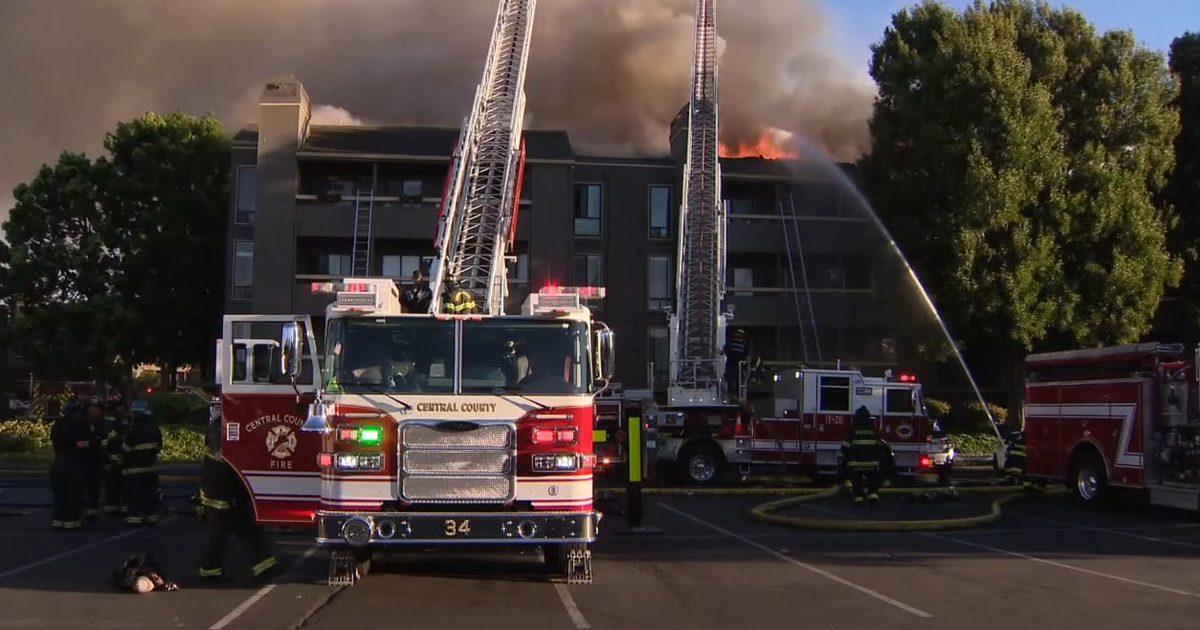
The Foster City condo fire that tore through a 51-unit building at the Spinnaker Cove Condo Complex has left the structure a complete loss, forced dozens of residents out of their homes and sent four firefighters to receive medical treatment. What began Sunday afternoon escalated with startling speed, ultimately drawing a six-alarm response.
How Fast It Moved
The building, located on Sea Spray Lane, sustained catastrophic damage after flames pushed into the attic and burned through insulation — a path that gave the fire an open corridor above the living spaces below.
Once fire reaches an attic in a multi-unit structure, containment becomes extraordinarily difficult. There are few barriers, plenty of combustible material, and crews below often cannot get ahead of it. Officials confirmed the outcome bluntly: the building is a total loss.
Residents fled with whatever they could carry. Many left with children and pets and little else.
Seven Rescued From the Third Floor
Crews from the San Mateo Consolidated Fire Department pulled seven people trapped on the third floor to safety while the fire continued to spread overhead.
Fire Chief Matt Turturici described the calculation that shaped the early minutes of the response. With a substantial number of people still inside, he said, getting them out took precedence — rescue operations proceeded even as crews were still stretching hose lines into position.
That sequencing is standard doctrine but rarely simple in practice. It means firefighters commit to search and rescue before the fire is fully engaged from a suppression standpoint, accepting greater personal exposure to reach occupants faster.
Four Firefighters Injured
The intensity of the operation took a toll on the crews working it.
Four firefighters were hurt during the response. One sustained second-degree burns. Others required treatment for smoke inhalation — a common hazard in attic fires, where heat and toxic products of combustion accumulate in confined overhead spaces before venting.
‘We Lost Everything’
For residents, Sunday afternoon marked the abrupt end of life as they knew it.
Ricky Liboro, one of the displaced, described being barely able to hold himself together while speaking with reporters, saying he had been crying since the night before. He summarized the loss in three words — everything was gone — and said he and others were still trying to process what had happened while figuring out what comes next.
That disorientation is typical in the immediate aftermath. Beyond furniture and clothing, families lose passports, birth certificates, medications, laptops, photographs and the countless small possessions that make a home feel like one.
Neighbors watched as walls buckled and floors collapsed under the combined weight of fire damage and the enormous volume of water needed to fight it. Water damage in incidents like this frequently extends far beyond the units that actually burned.
Investigators Begin Their Work
Firefighters remained on scene through Monday chasing down hot spots — smoldering pockets that can reignite hours after the main fire is knocked down, particularly in attic and wall cavities.
Meanwhile, investigators started the process of determining what caused the blaze. Early indications point to the back side of the complex as the origin area, possibly near a lower unit, though that assessment is preliminary.
Determining a cause in a total-loss structure is painstaking work. The evidence investigators need is frequently consumed by the fire itself or buried beneath collapsed material, and the process can take weeks.
Support for Displaced Families
Local relief efforts have mobilized to assist those who lost their homes. The needs in these situations tend to arrive in stages:
- Immediate: Emergency shelter, food, clothing and basic toiletries.
- Short term: Replacement of critical documents, prescription medications and school or work essentials.
- Longer term: Insurance navigation, temporary housing arrangements and eventually permanent relocation.
For condo owners specifically, the aftermath involves an additional layer of complexity. Building coverage typically runs through the homeowners association’s master policy, while individual unit interiors and personal property fall under each owner’s own policy. Renters within the complex would rely on their own renters insurance, if they carried it. Sorting out where one policy ends and another begins often becomes a lengthy process.
Why Attic Fires Are So Dangerous
The dynamics that made this fire so destructive are worth understanding, because they recur in multi-unit buildings across the country.
Attics in condominium and apartment complexes often extend across multiple units with limited fire separation. Once flames breach that space, several things happen at once:
- Horizontal spread accelerates, carrying fire above units that appear untouched from the interior.
- Visibility drops for crews, who must work below a fire they cannot easily see or reach.
- Structural components weaken, particularly roof supports, raising collapse risk.
- Ventilation becomes a difficult judgment call — cutting the roof relieves heat but can also feed the fire oxygen.
These conditions are precisely why fires of this type escalate through multiple alarms so quickly. Additional alarms bring more personnel and apparatus, and a six-alarm designation reflects a very large commitment of regional resources.
Practical Takeaways for Residents
Incidents like this one carry lessons for anyone living in a shared building:
- Know two ways out of your unit and of the building itself.
- Keep critical documents in a fireproof container or, better, stored digitally in a secure cloud account.
- Verify your insurance coverage rather than assuming the HOA policy protects your belongings — it usually does not.
- Test smoke alarms monthly and replace batteries on a schedule.
- Prepare a small grab bag with medications, chargers, copies of key documents and pet supplies.
- Leave immediately when an alarm sounds, rather than pausing to gather possessions.
What Comes Next
For now, the building stands as a shell, and the residents who lived in its 51 units face an uncertain stretch ahead. Investigators will continue working toward a cause determination, insurers will begin assessing claims, and the community will decide how to support families rebuilding from nothing.
Amid the destruction, one figure stands out: everyone made it out. Seven people trapped on the third floor are alive because crews went in for them first. In a fire this fast and this complete, that outcome was not guaranteed.
Author
-
Lucienne Albrecht is Luxe Chronicle’s wealth and lifestyle editor, celebrated for her elegant perspective on finance, legacy, and global luxury culture. With a flair for blending sophistication with insight, she brings a distinctly feminine voice to the world of high society and wealth.