Two EU Capitals Turn on Each Other as Ceuta Crossings Trigger Tit-for-Tat Border Checks
Spain Italy border controls now run in both directions, an extraordinary situation between two founding partners of Europe’s passport-free travel zone.
Madrid imposed checks on all air and sea arrivals from Italy beginning at midnight. The measures will remain for one month.
They arrive exactly one week after Rome introduced its own restrictions, and they mark a sharp deterioration in relations between two of the European Union’s largest member states.
What Triggered the Standoff
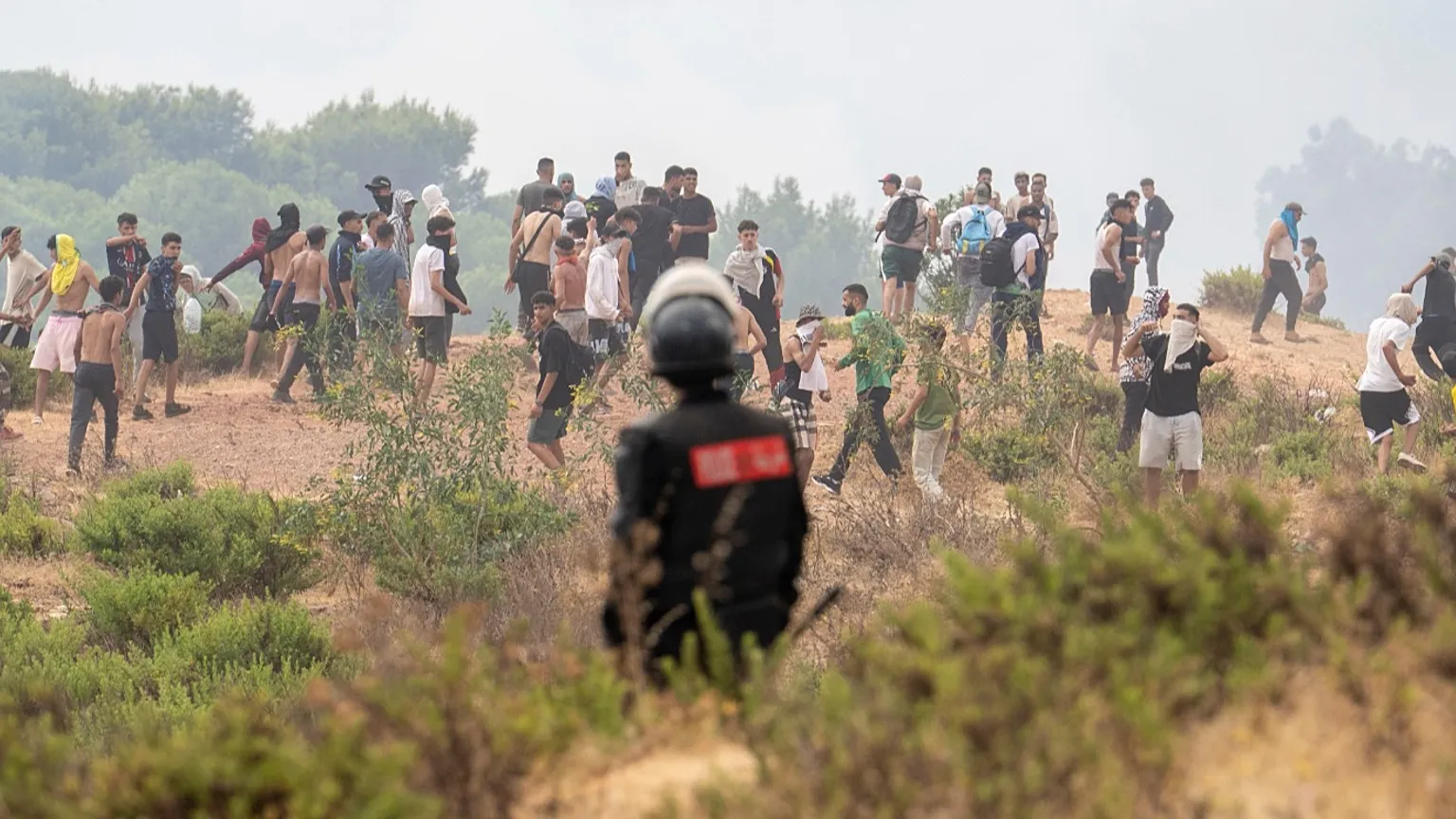
The dispute traces back to roughly 78,000 migrants who crossed from Morocco into the Spanish exclave of Ceuta.
Italy responded by temporarily suspending its participation in the Schengen arrangement, arguing the step was necessary to prevent anyone who entered Ceuta from continuing on to Italian territory.
There is a geographic oddity at the heart of this. Italy shares no land border with Spain.
Madrid rejected Rome’s justification outright, describing it as resting on spurious arguments with no factual basis. Spanish officials pointed out that migrants who entered Ceuta had no route into the Schengen area to begin with.
Escalation Rather Than Resolution
On Friday, Spain formally demanded that Italy reverse its checks by Sunday.
Rome refused. Italian officials said the measures would remain in place until at least 15 August, a date they justified by claiming Spain expects a new wave of migration to reach Ceuta around then.
Spain then imposed its own controls, which will stay until 7 September unless circumstances change sufficiently to warrant modification.
Two governments have now locked themselves into positions neither can abandon without appearing to concede.
How the Checks Are Working in Practice
Both sides insist the screening is limited and random. Passenger accounts suggest otherwise.
Spanish officials said documents were being examined for between 5 and 10 percent of passengers before they were permitted to leave aircraft.
But a passenger arriving in Madrid on Saturday told national broadcaster RTVE that everyone on her flight had to produce a passport. She said they were told they could not disembark without showing documents.
Another passenger described being stopped and asked for identification, adding that police appeared satisfied with the process.
Italy states that Spanish and EU citizens are exempt, with additional checks applying only to non-EU residents.
That distinction raises an obvious practical problem: officials cannot know a traveller’s nationality without checking documents in the first place. El Pais has reported long queues and extended waiting times at several Italian airport terminals, with passengers arriving from Spain routed into a dedicated line.
A Political Clash Beneath the Procedural One
The dispute has set Spain’s socialist prime minister Pedro Sanchez against Italy’s conservative leader Giorgia Meloni, who has long pressed for tighter EU migration rules.
Their disagreement has drawn in others. Finland and Denmark backed Italy’s month-long Schengen suspension. The Czech Republic went considerably further, calling for Spain’s Schengen membership to be temporarily suspended altogether.
Temporary suspensions are not unheard of. Italy already maintains controls on its border with Slovenia. What is unusual here is two member states applying them against each other.
What Actually Happened in Ceuta
Most of the migrants who reached Ceuta were returned within days.
An estimated 100 people are believed to have died attempting the crossing.
Nearly 1,400 minors remain in Ceuta, and officials have described some of them as very young boys and girls. Their situation represents the most urgent humanitarian dimension of the entire episode, and one that neither border control regime addresses.
Why So Many Crossed at Once
The reasons behind the scale of the crossings remain contested.
EU Migration Commissioner Magnus Brunner has attributed it to criminal networks spreading disinformation, a view the Spanish government shares.
The crossings followed a Spanish Supreme Court ruling that migrants intercepted at sea while attempting to reach Ceuta or Melilla cannot be summarily returned to Morocco.
Morocco has placed responsibility squarely on that ruling. An unnamed government source told local outlets that the deterrent element of the system collapsed and the dam gave way, not under pressure from criminals, but because of a judge’s decision.
Questions have also been raised about why Moroccan border guards did not intervene as large numbers of people swam toward the exclave.
The Second Wave Question
Spain has not officially announced any expected second wave.
However, BBC Arabic has identified dozens of Facebook posts calling for another crossing in mid-August, some advertising swimming equipment for sale. Six of the groups involved had more than 100,000 followers.
Meta says it has removed posts violating its policies.
The Spanish prime minister’s office told El Pais it is monitoring the situation but does not anticipate a repeat of last week’s scenes.
The Underlying Territorial Dispute
Ceuta and Melilla sit at the centre of a much older disagreement. Morocco does not recognise Spanish sovereignty over either exclave, a position that has strained relations for decades.
That unresolved status gives migration pressure at these borders a political dimension absent elsewhere in Europe.
Where This Leaves Schengen
The practical damage is measurable in queue times and cancelled plans. The symbolic damage may prove larger.
Free movement is among the European Union’s most visible achievements, and watching two major members reimpose checks on each other over a dispute involving neither’s shared frontier suggests how quickly that principle bends under political pressure.
Both sets of controls carry expiry dates. Whether they lapse quietly or get extended will indicate how much of this was crisis management and how much was positioning.
Author
-
Lucienne Albrecht is Luxe Chronicle’s wealth and lifestyle editor, celebrated for her elegant perspective on finance, legacy, and global luxury culture. With a flair for blending sophistication with insight, she brings a distinctly feminine voice to the world of high society and wealth.