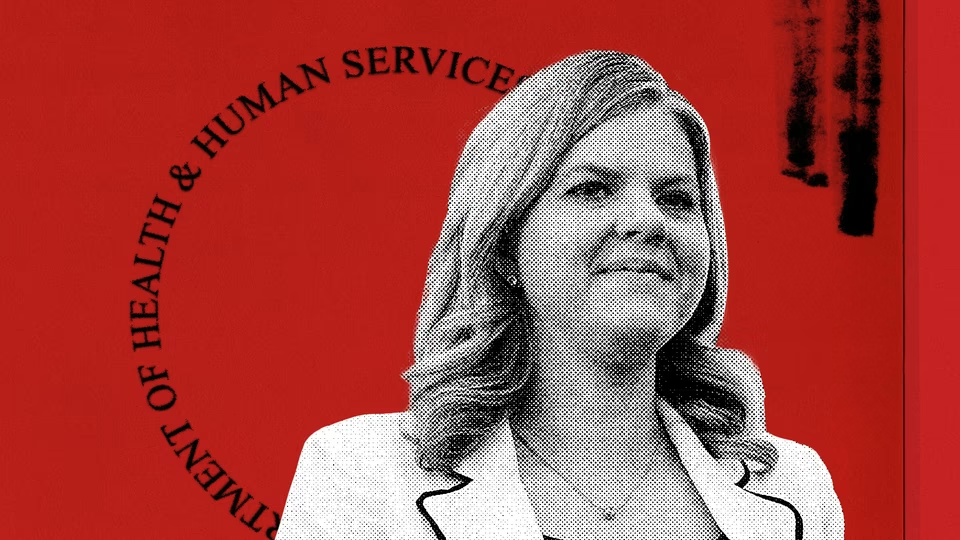
The next FDA commissioner nominee will be Heidi Overton, a White House policy aide with no prior experience running a federal agency, according to a senior administration official. The choice lands at a moment when the Food and Drug Administration is still searching for footing after months of upheaval.
An Agency in Need of Stability
The FDA has been operating without permanent leadership since Marty Makary departed earlier this year. His exit left the agency unsettled at a time when its decisions shape the pace and direction of American drug development.
That vacancy has consequences beyond organizational charts. Pharmaceutical companies plan multi-year development programs around regulatory expectations. When the top job sits empty and senior positions remain unfilled, uncertainty ripples outward through investment decisions and clinical timelines.
Kyle Diamantas has served as acting commissioner in the interim and has, by several accounts, worked to steady the agency’s relationship with industry after a difficult stretch.
Who Is Heidi Overton?
Overton currently serves as deputy director of the White House Domestic Policy Council. She had been one of several names under consideration for weeks before the president settled on her.
Her background sits closer to policy formulation than agency management, a distinction that has already become the central point of debate over the nomination. Bloomberg first reported that she was the president’s selection.
Other senior FDA roles also remain without permanent occupants. The senior administration official indicated additional announcements should follow soon, suggesting the White House intends to fill out the leadership tier rather than install a commissioner alone.
The Vaccine Event That Now Looms Large
Overton’s public profile grew last week when she appeared at the signing of an executive order directing an overhaul of the childhood vaccine schedule.
The order calls for reducing the number of federally recommended shots and splitting the combined MMR vaccine into three separate injections.
Speaking at the event, Overton said the administration continues to recommend the measles vaccine for all children while wanting parents informed about timing and given the option to separate the shots.
That appearance placed her visibly alongside a policy that has drawn sharp criticism from parts of the medical establishment, and it will almost certainly resurface during confirmation hearings.
Sharply Divided Reactions
Response to the pick split along predictable but intense lines.
The critical view
Chris Meekins, an analyst at Raymond James who previously held a health role in the Trump administration, offered a blunt assessment. He argued Overton holds degrees but appears to lack real experience running anything, describing her as a Makary protege who has embraced what he characterized as anti-science and anti-vaccine messaging associated with elements of the MAHA movement.
His forecast was equally direct. Industry will find the choice deeply troubling, he said, career FDA staff will continue leaving, and whatever progress has been made since Makary’s departure could be undone quickly if she is confirmed.
The supportive view
Brian Blase, who leads the Paragon Health Institute, called the selection a great choice. Writing on X, he praised Overton’s character and described her as dedicated to improving American well-being and helping patients receive the best possible care.
The gap between these two reactions captures the broader argument playing out over the agency’s direction.
The Confirmation Math
Nomination is not appointment. Overton must clear the Senate, and that chamber contains at least one figure with obvious reason for concern.
Outgoing Senate health committee chair Bill Cassidy of Louisiana called the vaccine executive order wrong. Overton’s participation in the signing event places her squarely on the side of a policy he has publicly rejected.
Cassidy is a physician, and his objections to vaccine policy shifts have carried weight in past confirmation fights within his own party. Whether he presses the issue here, and whether other senators join him, will determine how smooth this process becomes.
What Industry Is Watching For
Pharmaceutical companies tend to care about a narrow set of questions when a new commissioner arrives:
- Will review timelines hold steady or slip?
- Does the nominee understand the scientific review process from the inside?
- How stable is the career staff that actually conducts reviews?
- Will policy shifts on one issue spill into unrelated approval decisions?
Staff departures are the quiet variable in all of this. The FDA depends on experienced reviewers who develop expertise over years. When they leave in numbers, approval capacity erodes in ways that no leadership announcement can quickly repair.
The Larger Context
This nomination sits within a broader reshaping of federal health policy. The push to revise the childhood vaccine schedule represents a significant departure from decades of established recommendations, and the FDA is one of several agencies affected by that shift.
Supporters frame the changes as expanding parental choice and inviting scrutiny of long-unquestioned practices. Critics contend that fragmenting established vaccine schedules creates gaps in coverage and undermines public confidence in immunization generally.
Overton’s confirmation hearing will likely become a venue for that argument rather than a narrow examination of her management credentials.
What to Watch Next
Several things will clarify over the coming weeks.
The White House is expected to name additional FDA leadership, which may signal whether the agency gets experienced operational hands alongside a policy-focused commissioner.
Senate scheduling will indicate how much priority leadership assigns the nomination, and early committee statements will reveal whether Republican resistance materializes or stays muted.
For now, the FDA commissioner nominee enters a confirmation process where her policy positions, not her résumé, will draw the most scrutiny.
Author