The Education Department Trump video that appeared on X Wednesday lasted only briefly before being deleted, and the reason came down to a single line of dialogue that meant the opposite of what the post intended.
What the Post Contained
The department shared a 19-second clip captioned “No one does it like us,” accompanied by a tiger emoji.
It opened with a scene from Darkest Hour, the 2017 film about Winston Churchill’s early days as prime minister. In the sequence used, Churchill dismisses pressure to open negotiations with Nazi Germany.
The scene closes on Churchill delivering the line that became the problem: you cannot reason with a tiger when your head is in its mouth.
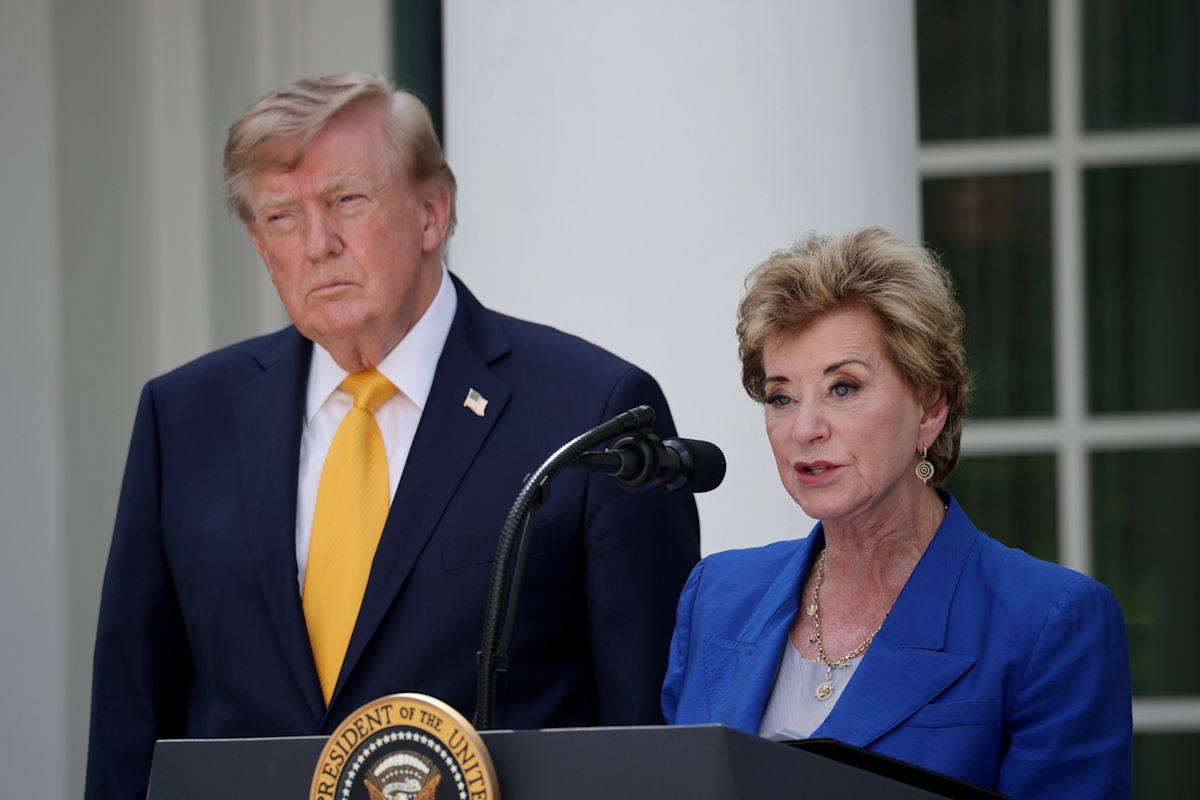
The video then cut to footage of President Donald Trump raising his fist and pointing, scored to the rapper BIA’s track “WE GO ON.”
The Obvious Problem
The tiger in that line is Adolf Hitler.
Churchill is explaining why negotiation with Nazi Germany is impossible. The tiger is the enemy, the thing that cannot be reasoned with, the predator already holding Britain’s head in its jaws.
Cutting from that line to triumphant footage of Trump produced a visual sequence in which the president occupied the position the metaphor assigns to Hitler.
Users on X noticed almost immediately and began asking whether the comparison was intentional.
The Deletion
The department removed the post.
Screenshots and reposts continued spreading regardless, which is the standard fate of anything deleted from a public account after it has been noticed.
Forbes reported on the episode, noting the department pulled the video after users pointed out what the tiger reference actually meant in the original scene.
How This Kind of Thing Happens
The mistake has a recognisable shape.
Someone found a clip with strong imagery, a defiant tone, and a memorable closing line. It reads as tough, uncompromising, and quotable. The Churchill association carries obvious appeal for anyone assembling political content.
What appears to have been missed is that the line is not a boast. It is an argument about the impossibility of dealing with a specific enemy, and that enemy is named implicitly rather than explicitly.
Metaphors borrowed without their context tend to behave unpredictably. A tiger sounds powerful and admirable in isolation. Inside Churchill’s sentence it is something else entirely.
Why Government Accounts Face Higher Stakes
Federal agencies have increasingly adopted the visual grammar of political and entertainment accounts: fast cuts, music beds, film clips, emoji captions.
The format is effective at generating attention. It also compresses decision-making, since the whole point is speed and volume.
A private account making this error gets mocked and moves on. A cabinet department carries institutional weight, and its posts are read as official communication rather than as one person’s quick edit.
The Education Department in particular has no obvious reason to be posting Churchill montages at all, which added to the puzzlement.
The Broader Pattern
Historical footage is unusually risky material for this style of content.
Wartime imagery comes loaded with meaning that most viewers already possess. Audiences recognise these references, and a substantial number will know exactly what a given scene is about.
Reusing such material without checking what it originally conveyed leaves an account exposed to precisely this outcome, where the intended message and the received message point in opposite directions.
Aftermath
Nothing further has been said publicly by the department about who approved the post or how it cleared whatever review process exists.
The clip is gone from the official account, and the copies circulating are now the version of record.
For anyone running institutional social media, the episode offers a fairly plain lesson. Before borrowing a line, find out who it was about.
Author