Israeli Strikes in Lebanon Kill 10 People Including Six Paramedics and a Child
The Israeli strikes in Lebanon have once again shaken an already fragile region, leaving at least 10 people dead within just 24 hours, according to Lebanon’s health ministry. Among the victims were six paramedics and a child, prompting widespread condemnation and casting fresh doubt over the fate of the United States-brokered ceasefire between Israel and Hezbollah.
A Devastating 24 Hours for Lebanon
Friday’s announcement from Lebanon’s health ministry painted a grim picture of the violence unfolding across the country. The ministry confirmed that ten people had been killed in a series of Israeli airstrikes within a single day, and it strongly condemned the attacks as violations of international law.
Among the victims were paramedics responding to emergencies. The strikes also claimed the life of a Syrian child, deepening the tragedy and intensifying global concern about civilian protection during the ongoing conflict.
Tyre and Surrounding Areas Hit Hard
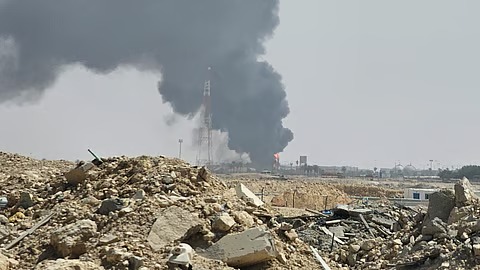
The destruction did not stop on Friday. Late into the night and continuing into Saturday, additional airstrikes were reported across southern Lebanon. An AFP correspondent in the southern city of Tyre confirmed hearing two large blasts. One strike hit a building on the outskirts of Tyre, while another targeted a structure inside the city itself, sending huge plumes of smoke into the air.
Earlier that day, Israeli forces had issued urgent evacuation warnings for parts of Tyre and the nearby village of Burj Rahal. Officials used loudspeakers to urge residents to flee the area as the strikes intensified. According to Israel’s military, the operations were focused on Hezbollah-related targets.
Additional Strikes in Northern Areas
Lebanon’s state-run National News Agency reported that five Israeli airstrikes were carried out shortly before midnight in the Nabi Sreij area on the outskirts of Brital. This mountainous region had largely been spared from attacks since the latest ceasefire with Hezbollah began, making the latest strikes particularly alarming.
The expansion of the attacks beyond southern Lebanon raises concerns that the violence may spread further, putting more civilians and infrastructure at risk.
Paramedics Become Victims of the Conflict
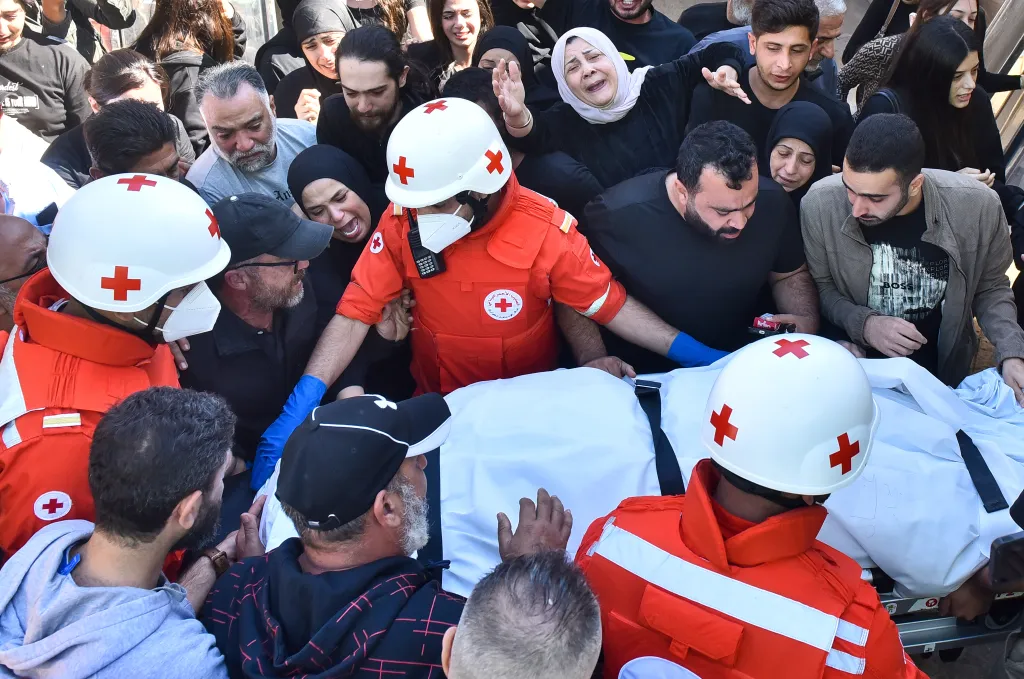
One of the most disturbing details from this week’s events involves the targeting of paramedics. According to Lebanon’s health ministry, an Israeli strike overnight Thursday into Friday in the southern town of Hanaway killed four paramedics from the Islamic Health Association. On Friday morning, another strike in Deir Qanoun En-Nahr in the coastal Tyre province killed six more people, including two medics and a young Syrian child.
The Israeli military responded by stating that the strikes in Hanaway targeted Hezbollah infrastructure where militants were reportedly present. In Deir Qanoun En-Nahr, the military said its forces had identified two Hezbollah militants traveling on motorcycles and struck them accordingly.
It also noted that the Al-Rissala Scouts Association is linked to the Hezbollah-allied Amal movement, suggesting that the organization is considered part of the broader militant infrastructure.
Video Evidence Raises Serious Questions
The Lebanese health ministry distributed a video that it said was filmed in Deir Qanoun En-Nahr. The footage shows two men in yellow vests, presumably paramedics, attending to an injured person on the side of the road. As an ambulance approaches, a flash and loud explosion occur. The same men are then seen lying motionless on the ground.
Reuters confirmed the location of the video by matching surrounding buildings, trees, and road layouts with archive imagery. The town had already been struck earlier this week in an airstrike that killed 14 people, marking the deadliest single attack since the recent ceasefire began.
The Israeli military said it was examining reports that “several uninvolved individuals” had been harmed in the strikes. It claimed it had taken steps to reduce civilian harm, including ordering local populations to evacuate before launching the attacks.
A Mounting Death Toll Across Lebanon
The numbers behind the conflict tell a heartbreaking story. According to figures released by Lebanon’s health ministry on Friday, more than 3,100 people have been killed in Lebanon since March 2, when Hezbollah launched its initial strikes on Israel and ignited the latest round of war.
Among the dead are 123 medics, 210 children, and nearly 300 women. These figures reflect the immense civilian toll the conflict has taken, especially in regions where airstrikes and ground operations have been concentrated.
Healthcare and Humanitarian Crisis
The ongoing strikes have placed enormous pressure on Lebanon’s already struggling healthcare system. The World Health Organization has confirmed that several hospitals in southern Lebanon have either been damaged or are completely out of service due to Israeli strikes.
This has made it incredibly difficult for civilians to access urgent medical care, especially in active conflict zones. The repeated targeting of medical workers, ambulances, and healthcare infrastructure has drawn sharp criticism from humanitarian organizations around the world.
International law clearly grants protection to frontline responders, healthcare workers, and civilian infrastructure. The continued attacks on these groups raise serious questions about whether such protections are being respected during the conflict.
Ceasefire Under Severe Strain
The current wave of violence is putting enormous pressure on the United States-brokered ceasefire that was announced just last month. While the agreement was initially seen as a fragile but hopeful step toward calming tensions, the recent strikes suggest that the deal may not be holding as expected.
Diplomatic observers warn that continued attacks could push the situation back into full-scale conflict, undoing the limited progress made through international mediation.
The Bigger Picture
The Israeli strikes in Lebanon have reignited international debate about the rules of engagement, civilian protection, and the long-term stability of the region. While Israel insists it is targeting only Hezbollah-related infrastructure and militants, the rising civilian death toll and the killing of paramedics are drawing serious condemnation from across the globe.
For Lebanon, the situation continues to grow more desperate. Families are mourning, hospitals are overwhelmed, and entire communities have been displaced. The targeting of medics, in particular, has caused outrage among local citizens and international humanitarian groups alike.
What Lies Ahead
As the conflict continues to unfold, the international community faces increasing pressure to step in and prevent further escalation. Calls for stronger ceasefire enforcement, accountability for civilian deaths, and the protection of medical personnel are growing louder by the day.
Whether diplomatic efforts can pull both sides back from the brink remains uncertain. For now, the people of Lebanon are paying a heavy price, and the world is once again watching a deeply painful chapter of the Middle East conflict unfold in real time.
Final Thoughts
The Israeli strikes in Lebanon have not just claimed lives but also raised urgent questions about how modern warfare is being conducted in densely populated regions. With paramedics among the dead, ambulances reportedly hit, and a child lost in the violence, the human cost of the conflict has become impossible to ignore.
As Lebanon mourns its fallen and waits for international action, the hope remains that future days will bring stronger ceasefire enforcement, real accountability, and meaningful protection for civilians caught in the crossfire.
Author