The Myanmar village explosion that tore through a rebel-held community in Shan State has left a trail of devastation, killing at least 46 people and wounding dozens more. The blast struck Kaung Tat village in Namkham Township, near the Chinese border, in an area controlled by insurgents fighting the country’s military junta.
The scale of the destruction and the loss of life have shaken the local population, raising urgent questions about how such a catastrophe was allowed to happen.
A Heavy Toll, Including Children
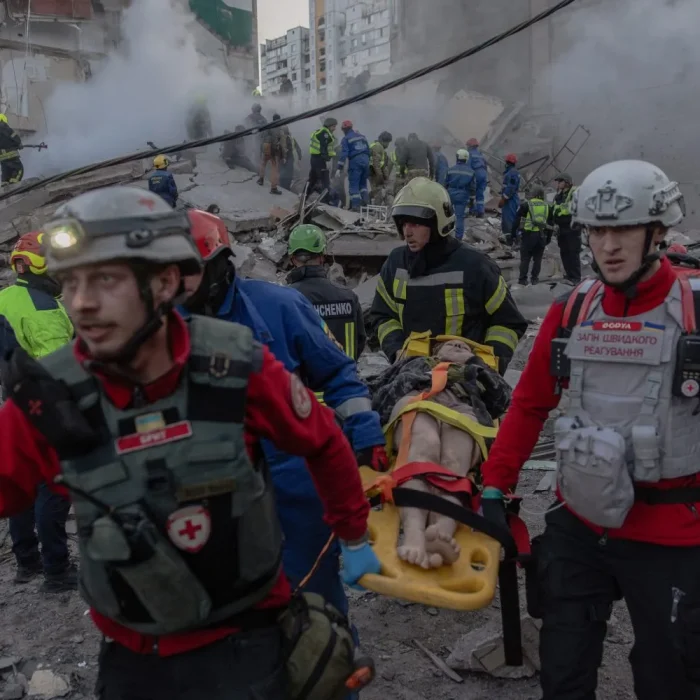
The human cost of the explosion has been profound. According to rescue teams who spoke with the BBC, at least 46 people lost their lives in the blast.
A rescue worker in Kaung Tat reported that the dead included six children, among them a one-year-old toddler. Earlier accounts had painted an even grimmer picture, with one source familiar with the situation on the ground initially telling the BBC that as many as 55 people may have died.
The bodies of all 46 confirmed victims, including three Chinese nationals, were cremated on Sunday evening, with rescue operations expected to resume the following day.
Widespread Destruction
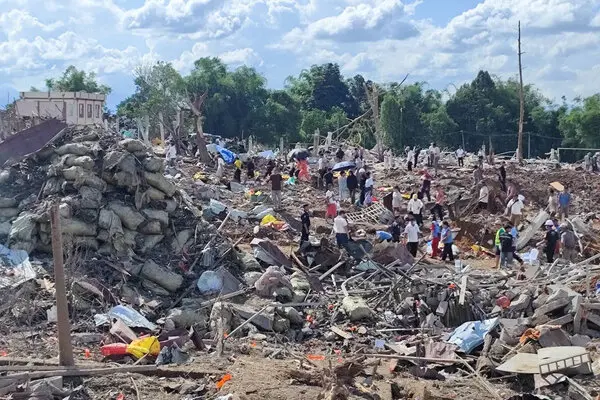
The explosion did not only claim lives; it also flattened much of the surrounding area. The blast is said to have damaged around 200 homes in Kaung Tat itself.
The destruction extended beyond the village. An additional 100 homes in the nearby Pan Lone village were also reported damaged, illustrating the sheer force of the detonation.
In the aftermath, around 74 injured people were transferred to the nearby Namkham General Hospital for treatment, overwhelming local resources as the community grappled with the disaster.
What Caused the Blast
The Ta’ang National Liberation Army, the armed group that controls the area, has offered an explanation for the tragedy. According to the TNLA, explosives stored in a warehouse for use in local mining operations had ignited, triggering the blast.
The group described the incident as an “accidental explosion” that occurred around midday on Sunday. In a statement, the TNLA acknowledged the heavy toll, noting that many local villagers had lost their lives, suffered injuries, and seen their homes destroyed, though it provided few additional details.
Specifically, the group said the facility contained gelignite stored by its economic department for mining purposes, and that an investigation was under way to determine how the material had detonated.
A Scene of Utter Ruin
Footage from the site captures the horrifying scale of the destruction. Images show a vast crater of earth and rubble, surrounded by shattered buildings.
Smoke continued to drift from charred debris and twisted trees, painting a picture of near-total devastation. The visuals underscore just how powerful the explosion must have been to leave such a mark on the landscape.
Survivors Recount the Terror
For those who lived through it, the explosion was a moment of sheer chaos and fear. Some villagers initially believed the blast had been caused by an air strike, a reasonable assumption in a region scarred by conflict.
One resident shared a chilling account on social media, describing how a small twist of fate had spared her life. She recounted sitting in her bedroom eating noodles and looking at her phone, reflecting that had she been eating in the kitchen instead, she likely would not have survived.
Despite suffering a minor leg injury and losing her home, she described the heartbreaking scenes that followed:
- People crying out in anguish.
- Villagers calling out for their parents.
- A pervasive sense that, as she put it, the world had come to an end.
Questions of Safety and Accountability
In the wake of the tragedy, difficult questions have emerged about how the disaster was permitted to occur. The same resident openly questioned why a facility containing explosives had been allowed to operate so close to residential areas.
She warned that the families of those killed would not be satisfied unless the authorities provided a full and honest explanation. Her words reflect a growing demand for accountability among a population that has already endured immense hardship.
A Broader Pattern of Risk
The explosion also sheds light on a wider and troubling reality in Myanmar’s conflict zones. The TNLA is one of the most powerful ethnic armed groups opposing the junta in Myanmar, formerly known as Burma.
Many of the country’s rebel groups depend on mining precious minerals to fund their campaigns against the military government. According to reporting, lax safety measures in these operations make mine collapses and similar accidents distressingly common.
This context suggests that the Kaung Tat disaster, while shocking in its scale, may be part of a larger pattern of danger faced by communities living amid armed groups reliant on resource extraction.
A Community in Mourning
As rescue efforts continue and the investigation unfolds, the people of Kaung Tat and the surrounding villages are left to mourn their dead and rebuild shattered lives. The loss of children, families, and homes has cast a long shadow over the community.
The Myanmar village explosion stands as a stark reminder of the hidden dangers that accompany life in regions controlled by armed groups, where the machinery of war and survival can turn deadly in an instant. For the survivors, the path ahead will be marked by grief, uncertainty, and a determined search for answers about how such a tragedy came to pass.
Author