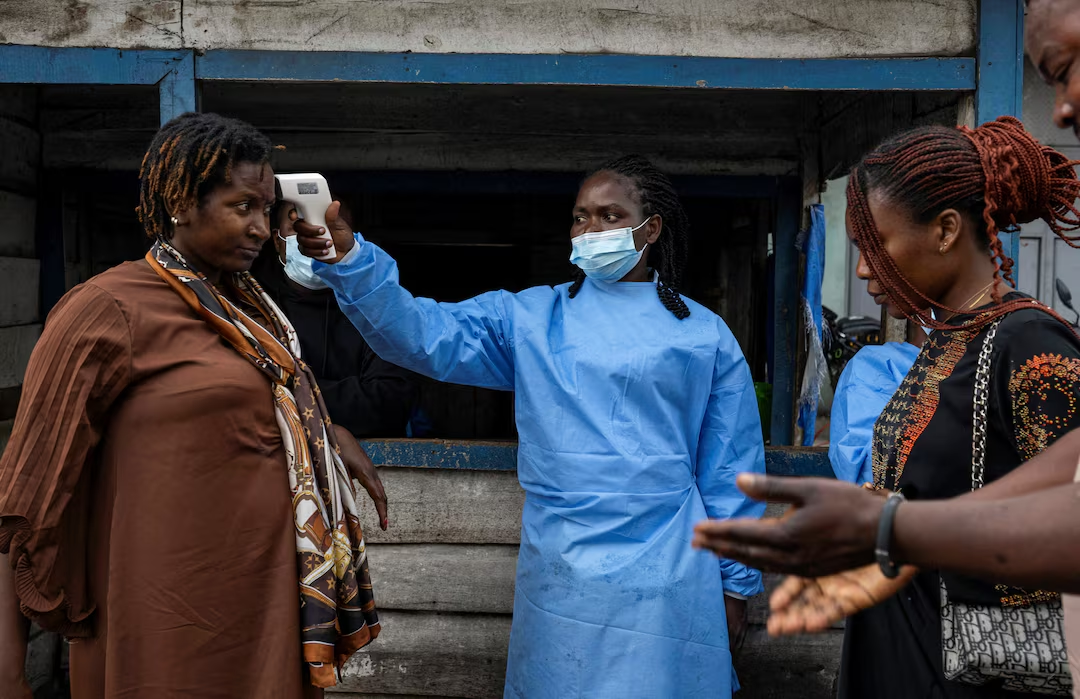
The Congo Ebola outbreak has taken an alarming turn, with health authorities reporting one of the largest single-day increases in cases since the crisis began. A month after the outbreak was officially declared, weak contact tracing, regional insecurity, and persistent funding shortages continue to undermine efforts to contain the deadly virus.
A Sharp Spike in Cases
On Sunday, the Congolese Ministry of Health reported 72 new cases within a 24-hour period, marking one of the highest daily jumps recorded during this outbreak. The surge brought the total number of confirmed cases to 782.
The death toll has also climbed steadily. The ministry confirmed 32 new deaths, raising the total number of confirmed fatalities to 181. These figures paint a sobering picture of an outbreak that is accelerating rather than slowing.
The True Scale May Be Larger
Troublingly, experts believe the actual number of cases is likely higher than the official count. Part of the problem lies in the outbreak’s delayed confirmation, which came on May 15, weeks after the disease is suspected to have first begun spreading.
Compounding the challenge, the contact tracing coverage rate has fallen to just 56 percent, a sharp decline from the previous week. This drop significantly hampers the ability of health workers to track and isolate potential cases, allowing the virus more room to spread undetected.
A Rare and Untreatable Strain
This particular outbreak is especially concerning because of the virus responsible for it. The current crisis is caused by the rare Bundibugyo virus, which has no approved vaccine or treatment.
This sets it apart from the more familiar Zaire virus, which was behind most of Congo’s previous 16 Ebola outbreaks. The absence of proven medical countermeasures for the Bundibugyo strain leaves health workers with far fewer tools to protect communities and treat the infected.
Recoveries and Fatality Rate
Amid the grim statistics, there are some signs of survival. The ministry reported that 56 people have recovered from the disease so far.
However, the outbreak remains deadly, with a current fatality rate of 23 percent. That figure underscores just how dangerous this strain is and highlights the urgent need for an effective and coordinated response.
International Response Intensifies
Global and regional health bodies have stepped up their efforts to combat the outbreak. The World Health Organization announced on Sunday that it is intensifying testing, contact tracing, and treatment.
Africa’s top health body is also mobilizing resources on multiple fronts. Its efforts include:
- Deploying technical expertise to the affected areas.
- Supporting laboratory systems to improve testing capacity.
- Conducting active case finding to identify infections early.
- Strengthening community engagement to build trust and cooperation.
Jean Kaseya, head of the Africa Centers for Disease Control and Prevention, voiced a firm commitment to the cause. He pledged continued support to affected countries until transmission is halted and issued an urgent appeal to partners and donors to mobilize resources to strengthen the response and save lives.
An Outbreak Centered in Ituri
The geographic concentration of the outbreak reveals where the crisis is most acute. Congo’s eastern province of Ituri accounts for more than 90 percent of the cases, making it the epicenter of the emergency.
The virus has not remained contained there, however. Cases have also been recorded in the North Kivu and South Kivu provinces, and the disease has even spread across the border into Uganda, raising fears of a wider regional outbreak.
Conflict and Displacement Complicate the Fight
One of the greatest obstacles to controlling the outbreak is the volatile situation on the ground in Ituri. According to the U.N. humanitarian office, nearly a million people have been displaced by conflict in the province.
This mass displacement makes contact tracing extraordinarily difficult. As people flee attacks or move frequently across the vast province, health workers struggle to track potential cases. The region’s dense forests, poor roads, and remote villages, some of which can take days to reach, only add to the challenge.
Further complicating matters is the constant movement of thousands of artisanal miners, who regularly travel between remote sites in the mineral-rich region. Tracing infections among such a mobile population presents yet another formidable barrier to containment.
Final Thoughts
The Congo Ebola outbreak has reached a critical juncture, with record daily case increases signaling that the crisis is far from under control. The combination of a rare and untreatable virus, declining contact tracing, ongoing conflict, and widespread displacement has created a perfect storm that threatens to prolong the emergency. While international and regional health organizations are ramping up their response, the calls for urgent funding and resources underscore how much still needs to be done. As the virus continues to spread within Congo and beyond its borders, the coming weeks will test the resolve and capacity of everyone working to bring this dangerous outbreak to an end.
Author