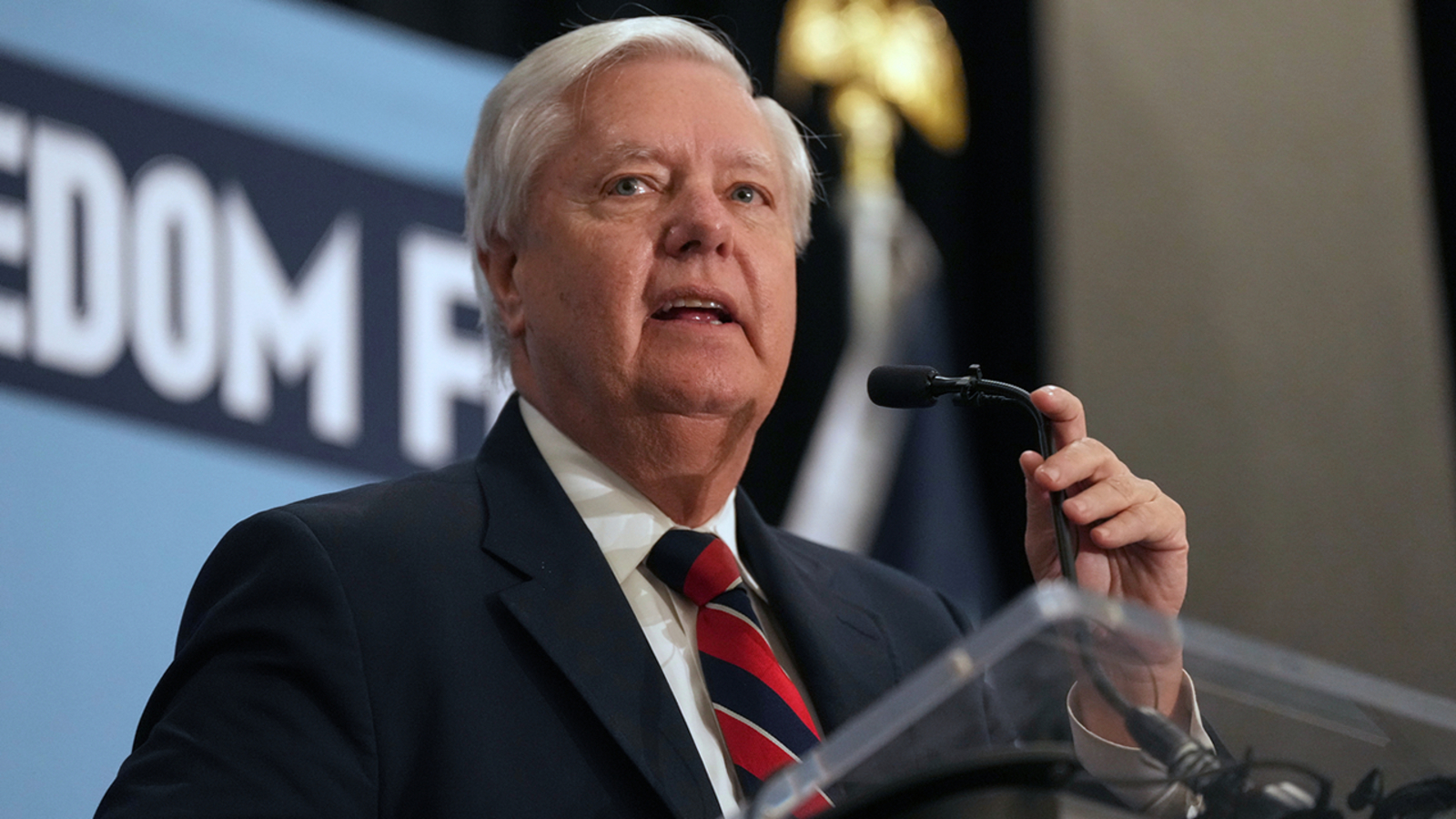
Lindsey Graham died suddenly on Saturday night, and the consequences ripple outward in every direction at once — through South Carolina politics, through a razor-thin Senate majority, and through American policy on Russia.
The Lindsey Graham Senate seat is now vacant in the middle of his campaign for a fifth term, and the machinery to fill it is already moving.
The Immediate Political Reality
Graham was not a peripheral figure.
He chaired the Senate Budget Committee. He was among the loudest foreign policy hawks in Washington and a committed supporter of Ukraine in its war with Russia — he had recently returned from meeting President Volodymyr Zelensky in Kyiv.
Shortly before his death, he announced a bipartisan agreement with the White House to advance long-stalled sanctions on Russia, designed to pressure Moscow toward ending the war.
That deal now proceeds, if it proceeds, without its architect.
A Replacement Could Come Quickly
Under South Carolina law, the governor may appoint someone to serve the remainder of Graham’s term at any time.
Gov. Henry McMaster’s office has not indicated a timeline. In a statement, McMaster called Graham “irreplaceable” and “the fiercest of fighters for South Carolina and America.”
The appointment power gives McMaster significant, immediate influence — the ability to install a senator without any voter involvement.
The Special Election Calendar
Separately, state law requires a special election, and the schedule is compressed.
- July 21: Filing period opens (the second Tuesday after Graham’s death)
- July 28: Filing closes — candidates have exactly one week to declare
- Aug. 4: Special primary
- Aug. 18: Runoff, if no candidate wins outright
Graham had already won the Republican primary last month and was overwhelmingly favored in November. The party must now start over.
Expect a Scramble
Graham occupied this seat for more than two decades, effectively blocking an entire generation of ambitious South Carolina Republicans from advancing.
That dam has broken.
In a deep-red state, this seat is close to a lifetime appointment for whoever wins it. The competition is likely to be fierce.
Potential contenders include:
- Nancy Mace, who gave up her House seat for an unsuccessful gubernatorial run — a person familiar with her thinking confirmed she is strongly considering a Senate bid
- Ralph Norman, who also abandoned his House seat in a failed run for governor
- Lt. Gov. Pamela Evette, Trump’s initial gubernatorial pick, who lost in a runoff
- Mark Lynch, the business owner who challenged Graham from the right and took nearly 29 percent of the primary vote in June
South Carolina currently has six sitting Republican House members, any of whom could join.
Trump Will Likely Decide It
In practical terms, one endorsement may settle the matter.
Speaking Sunday on NBC’s “Meet the Press,” Trump indicated he already has a preference.
There is “somebody that I think would be great” for the seat, he said, though he declined to name the person, calling it “too soon.”
“I don’t want to even talk about anybody, but I do have somebody that I think is really good,” he added.
In a Republican primary in South Carolina, that endorsement is close to decisive.
The Senate Math Just Got Worse
Graham’s death lands at a genuinely inconvenient moment for Senate Republicans.
When the chamber returns from recess this week, the GOP will be down two members. Sen. Mitch McConnell has been hospitalized since last month, with little public clarity about his condition.
That leaves Republicans operating on the barest possible majority.
Their nominal 53-47 edge has already proven unreliable. Ideological friction between Trump and more moderate Republicans has repeatedly fractured the caucus on key votes.
Now the cushion is gone.
What’s at Stake in the Next Four Weeks
The immediate test is the confirmation of Todd Blanche, Trump’s controversial nominee for attorney general, whose hearing is scheduled for Wednesday.
There is also legislative business Graham was expected to lead. As Budget Committee chairman, he was positioned to shepherd another Republican reconciliation bill — the fast-track mechanism that lets the majority pass fiscal legislation with a simple majority.
The window is narrow. The Senate plans to work for four weeks, then break for a month, returning in mid-September.
The Russia Question
Beyond the vote counting sits a policy question with international consequences.
Graham was the driving force behind the Russia sanctions effort. He built the coalition. He negotiated with the White House. He traveled to Kyiv repeatedly.
Whether that legislation retains its momentum without him — and whether his replacement shares his hawkish instincts on Ukraine — is now an open question that Moscow is undoubtedly watching.
What Comes Next
McMaster will name someone, possibly soon. Candidates will file within days. A primary follows in three weeks.
And somewhere in that sequence, Trump will say a name — and the race will likely end there.
Author