A Surprising Legal U-Turn
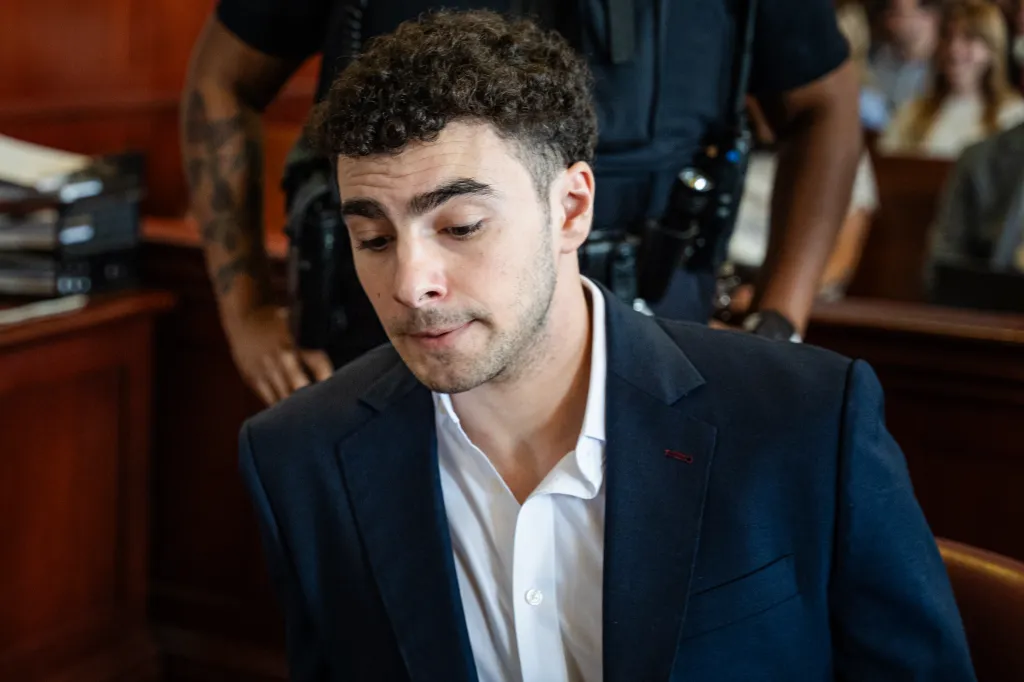
Luigi Mangione’s psychiatric defense has been unexpectedly pulled off the table, marking a dramatic shift in one of the most closely watched criminal cases in the country. On Thursday, Mangione’s legal team reversed course and abandoned plans to rely on a psychiatric argument when his trial begins in New York state court this September.
Mangione has pleaded not guilty to the 2024 murder of health insurance executive Brian Thompson, who was shot on a Manhattan street. The sudden change in strategy has left legal observers stunned and searching for answers.
From Evaluation to Reversal in Just One Day
The about-face came with remarkable speed. Only a day earlier, during a hearing before state Judge Gregory Carro, Mangione’s attorneys had confirmed that their client was undergoing psychiatric evaluation. At that time, they indicated his defense would rest, at least partly, on the claim that he had been experiencing “extreme emotional disturbance.”
That position vanished almost overnight. In a brief, one-line letter sent to Judge Carro on Thursday, Mangione’s team stated that they no longer intended to introduce psychiatric evidence at trial, at least “at this time.”
The reasoning behind the sudden shift remains unclear. Mangione’s attorneys did not respond to requests for comment, leaving the public and legal experts to speculate about what prompted the move.
Legal Experts React with Surprise
The reversal caught seasoned legal minds off guard. Former Manhattan prosecutor and legal analyst Gary Galperin described the decision as a stunning turnaround, noting that withdrawing a psychiatric defense at this stage is highly unusual.
Galperin admitted that the motivations behind the change could only be guessed at for now. He also pointed out that the central question moving forward is what kind of defense Mangione’s team will actually pursue once the trial begins.
With the psychiatric route seemingly closed, the strategy his lawyers will adopt has become one of the biggest unknowns in the case.
Pressure from the Court and Prosecutors
The timing of the withdrawal appears closely connected to mounting pressure inside the courtroom. Just before the reversal, Judge Carro had ordered Mangione’s attorneys to promptly hand over psychiatric information to prosecutors.
During Wednesday’s hearing, Carro made his expectations clear. He stressed that the prosecution needed to understand the nature of any condition the defendant might be suffering from and how it could have triggered extreme emotional distress. He warned the defense against springing surprises on the eve of trial and told them firmly to get the matter resolved.
Prosecutors, for their part, had voiced growing frustration. Assistant Manhattan District Attorney Joel Seidemann repeatedly accused Mangione’s team of stonewalling by withholding key medical details about his mental state. He complained that the prosecution had received nothing at all.
Defense Pushes Back on Delay Claims
Mangione’s lead attorney, Karen Friedman Agnifilo, rejected the accusations head-on. She denied that her team was deliberately delaying the proceedings or improperly keeping information from the court.
Still, legal analysts saw a strategic angle in the decision. Richard Schoenstein noted that by dropping the psychiatric defense, Mangione’s team effectively sidesteps the court-imposed deadline to produce its psychiatric evidence.
According to Schoenstein, the move doesn’t completely rule out the possibility of the defense revisiting some form of psychiatric argument later in the trial. However, he cautioned that pursuing such a strategy down the road would now be considerably more difficult.
A Case That Captured the World’s Attention
Mangione’s trial has drawn intense interest far beyond New York. Legal experts point out that the 28-year-old has attracted an unusually high level of public support, much of it tied to his vocal criticism of the health insurance industry.
The victim, Brian Thompson, was a father of two and served as CEO of UnitedHealthcare at the time of his death. The contrast between the high-profile victim and the wave of public sympathy for the accused has made the case a lightning rod for broader debates about the American healthcare system.
That unusual dynamic has only intensified scrutiny of every development in the proceedings.
Sealed Documents Stay Hidden
The shift in defense strategy also had immediate consequences for the court record. During Wednesday’s hearing, Judge Carro had signaled that a batch of court documents related to Mangione’s potential psychiatric defense would be released to the public.
By Thursday, however, that plan was scrapped. In a signed order, Carro explained that because Mangione would no longer be presenting psychiatric evidence, the earlier order sealing certain transcripts, emails, and documents would remain in place.
As a result, materials that might have offered insight into the abandoned defense will stay out of public view, at least for now.
What Lies Ahead
With the psychiatric defense set aside, attention now turns to how Mangione’s legal team will approach the trial itself. The decision raises fresh questions about strategy, timing, and what arguments might ultimately be presented to the jury.
Mangione’s state trial is scheduled to begin in early September. Beyond that, a separate federal trial is expected to follow later, ensuring that his legal battles will remain in the spotlight for months to come.
For now, the abrupt withdrawal of the psychiatric defense stands as a pivotal and puzzling moment in a case that continues to grip audiences across the country and around the world. As September approaches, all eyes will be on how this high-stakes legal drama unfolds.
Author