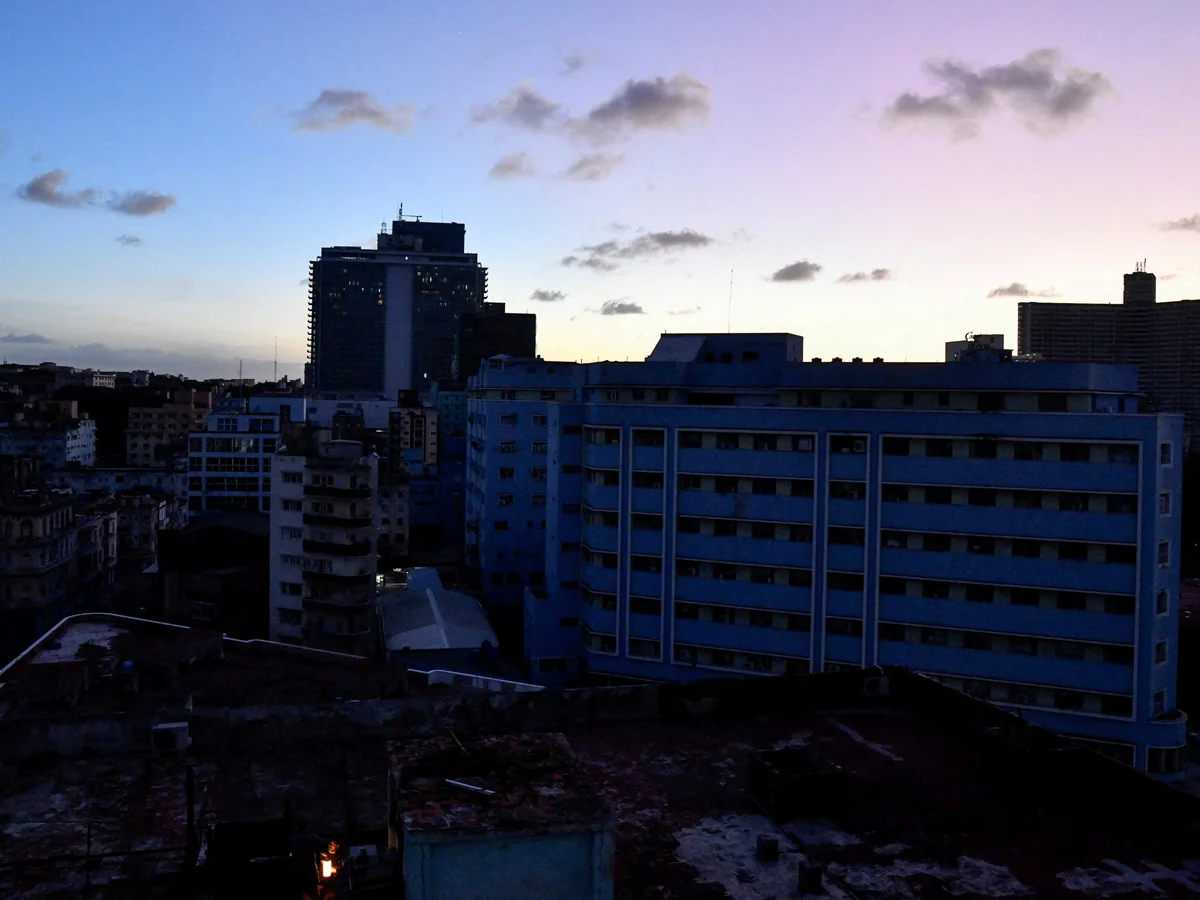
The Cuba grid collapse late Sunday left roughly ten million people without electricity, marking the latest in a punishing sequence of nationwide failures. The state-owned grid operator confirmed the breakdown but offered almost nothing beyond that acknowledgement, a pattern that has become familiar to Cubans watching their power system falter with increasing regularity.
Another Failure in a Worsening Pattern
Union Electrica de Cuba announced the collapse through posts on X and Facebook, providing no additional detail about the cause, the affected regions, or how long restoration might take.
The silence is telling in its own way. It follows three separate nationwide blackouts in July alone, a frequency that suggests the system is no longer experiencing isolated failures but operating perpetually on the edge of one.
For an island nation with limited alternatives, each collapse cascades outward: refrigeration fails, water pumping stops, hospitals shift to generators, and communications degrade.
The Fuel Problem Behind the Failures
The immediate technical cause of any grid collapse is one thing. The structural cause in Cuba’s case is straightforward: the country cannot secure enough fuel to run its power plants.
That shortage has intensified sharply following an oil blockade imposed by President Donald Trump. The measure came after Washington’s removal of Venezuelan President Nicolas Maduro on January 3.
Venezuela had served for years as Cuba’s principal oil supplier, an arrangement rooted in ideological alignment and sustained through periods when little else in the Cuban economy functioned reliably. The loss of that relationship removed the foundation of Cuban energy security.
Mexico, which had provided an alternative channel, has also halted imports amid mounting US pressure.
The result is an energy system with ageing infrastructure and no dependable fuel supply, a combination that makes repeated failure close to inevitable.
Why the Grid Is So Fragile
Cuba’s power generation relies heavily on thermoelectric plants, many of which date back decades and have suffered from chronic underinvestment in maintenance.
Systems in that condition have little margin. When a single major plant drops offline, the remaining capacity may be insufficient to hold frequency across the network, and the failure propagates until the whole grid goes down.
Fuel scarcity compounds the problem in a specific way. Operators cannot run units at optimal loads or schedule maintenance properly when supply is uncertain, which accelerates the very deterioration causing the breakdowns.
A Cautious Opening in an Otherwise Closed Sector
The crisis has pushed Havana toward changes it has long resisted.
Cuba’s energy sector has historically been tightly controlled by the state, with foreign participation heavily restricted and private involvement essentially absent. Fuel shortages and severe US sanctions have made that model untenable.
Two recent moves signal a shift:
- Authorisation of the country’s first foreign-backed fuel import venture
- Permission for nearly 200 Cuban businesses to take part in wholesale fuel distribution
Both represent meaningful departures from established practice. Allowing private domestic enterprises into wholesale distribution, in particular, concedes that the state apparatus alone cannot manage the logistics of keeping fuel moving.
Whether these openings arrive quickly enough to matter is a separate question. Establishing import channels and distribution networks takes time the grid may not have.
What Blackouts Mean on the Ground
For Cubans, a national blackout is not an abstraction. It is food spoiling in refrigerators that were already sparsely stocked. It is water that stops reaching upper floors of apartment buildings because pumps have no power. It is businesses closing and workers losing income they cannot afford to lose.
Repeated outages have previously fuelled public frustration on the island, where economic hardship has already driven substantial emigration in recent years.
The psychological weight of frequency matters too. An occasional outage is an inconvenience. A pattern of monthly nationwide collapses reshapes how people plan their days and how much confidence they place in basic services continuing to function.
The Geopolitical Squeeze
What is happening to Cuba’s grid cannot be separated from regional politics.
The removal of Maduro in Venezuela severed the supply line Cuba had depended on. The subsequent blockade closed off replacement options. The pressure applied to Mexico eliminated another. Each step tightened the constraint on an energy system that had no reserve capacity to absorb it.
Cuba’s response, opening portions of its economy to foreign and private participation, represents exactly the kind of structural change sanctions campaigns are designed to produce. Whether it delivers relief or arrives too late to prevent deeper deterioration remains unresolved.
What to Watch Next
Several indicators will reveal the trajectory over coming weeks.
Restoration time from Sunday’s collapse offers one measure of how much capacity remains functional. The interval before the next nationwide failure offers another. And the practical progress of the new import venture and wholesale distribution arrangements will show whether the policy shift translates into actual fuel reaching plants.
For now, the pattern is unmistakable. A grid that once failed occasionally is now failing repeatedly, and the underlying causes show no sign of resolving on their own.
Author
-
Lucienne Albrecht is Luxe Chronicle’s wealth and lifestyle editor, celebrated for her elegant perspective on finance, legacy, and global luxury culture. With a flair for blending sophistication with insight, she brings a distinctly feminine voice to the world of high society and wealth.