Washington Declares Statewide Emergency as Wildfires Close In on Spokane
A Washington statewide emergency over wildfires was declared Saturday by Gov. Bob Ferguson, as punishing drought, abnormal heat, powerful winds and a record-breaking fire season converged on communities across the state. Alongside the proclamation, the governor imposed a broad ban on most outdoor and agricultural burning that will remain in force through Sept. 30.
The announcement arrived just ahead of a warning from the National Weather Service that forecasters described in unusually stark terms. Meteorologists issued a Red Flag Alert flagged as a “particularly dangerous situation,” with fire weather risk across Eastern Washington rated at the extreme end of the scale.
Why the Governor Acted Now
Ferguson framed the decision as preventive rather than reactive. In a statement, he pointed to the combination of a record-setting drought and sustained high winds as the driver behind conditions he called dangerous across the state, and said the emergency declaration was intended to reduce the risk of deaths and property loss.
The backdrop is a state entering its fourth straight year of statewide drought, a stretch officials have characterized as unprecedented in the modern record. Four consecutive dry years leave soil moisture depleted, streamflows low and vegetation primed to ignite from the smallest spark.
Fires on Spokane’s Doorstep
The governor briefed the public on the state’s response to several fast-moving fires burning near Spokane, where officials warned that hazardous conditions would persist into the evening hours.
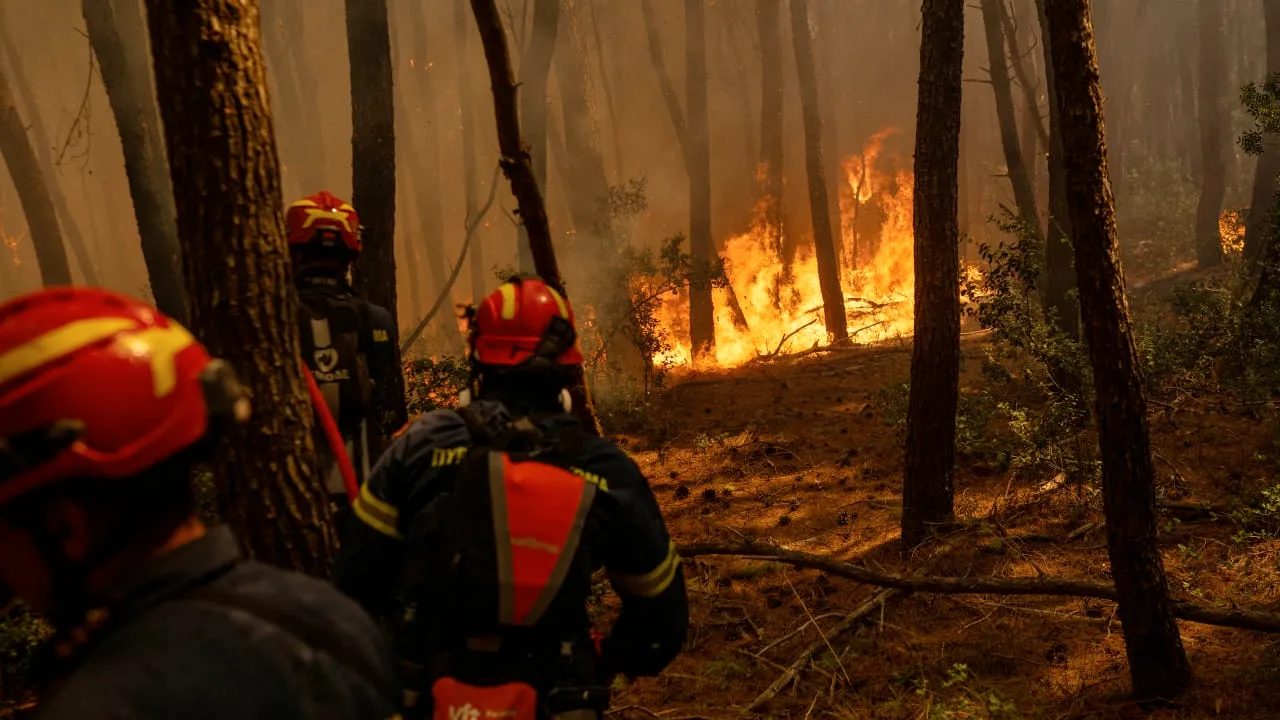
Strong winds pushing across parched terrain allowed multiple blazes to develop on the city’s outskirts, and state officials said some are now pressing toward neighborhoods inside Spokane itself. That proximity is what elevated the situation from a rural firefighting operation to an urban threat requiring statewide coordination.
Joining Ferguson at the briefing were Commissioner of Public Lands Dave Upthegrove and emergency management leaders, who walked through the state’s response posture and pressed residents to monitor conditions closely, particularly evacuation notices that could change with little warning.
Upthegrove delivered the bluntest message of the session, urging the public not to be the source of the next ignition.
Officials repeatedly steered residents toward official channels for updates on fire behavior, evacuation zones and containment progress, rather than relying on secondhand information circulating online.
The Largest Fires Burning Now
Two incidents stand out for their size.
The Modrite Fire has consumed 40,625 acres and stands at 22 percent containment. Three helicopters have been committed to that fire continuously for the past three weeks, an indication of how difficult the terrain and conditions have been.
The Little Giant Fire had reached 28,393 acres as of an update issued roughly four hours before the governor’s briefing, meaning its actual footprint was likely larger by the time officials spoke.
Forecasters expect elevated winds to continue into the evening, which creates volatile behavior and raises the likelihood of significant growth on active perimeters overnight.
A Season Outpacing Recent Years
Figures from the Washington Department of Natural Resources put this year’s totals in perspective. More than 1,000 individual fires have burned roughly 425,000 acres, the largest area consumed since 2021.
Of that total, upward of 200,000 acres are currently burning across 12 large incidents. In practical terms, nearly half the season’s damage is still active rather than resolved, which limits how many crews and aircraft can be redirected to new starts.
What the Burn Ban Covers
The statewide prohibition targets the activities most likely to escape control in dry, windy weather. Restricted activities include:
- Burning yard debris
- Disposing of trash by fire
- Land clearing burns
- Weed abatement burning
- Bonfires
- Campfires that are not contained within a fire ring or fire pit
Several exceptions remain in place. Stoves and grills fueled by liquid or gas are still permitted when used on a nonflammable surface positioned at least five feet away from vegetation. Agricultural and silvicultural burns that hold proper permits may continue. Campfires are allowed when contained in approved rings or pits on private property, as well as at state, county and municipal parks and campgrounds.
Officials also stressed that the statewide order sets a floor, not a ceiling. Where local jurisdictions or the Department of Natural Resources have imposed tighter rules, those stricter limits govern. Consumer fireworks remain illegal to sell or set off outside of licensed public displays.
Additional Resources Unlocked
Beyond restricting ignition sources, the proclamation opens access to outside help. Washington can now draw firefighting resources through the Emergency Management Assistance Compact, the mutual aid framework that allows states to lend personnel and equipment to one another during disasters. The order also clears the way for further National Guard activations as commanders determine they are needed.
That process is already underway. Ferguson activated 110 members of the Washington National Guard on July 31, supplementing 27 helicopter crew members who had been called up earlier.
The Washington State Fire Marshal’s Office has deployed 13 task forces. Eight are working the Sinlahekin Fire in Okanogan County, while five are committed to the Bradeen Hill Fire in Stevens County. Three strike teams have been sent to the Kaiser Canyon Fire in Okanogan County and the Little Giant Fire in Chelan County, and an additional task force is positioned in Kittitas County awaiting assignment.
Practical Steps for Residents
Fire Marshal officials offered guidance aimed at the everyday behaviors that start a surprising share of wildfires. Residents were asked to avoid any activity capable of throwing sparks into dry vegetation, to check vehicles for hazards such as trailer chains dragging on pavement, and to fully extinguish smoking materials before disposing of them.
Those recommendations may sound minor, but in conditions this dry, a single spark landing in cured grass can produce a fire that outruns crews within minutes.
What Happens Next
Much depends on the wind. If gusts ease overnight, crews gain a window to strengthen containment lines around the Spokane-area fires. If they hold, growth is likely and evacuation boundaries could expand quickly.
With the burn ban running through the end of September, state officials are clearly planning for a long stretch of elevated risk rather than a short emergency. Residents in and around Spokane should treat evacuation readiness as an immediate priority rather than a precaution to arrange later.
Author
-
Lucienne Albrecht is Luxe Chronicle’s wealth and lifestyle editor, celebrated for her elegant perspective on finance, legacy, and global luxury culture. With a flair for blending sophistication with insight, she brings a distinctly feminine voice to the world of high society and wealth.