The Second Thomas Shoal clash has produced two irreconcilable accounts of the same encounter, with Beijing filing a formal diplomatic protest Tuesday and accusing Philippine forces of instigating a confrontation that Manila says left one of its sailors bleeding from a head wound.
Both governments agree a violent incident occurred. Almost nothing else in their versions matches.
China’s Account
The Chinese Foreign Ministry announced it had summoned the Philippine ambassador and lodged a formal protest over what it called malicious harassment of Chinese personnel.
According to Beijing, it was the Philippine Navy that approached and rammed Chinese Coast Guard vessels in a dangerous manner near the shoal.
The ministry said Philippine servicemen maliciously harassed and attacked Chinese law enforcement officers, placing their safety at risk. It maintained that the Coast Guard vessels were conducting legitimate law-enforcement activities in nearby waters when the incident unfolded.
Beijing added a pointed accusation about the aftermath, saying the Philippine side provoked the confrontation and then attempted to shift blame, distort facts and generate malicious media coverage.
The Video
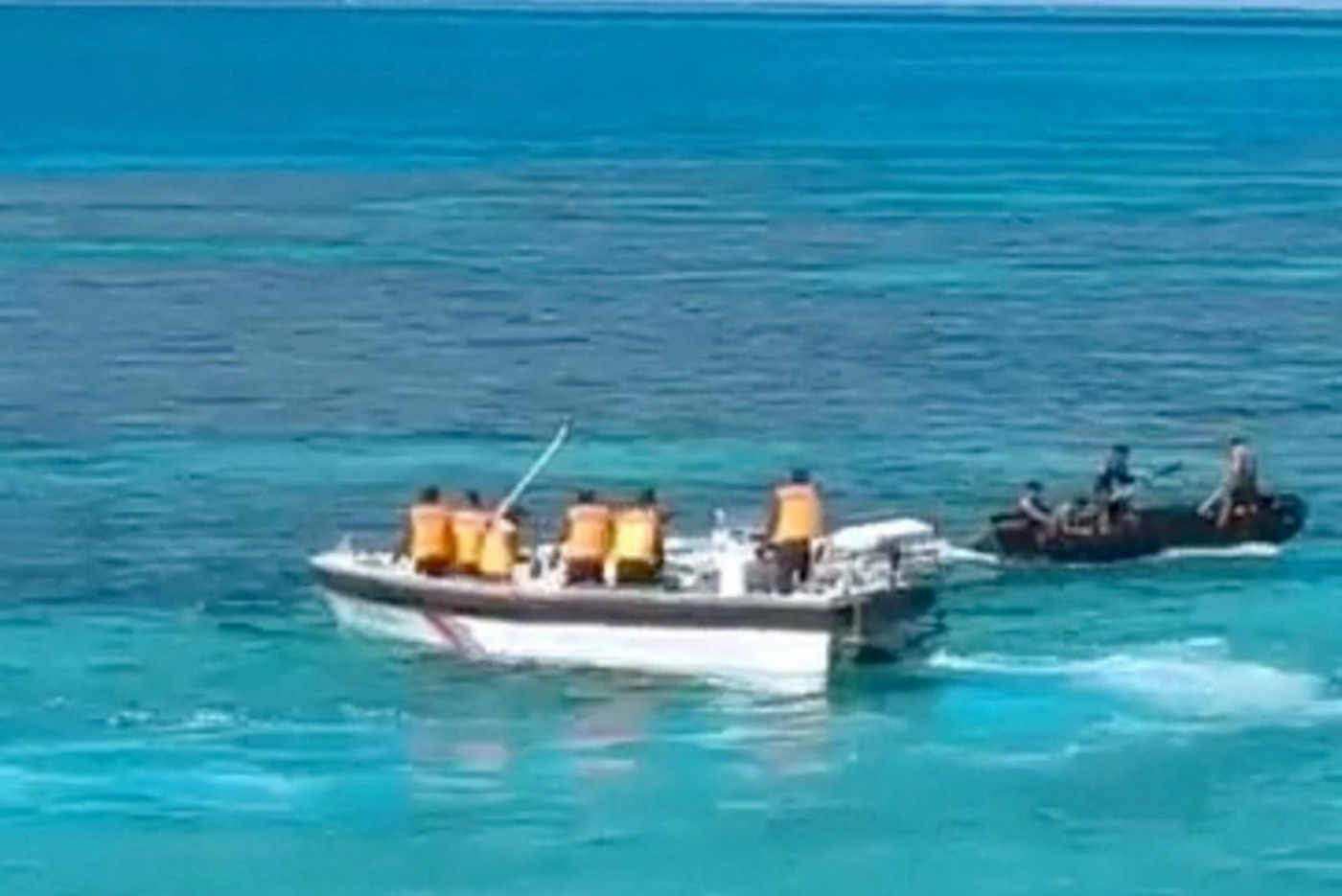
The official account of the Chinese military posted footage on X showing two rubber boats maneuvering around a Chinese Coast Guard vessel in what the accompanying statement described as an attempt to encircle and ram it.
The military said Filipino servicemen struck first, attacking Chinese personnel with paddles and long poles.
Manila’s Account
The Philippine version reverses the sequence entirely.
Philippine officials say Chinese Coast Guard personnel struck a Navy serviceman in the head with a wooden baton, wounding him.
The Philippine military said Chinese vessels unlawfully approached within close range of its outpost, and that Chinese crew reacted violently as they were being driven away.
One Point of Agreement
China’s Coast Guard said separately Tuesday that it had allowed the Philippines to transfer the injured serviceman away from the area.
That phrasing is worth noting. Framing a medical evacuation as something permitted rather than simply facilitated asserts authority over the waters in question, which is precisely what the dispute is about.
The Territory at Issue
Second Thomas Shoal, which China calls Ren’ai, sits at the center of one of the region’s most persistent flashpoints.
The Philippines maintains a military outpost on the reef. China claims the feature as its own territory.
That combination, a permanent Philippine presence on a feature Beijing considers Chinese, guarantees recurring friction. Resupply missions to the outpost have generated confrontations repeatedly, and each one carries the risk of escalating beyond water cannons and improvised weapons.
Washington Responds
The US State Department condemned the incident and called on China to immediately cease what it described as destabilizing conduct.
American involvement is structural rather than optional here. The United States maintains a mutual defense treaty with the Philippines, and officials have stated previously that it extends to armed attacks on Philippine public vessels and armed forces in the South China Sea.
That commitment is why incidents involving paddles and batons draw responses from Washington. The gap between a non-lethal scuffle and a treaty-triggering event is narrower than it appears.
Why Both Sides Tell It This Way
The competing narratives are not simply about assigning fault for one encounter.
For China, establishing that its Coast Guard was conducting law enforcement reinforces the claim that these are Chinese waters where Chinese authority applies. Framing Philippine vessels as the aggressors supports that legal architecture.
For the Philippines, documenting Chinese personnel injuring a sailor near a Philippine outpost supports the opposite case: that China is using force against a legitimate national presence in waters where it has no standing.
Each account is doing legal and diplomatic work beyond describing what happened.
The Pattern
Confrontations at Second Thomas Shoal have followed a recognizable script over recent years:
- A Philippine resupply or patrol mission approaches the outpost
- Chinese Coast Guard vessels intercept
- Physical contact occurs, ranging from water cannons to blocking maneuvers to direct collisions
- Both sides release footage supporting their version
- Diplomatic protests follow, and the US issues a statement
What varies is the severity. An injured serviceman represents an escalation from property damage, and injuries move the situation closer to thresholds that neither government has publicly defined.
What to Watch
The immediate question is whether this remains a diplomatic exchange or produces changes on the water.
Beijing has not indicated any intention to reduce its presence around the shoal. Manila has shown no willingness to abandon the outpost, which it treats as essential to maintaining its claim.
With both positions fixed, the next resupply mission becomes the next test. The underlying dispute over sovereignty is not going to be resolved, which means the practical question is whether the two coast guards can keep colliding without someone being killed.
So far they have managed it. The margin has been narrowing.
Author