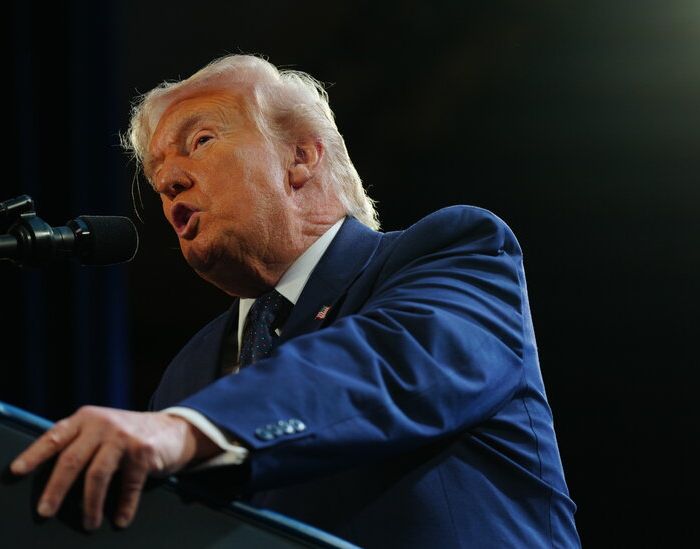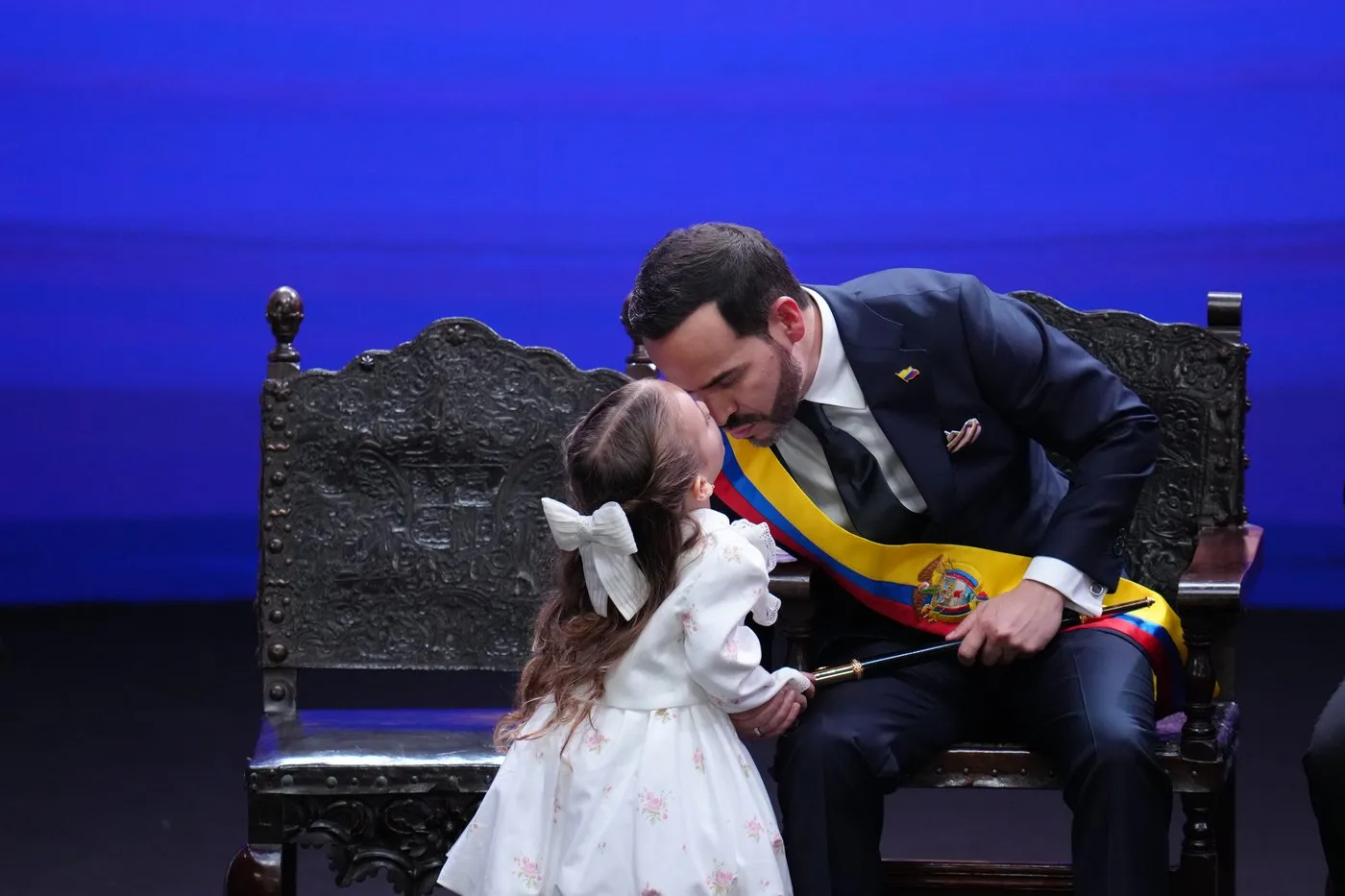
De la Espriella Colombia president Abelardo took the oath of office Friday, opening a sharply different chapter for a country that spent four years under leftist leadership and now turns toward confrontation with the armed groups that control much of its territory.
The 48-year-old right-wing lawyer won June’s run-off against outgoing President Gustavo Petro on a platform built around three promises: defeat narco-terrorism, cut government spending by as much as 40 percent, and revive the oil and gas sector.
A Ceremony Held Where the Conflict Lives
The inauguration broke with precedent before a word was spoken. Rather than holding it in Bogota, de la Espriella chose Cali, a city in Colombia’s volatile southwest that has absorbed decades of violence linked to the state’s fight with armed organisations.
The location was the message. It placed the ceremony inside contested territory rather than in the safety of the capital.
Security reflected that reality. The event took place in a university auditorium before Congress, with soldiers and armoured vehicles positioned along nearby roads. Police had manned checkpoints for days beforehand, screening vehicles for explosives.
The Break With Negotiated Peace
De la Espriella left no ambiguity about his approach, declaring that the option of dialogue is completely exhausted.
He pledged to relentlessly defeat narco-terrorism and warned that there would be no room for manoeuvres undermining national stability.
That represents a direct reversal of Petro’s strategy, which centred on negotiated settlements with armed groups. De la Espriella has characterised that policy as a failure.
The region he chose for his inauguration illustrates the scale of the problem. Colombia’s southwest remains contested by several actors:
- Dissident factions of the FARC who rejected the peace agreement signed a decade ago
- The Clan del Golfo drug cartel
- The National Liberation Army, known as the ELN
After the ceremony, the new president travelled to a nearby military battalion to speak directly with troops, framing the visit as both a boost to morale and an indication of how he intends to govern.
An Economic Pitch to Business
Addressing Colombian business owners, de la Espriella promised his government would act as their partner in investing in the country.
His energy agenda was specific. He called for developing what he described as responsible and sustainable fracking, arguing that Colombia cannot accept proven oil reserves lasting only a few more years or a continued decline in gas reserves. He committed to strengthening the state-run oil company Ecopetrol.
That position collides directly with Petro’s environmental orientation, which had moved the country away from new hydrocarbon exploration.
Who He Is
Known to supporters as El Tigre, the Tiger, de la Espriella arrived in the presidency without prior elected office.
He built his wealth and public profile as a lawyer and businessman, and largely financed his own campaign, running explicitly as an outsider.
The contrast with his predecessor is difficult to overstate. Petro is a former rebel fighter who repeatedly criticised US President Donald Trump’s approach to drugs and immigration. De la Espriella has aligned himself closely with Trump and with the militarised approach to drug crime that the administration has promoted across Latin America.
Foreign Policy Realignment
The new president has committed to joining the Shield of the Americas, a US-backed regional coalition against drug trafficking that emerged from a summit hosted by the Trump administration in March.
He also intends to restore diplomatic relations with Israel while cutting ties with Cuba and Nicaragua, which he has described as tyrannies.
Washington responded quickly. The State Department announced Friday that the administration plans to provide $1 billion in security assistance, subject to congressional approval, describing it as a cornerstone of a renewed partnership supporting shared objectives.
Trump had personally endorsed the campaign.
A Country That Remains Divided
The transfer of power was not smooth. Petro initially refused to accept the result, alleging manipulation of vote tallies. Both international observers and Colombia’s electoral authorities rejected that claim, and he eventually agreed to respect the outcome.
Protests broke out on inauguration day in Cali, Bogota and Barranquilla.
In Cali’s Puerto Resistencia neighbourhood, which became the centre of mass antigovernment demonstrations in 2021, 25-year-old Sebastian Ocampo said residents were defending dignity against a president who had not earned their support.
Jorge Restrepo, an economics professor at Javeriana University in Bogota, told Al Jazeera that the narrow margins point to real difficulty ahead. He described the inaugural address as heavy on intention and political principle while short on specifics, and argued that the absence of detail makes it hard to see how the promised transformation would be delivered.
Part of a Regional Pattern
The victory extends a run of conservative wins across Latin America. Seven right-wing leaders have taken office since Trump returned to the White House in January 2025, among them Peru’s Keiko Fujimori, Chile’s Jose Antonio Kast and Argentina’s Javier Milei.
Both Milei and Kast attended Friday’s ceremony, alongside Spain’s King Felipe VI, acting US Attorney General Todd Blanche and FIFA president Gianni Infantino.
What Comes Next
The promises are ambitious and, in several cases, in tension with one another. Cutting spending by up to 40 percent while escalating military operations against multiple armed groups requires reconciling two expensive priorities.
Whether the confrontational approach produces results where negotiation did not is the question that will define the term. The answer will be measured first in the southwest, where the new president chose to begin.
Author
-
Lucienne Albrecht is Luxe Chronicle’s wealth and lifestyle editor, celebrated for her elegant perspective on finance, legacy, and global luxury culture. With a flair for blending sophistication with insight, she brings a distinctly feminine voice to the world of high society and wealth.