The Forest Grove quintuple murder suspect was found dead in Washington state Sunday, ending a rapidly developing manhunt just a day after investigators discovered five bodies at a rural property outside Portland, Oregon.
Benjamin Charles Parker, 36, died of an apparent self-inflicted gunshot wound inside his vehicle in Enumclaw, Washington, according to authorities. His death appears to close the immediate search phase of a case that investigators have described as one of the most complex crime scenes they have encountered in decades.
How the Case Unfolded
The bodies were discovered Saturday at a home in a rural community near Forest Grove, Oregon, roughly 25 miles west of Portland. Investigators quickly identified Parker as the suspect in what authorities are calling a quintuple murder.
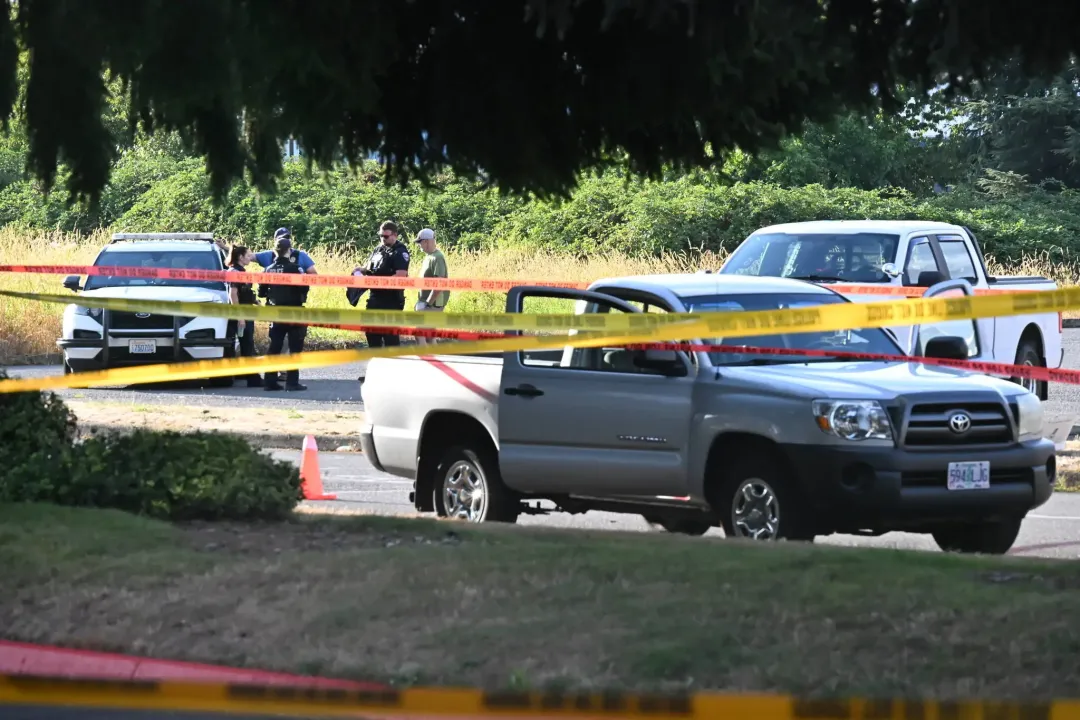
Tracking his movements led detectives north across the state line. The Washington County Sheriff’s Office stated that their investigation pointed to Parker being in Enumclaw, Washington. Local officers there located his vehicle and found him deceased inside, with authorities believing he took his own life.
The Enumclaw Police Department confirmed that an unidentified man was found dead behind a Safeway grocery store, a discovery that investigators subsequently connected to the ongoing Forest Grove case.
A Scene Investigators Call Unprecedented
The complexity of the crime scene has been a recurring theme in official statements.
Sheriff Caprice Massey, addressing the investigation, said that across 22 years in her position, she had never been part of or witnessed a scene this complicated involving this type of case. That assessment from a veteran law enforcement official underscores the scale of what investigators encountered at the property.
Massey appealed directly to the public, asking anyone with knowledge of the property or its residents to come forward with information that could assist the investigation.
Identifying the Victims
As of the latest updates, authorities had not yet confirmed the identities of all five victims.
Detective Shannon Wilde, speaking for the sheriff’s office, described the logistical difficulty inherent in a case of this magnitude. She noted that even a single death presents investigative challenges, and that five deaths at once multiply those difficulties considerably, from processing the scene itself to notifying next of kin only after positive identification.
That process typically involves forensic examination, comparison against dental or medical records, and in some cases DNA analysis, particularly when a scene has been affected by time or environmental conditions.
A Coordinated Multi-Agency Response
Given the scope of the case, a dozen separate law enforcement agencies contributed to the investigation. That level of coordination is typical for crime scenes involving multiple victims, cross-jurisdictional suspect movement and the need for specialized forensic resources that a single local department would be unlikely to have on hand.
The involvement of agencies spanning two states also reflects how quickly the investigation moved once Parker was identified as a suspect, requiring rapid information sharing between Oregon and Washington authorities to track his location.
What Happens Next
With the suspect deceased, the investigation shifts from a search for a dangerous individual to the methodical work of reconstructing what happened at the property and formally identifying each victim.
Investigators will likely spend considerable time processing physical evidence from the rural home, interviewing anyone with knowledge of the residents, and piecing together a timeline of events leading up to the killings. Because Parker cannot be prosecuted, much of that work will focus on providing answers to victims’ families and the broader community rather than building a criminal case for trial.
A Community Left with Questions
Rural communities like the one near Forest Grove are often tight-knit, and a crime scene of this magnitude tends to ripple well beyond the immediate families involved.
For now, officials are asking for patience as the identification process continues and urging anyone with relevant information, no matter how minor it may seem, to reach out. The scale of the response, spanning multiple agencies and two states, reflects both the severity of the crime and the difficulty of the work still ahead in confirming exactly what happened and to whom.
Author