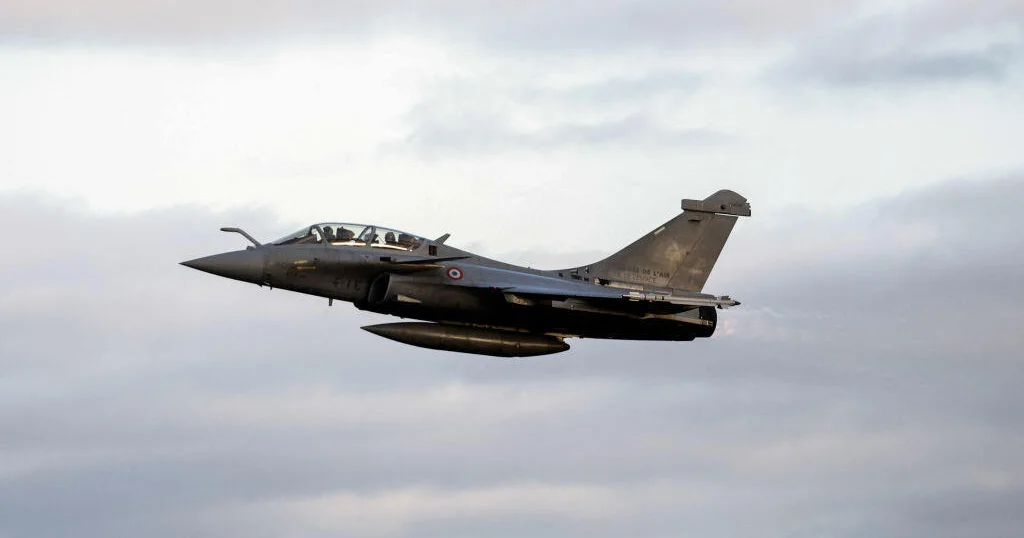
The NATO drone Latvia incident on Monday saw a French fighter jet shoot down a drone that had crossed into Latvian airspace from Russia, marking the latest in a string of security scares along Europe’s eastern border as Russia’s war on Ukraine grinds on.
What Happened
NATO command ordered the shoot-down after determining that Russia had been using electromagnetic warfare in the area, according to Latvian Defense Minister Raivis Melnis. The drone was brought down Monday morning near the village of Berzgale, roughly 20 miles from the border. No property damage or injuries were reported, and both the type of drone and its precise origin remained unclear.
It was the first drone NATO has shot down over Latvia, but far from the first to set off alarms across Eastern and Central Europe.
A Pattern of Incidents
The downing fits into a worrying recent trend. Several episodes over the past month have rattled the region:
- A NATO fighter jet shot down a suspected stray Ukrainian drone over Estonia, and the following day Lithuania’s president and prime minister were rushed to underground bunkers as residents of Vilnius were urged to take shelter after a drone breached the country’s airspace.
- A Russian drone crashed into an apartment building in Galati, Romania, about 20 miles from the Ukrainian border, exploding and injuring two people.
These breaches have sown chaos along NATO’s eastern flank and deepened anxiety about alliance security, particularly at a moment when the U.S. commitment to collective defense looks uncertain under President Donald Trump.
A Political Casualty in Latvia
The stakes have already proven politically explosive. Last month, multiple Ukrainian drones crashing into Latvian territory ahead of national elections brought down the government over security concerns. Prime Minister Evika Silina said the breaches showed that the defense sector’s leadership had failed to deliver on its promise of safe skies, and she dismissed Defense Minister Andris Spruds. She subsequently lost her coalition’s support and resigned.
Shoring Up the Eastern Flank
NATO forces have been steadily building up their presence along the alliance’s eastern edge. Estonia, Latvia, and Lithuania, all staunch allies of Ukraine, have accused Moscow of running operations designed to destabilize them. The French jet that downed Monday’s drone is part of a NATO air patrol that has covered the three Baltic states since they joined the alliance in 2004.
The Cost Problem
The wave of military drones over Europe has fueled concern that NATO nations aren’t adequately equipped for modern warfare. One pressing question is whether it makes sense to use multimillion-dollar jets and missiles to knock down small, cheap drones.
After Poland accused Russia of sending a swarm of drones into its airspace in September, European Commission President Ursula von der Leyen called for building a “drone wall,” a network of sensors and electronic warfare tools meant to intercept small drones. That project remains a distant prospect. In the meantime, Eastern European nations have strengthened their anti-drone defenses both individually and through the EU and NATO.
Latvia’s military, for its part, plans to deploy more interceptor teams along its 250-mile border with Russia and ally Belarus. These small units operate from rugged-terrain vehicles equipped with killer drones capable of destroying incoming threats within a roughly six-mile radius.
Ukraine Strikes Back, and Stumbles
The drone war runs in both directions. Ukrainian drones have been striking deep inside Russian territory. Last week, just hours before Russia’s St. Petersburg Economic Forum was set to open, Ukrainian drones hit an oil terminal in the city and the nearby Kronstadt naval base, more than 600 miles from the Ukrainian border, along with a weapons facility in the Tambov region.
Then overnight Saturday, on the forum’s final day and shortly after President Vladimir Putin delivered a keynote rejecting Ukrainian overtures for a ceasefire, Ukrainian drones struck Kronstadt again, as well as a nearby naval arsenal and an oil depot in Russia’s southern Krasnodar region. President Volodymyr Zelensky declared on social media that it was time to end the war, accusing Russia’s leader of wanting to keep fighting.
Ukraine’s drone fleet has also hit setbacks, though. On Friday, a Ukrainian maritime drone exploded in the Romanian Black Sea port of Constanta, and Ukrainian naval officials confirmed they had lost control of a sea drone they said was knocked off course by Russian electronic warfare. The same day, Ukraine’s Foreign Ministry apologized to Greece over a sea drone discovered near the island of Lefkada in May, with a spokesperson attributing the incident to circumstances created by Russia’s ongoing aggression.
Taken together, these events underscore how the war is increasingly testing the edges of NATO territory, raising hard questions about how the alliance can defend itself against a cheap, fast-evolving threat.
Author