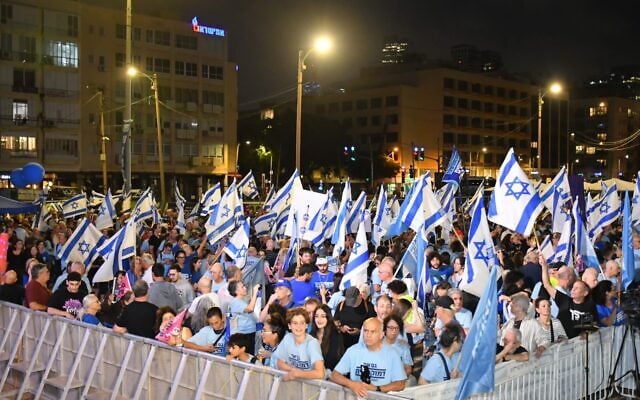
Jewish-Arab coalition demands filled the streets of Tel Aviv on Saturday as thousands of Israelis gathered to press the opposition into striking a deal with the country’s Arab parties. Their goal was clear: remove Benjamin Netanyahu, the longest-serving prime minister in Israel’s history, from power. With Tuesday’s election producing no outright winner, the protesters believe this moment may be the only realistic opening for a different kind of government.
A Rally Fuelled by Urgency
The mood among demonstrators was a mix of hope and anxiety. Several people described the current political window as possibly the final opportunity for meaningful change in the country. Others were blunt in their assessment of the prime minister, labelling him a master of manipulation who has repeatedly managed to cling to office despite enormous pressure.
For many in the crowd, the election result was not simply a set of numbers but a chance to reshape Israel’s political direction. They argued that voters had delivered a message, and that the leaders of the Jewish-Israeli parties now had a duty to hear it. Reporting from Ramallah, Al Jazeera’s Nour Odeh noted that those who turned out want the “vote for change” to actually translate into something concrete, and that they expect opposition figures to respond rather than retreat.
The Numbers Behind the Deadlock
Tuesday’s election left the Knesset split in a way that makes governing difficult for either side. Netanyahu’s bloc secured 53 seats, while the bloc led by main opposition leader Gadi Eisenkot captured 48. In a 120-seat parliament, neither grouping comes close to the 61 seats needed to form a government on its own.
That is where the Arab-led parties enter the picture. Israel’s three Arab-led parties collectively won 19 seats, a strong showing that reflects a surge in participation from Palestinian citizens of Israel. According to the Central Election Committee, close to 840,000 people cast ballots for Ra’am and the Joint List, which is itself a coalition of three Arab-led parties. That figure represents a 64 percent jump compared with the 2022 election.
If Eisenkot were to join forces with these parties, the resulting alliance would hold 67 seats, a comfortable majority that would end the stalemate. On paper, the arithmetic is simple. In practice, it is anything but.
Eisenkot’s Dilemma
Gadi Eisenkot has previously stated that he would not build a coalition that includes Israel’s Arab parties. That position, however, was taken before the election produced a hung parliament. Now, the only clear path to a government that excludes Netanyahu runs directly through the parties he once ruled out.
This puts the opposition leader in a difficult spot. Reversing his earlier stance could expose him to accusations of inconsistency and alienate parts of his own base. Holding firm, on the other hand, may leave him unable to form a government at all, potentially handing the initiative back to Netanyahu or triggering yet another round of elections.
The protesters in Tel Aviv were essentially asking Eisenkot to choose change over caution. Their message was that the partnership they are calling for is not only possible but necessary.
Counterprotesters Push Back
The demonstration did not go unanswered. Supporters of Netanyahu arrived to stage a counterprotest, and their chants made their position plain. They insisted that Israel must never be governed by a coalition that includes what they described as “so-called terrorists,” a reference to the Arab parties.
The clash of slogans captured a deeper divide in Israeli society. For one side, a Jewish-Arab coalition represents a long-overdue step toward shared governance. For the other, it is a red line that should never be crossed, regardless of the electoral math.
Accusations and Denials
Netanyahu himself has not stayed quiet about the Arab parties’ gains. He has accused Palestinian-Israeli parties of effectively hijacking the election and has claimed they received funding from Qatar to do so. Qatar has firmly rejected those claims, describing them as part of a coordinated disinformation effort.
The rhetoric from parts of Israel’s right-wing has gone even further. Odeh reported that some figures in those circles have characterised the record turnout among Palestinian citizens of Israel as a form of “electoral terrorism,” going so far as to compare it with the October 7th attack. That assault, carried out by Hamas-led fighters in southern Israel, left more than 1,200 people dead and saw hundreds taken captive.
Equating a surge in democratic participation with a deadly attack has drawn sharp criticism and underscores how charged the debate has become.
Why Arab Voters Are Under Pressure
According to Odeh, the reason Palestinian-Israeli votes are facing such intense scrutiny is simple: they matter more than ever. The Arab parties now occupy a decisive position in determining whether Eisenkot can assemble a governing majority. That influence has made them a target for those who want to keep Netanyahu in power.
In other words, the very success of these parties at the ballot box has turned them into a political flashpoint. Their voters are being questioned not because of anything they did wrong, but because their choices could reshape the leadership of the country.
What Happens Next
The coming days are likely to involve intense negotiations behind closed doors. Eisenkot must decide whether to abandon his earlier pledge and open talks with the Arab parties. Netanyahu, meanwhile, will be working to hold his bloc together and to peel away any wavering lawmakers from the opposition.
For the thousands who marched in Tel Aviv, the hope is that public pressure can tip the balance. They see a Jewish-Arab coalition as the most direct route to ending more than a decade of Netanyahu-dominated politics. Whether their leaders are willing to take that step remains the central question hanging over Israel’s political future.
Author