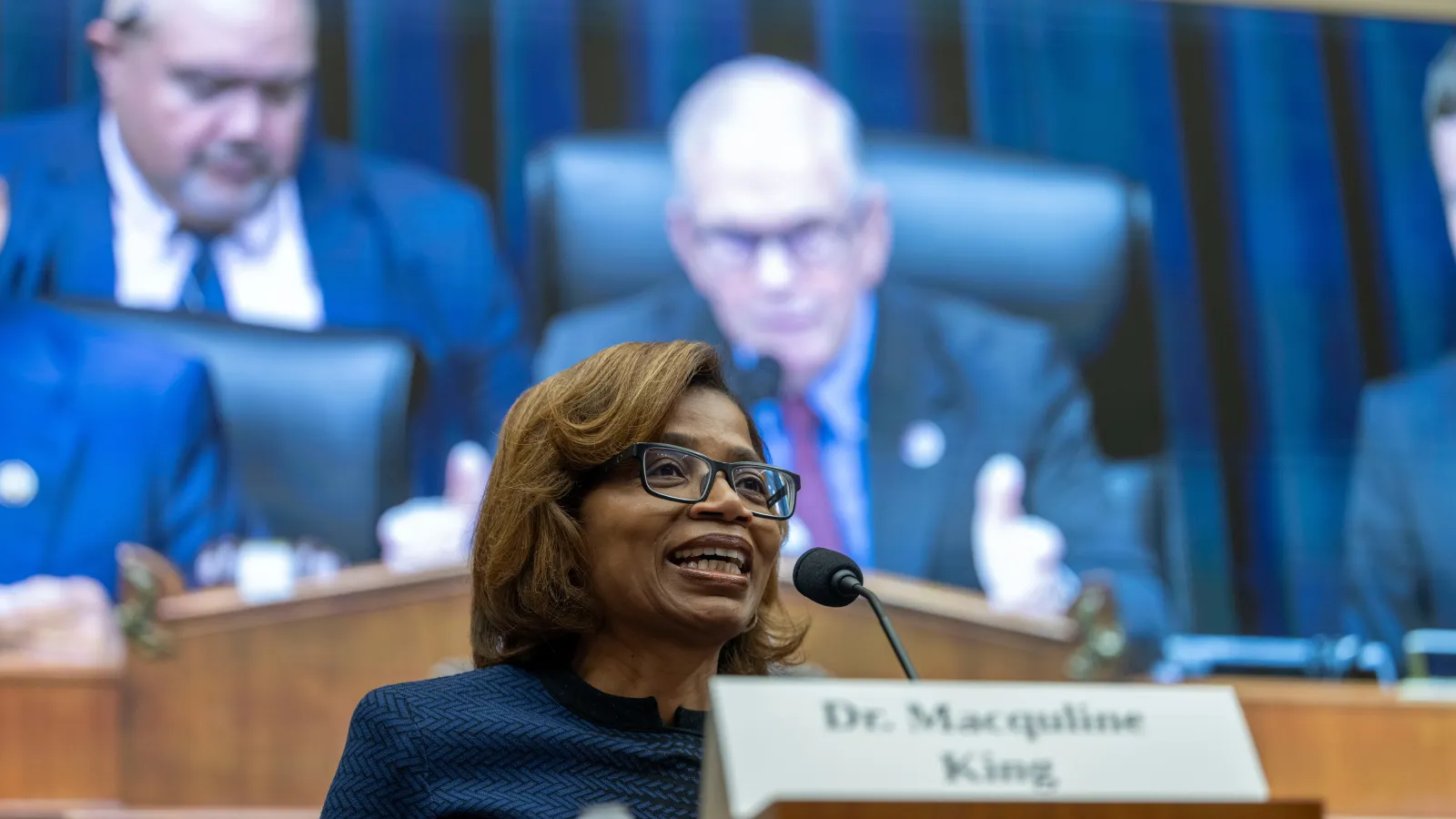
The debate over CPS transgender policies took center stage in Washington on Wednesday, as Chicago Public Schools CEO and Superintendent Macquline King faced an aggressive round of questioning from House Republicans. Testifying under subpoena before the U.S. House education committee, King repeatedly defended her district’s approach by pointing to one consistent anchor: Illinois law.
A Combative Opening
The committee’s Republican chair, Tim Walberg, set a confrontational tone from the start. He accused King and the other superintendents present of leading districts with radical policies that, in his words, sideline parents and compromise student privacy rights.
Walberg pushed the rhetoric further, suggesting that certain practices, such as permitting a transgender girl to share a room with a cisgender girl on an overnight trip, could amount to child abuse and neglect. Advocates for transgender youth see these same policies very differently, arguing they protect trans students’ privacy and safety.
High Stakes Beyond the Hearing Room
School leaders and education experts across the country followed the proceedings closely. The Trump administration has threatened to withhold federal funding from schools it believes violate its interpretation of civil rights laws, raising the stakes considerably.
The session marked the first time during Trump’s second term that K-12 superintendents were called to answer for the culture-war issues that have dominated right-wing discourse in recent years.
King’s Disciplined Defense
Republican lawmakers pressed King on a range of topics, including whether teachers must abandon their Christian beliefs to work in CPS and at what grade level she thought it appropriate to provide condoms to students. To most of these questions, including those about accommodations for trans students on overnight trips, King offered a steady, measured response: CPS policies align with Illinois law.
That refrain clearly frustrated Walberg. In his closing remarks, he challenged it directly, citing a poll suggesting that nearly 80 percent of citizens oppose allowing males in female sports or restrooms, and arguing that Illinois rules, which King repeatedly invoked, encourage exactly that.
He then issued a thinly veiled warning, suggesting that districts clashing with Republican priorities could be cut out of any new funding for special education services. He framed the concern as whether such funding would be used to teach children what he called the truth, rather than going along with efforts to change the reality around gender.
Measured Words After the Hearing
King declined to take questions from reporters afterward. The district later released a statement that offered little insight into how she felt the hearing went, instead reiterating that CPS policies are rooted in law, the district’s mission, and its values. The statement emphasized that King had stressed the district must always prioritize the best interests of students and their families.
The Investigations Looming Over CPS
The hearing unfolded against the backdrop of federal scrutiny. The Trump administration is investigating CPS over its policy allowing transgender students to use bathrooms corresponding to their gender identity, as well as its Black Student Success initiative, which aims to improve experiences and outcomes for Black students.
Interestingly, Republicans did not raise the Black Student Success plan during their questioning. A Democrat brought it up instead, prompting King to explain that the initiative was developed with input from hundreds of community members and intended to support Black students who have been historically and systematically denied opportunities, without coming at the expense of other students.
Trump and other Republicans contend that such policies violate federal civil rights laws by discriminating against students who are cisgender or who are not Black.
Walking a Tightrope
King’s position was a delicate one. Many Chicago parents, students, and activists had previously demanded that CPS adopt the very policies now under federal scrutiny, and they wanted her to champion them. At the same time, King could not afford to hand federal officials another reason to pull funding, particularly after the district already lost a $20 million grant tied to the Black Student Success plan.
Celebrating Diversity as Strength
In her opening statement, King framed the district’s diversity in culture, language, and faith as a core strength that shapes how CPS serves its students. She described Chicago classrooms not as homogeneous spaces but as vibrant communities where students learn alongside peers with different lived experiences, arguing that truly serving a student means understanding and embracing what makes each one unique.
Fellow Superintendents Join the Defense
King appeared alongside district leaders from San Francisco and Loudoun County, Virginia. Maria Su, superintendent of San Francisco Unified, mounted a direct defense of transgender policies, noting her city’s reputation as a pioneer in LGBTQ rights and its tradition of welcoming those who feel marginalized. She repeatedly emphasized that students cannot learn if they feel excluded or bullied.
Republican Rep. Virginia Foxx of North Carolina pressed the leaders on whether they instruct teachers to lie to parents about the names their children use at school, an apparent reference to concerns that transgender students might use different names or pronouns without parental knowledge. King responded that she knew of no instance in which a CPS educator had lied to parents and that they would never be asked to do so.
A Parent’s Perspective
Before the hearing, CPS parent Mary Kay Devine traveled to Capitol Hill to defend policies she credited with giving her transgender daughter a safe and joyful high school experience. She described how her daughter’s teachers used her chosen name, how she landed a female lead in the spring musical, and how she used the women’s restroom without incident. Her classmates, Devine noted, cared far more about grades and honors than about her daughter’s gender identity.
Democrats Push Back on the Premise
Democrats on the committee worked to steer the conversation toward what they considered the real issues facing schools. Rep. Jahana Hayes, a former teacher from Connecticut, criticized the hearing’s focus and urged the superintendents not to get pulled into culture-war battles.
She pointed to glaring omissions, noting that the committee had held no hearings on school shootings, chronic absenteeism, or the youth mental health crisis across the current and previous Congress. Rep. Suzanne Bonamici of Oregon asked each superintendent to identify the top concern among parents in their districts. King cited budget cuts that could reach the classroom, the Loudoun County leader pointed to academic progress, and Su highlighted academic rigor and student services. Bonamici described these as the genuine concerns of parents.
Chicago Rallies Behind King
Roughly two dozen Chicago parents, teachers, students, and advocates made the trip to Washington in support of King, with some spending the day delivering banned books to members of Congress.
Tierra Pearson of the advocacy group Kids First Chicago, who watched from the hearing room, called the proceedings a political circus but praised King for staying focused on the district’s accomplishments rather than getting drawn into the political theater.
At a pre-hearing news conference, Rep. Delia Ramirez, who represents part of Chicago, stood with the visiting Chicagoans and labeled the Republicans leading the hearing as bullies. She thanked the teachers and students who came to send a message of defiance and pride.
CPS teacher and parent Taneesha Henderson said she made the trip specifically to defend the Black Student Success plan. As an educator working with special education students, she said she sees enormous needs and believes Congress should focus on helping schools navigate budget cuts, staffing shortages, mental health challenges, and learning gaps rather than culture-war fights.
A Rare Show of Unity
Back in Chicago, the school board, which has been fractured by intense disagreements over the past two years, set aside its divisions in a striking display of solidarity. Nearly the entire board gathered during a break in a regularly scheduled meeting to stand behind King.
Board President Sean Harden praised her performance, saying she did a fantastic job explaining the district’s values and guiding policies to Congress, and affirmed that the board has complete confidence in her. He commended her leadership across community partnerships, advocacy, and her testimony, applauding her commitment to keeping students and families at the center.
What Comes Next
King emerged from the hearing having threaded a difficult needle, defending her district’s policies without handing federal officials fresh ammunition to cut funding. Yet the underlying tensions remain unresolved. With multiple federal investigations still active and the threat of funding cuts hanging over the district, CPS faces continued pressure in the months ahead.
For now, King’s steady invocation of Illinois law has become both her shield and her message: that Chicago’s schools are operating within the bounds of the rules they are bound to follow, even as those rules collide with a federal administration determined to challenge them.
Author