Broad Peak Avalanche Claims Nirmal Purja and Nine Fellow Climbers
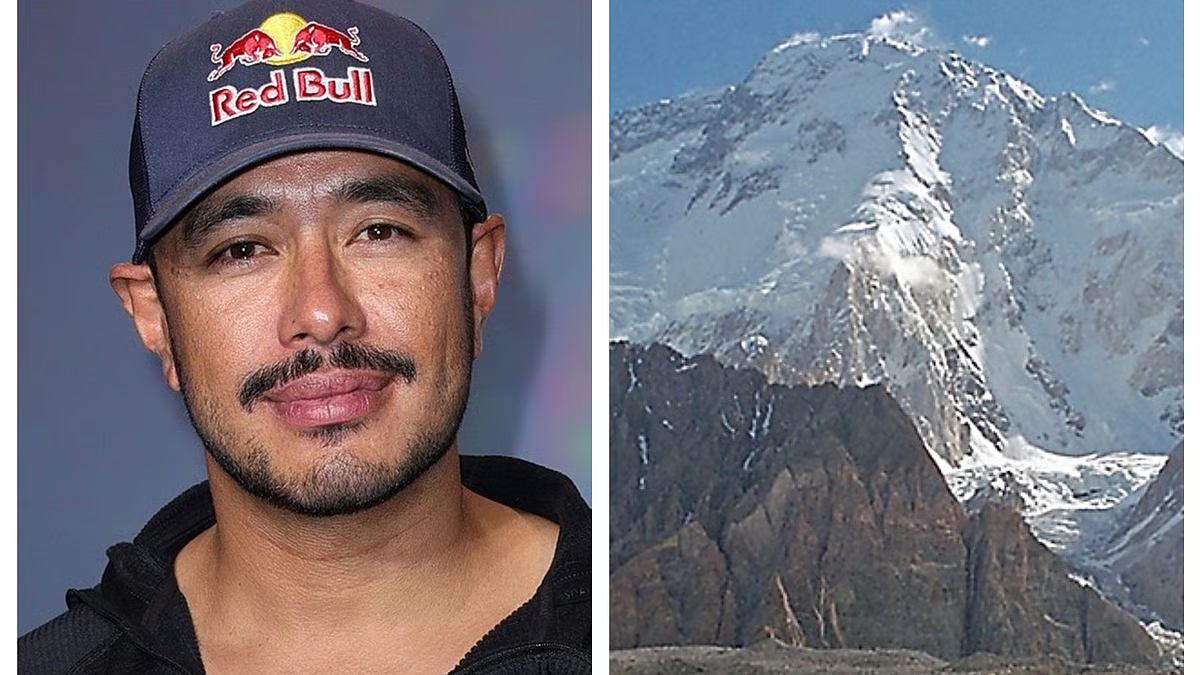
The Nirmal Purja avalanche on Broad Peak has ended the life of one of the most recognizable figures in modern mountaineering, along with nine others who were part of the same expedition on a peak standing 26,414 feet above northern Pakistan.
Purja’s company, Elite Expeditions, confirmed the loss in a statement expressing profound sadness and immense heartbreak, saying he had died following the avalanche. The company added that it had also received confirmation that other members of the expedition did not survive.
The Man Known as Nimsdai
Purja was 43, a British-Nepali climber whose name became known far outside mountaineering circles.
His defining achievement came in 2019, when he became the first person to summit all 14 mountains on earth exceeding 8,000 meters, roughly 26,247 feet, completing the circuit in 6 months and 6 days. Previous holders of that record had measured their attempts in years.
The accomplishment drew enough attention to become the subject of a Netflix documentary released in 2021, introducing him to audiences with no particular interest in climbing.
Before that, he spent a decade serving in the United Kingdom’s Special Boat Service, an elite special forces unit comparable in role to the U.S. Navy SEALs. That background shaped both his physical capacity and the operational approach he brought to expedition planning.
An International Group
The Alpine Club of Pakistan reported that the expedition included climbers from Oman, Nepal, Pakistan, China and the United States.
The American member was Mallory Geis, 39, from San Antonio, Texas.
A Life Redirected Toward the Mountains
Geis had made a significant change before this expedition. Earlier this year she wrote about closing her Pilates studio to pursue high altitude climbing, describing it as a leap of faith into the unknown and predicting the road ahead would involve a great deal of helmets, harnesses and crampons.
In a separate post, she expressed enthusiasm about the Pakistan trip, calling it her first major climbing expedition and writing about seeing whether she could get her body and her boots up Broad Peak, which she identified as the twelfth highest mountain in the world.
Her father, George Geis, spoke to KENS 5 in San Antonio, describing her as a very positive person who could accomplish most anything she set out to do.
The Search
Rescue operations began despite conditions that made them extraordinarily difficult.
Local police reported that military helicopters worked the area alongside high-altitude porters and rescue teams, contending with punishing terrain and weather.
At the altitudes involved, helicopter operations run near the limits of what aircraft can do, and ground teams face the same thin air and avalanche risk that claimed the expedition.
The efforts did not produce survivors.
Confirmation and Repatriation
Nepal’s Prime Minister Balendra Shah, known widely as Balen, confirmed the deaths of the Nepalese climbers in a social media post on Saturday.
Remains of some climbers have been flown to hospitals in Pakistan, according to local police.
Elite Expeditions closed its statement by broadening the focus beyond its founder, saying the day was one of mourning not only for Nims but for every life lost in the tragedy, and extending thoughts, prayers and condolences to the families, friends and loved ones of all involved.
Why Broad Peak Is Dangerous
Broad Peak sits in the Karakoram range, sharing a region with K2 and several other of the world’s most technically demanding mountains.
Above 8,000 meters, climbers enter what mountaineers call the death zone, where oxygen levels cannot sustain human life indefinitely. Decision-making degrades, physical recovery becomes impossible and every hour spent at altitude compounds the danger.
Avalanches represent a category of risk that skill only partially addresses. Experienced climbers read snowpack, choose lines and time their movements to reduce exposure, but a slide of sufficient size overwhelms preparation entirely. It is the hazard that most consistently claims accomplished mountaineers rather than inexperienced ones.
The Scale of the Loss
Ten deaths in a single incident represents one of the more devastating events in recent high-altitude climbing.
For the Nepalese climbing community in particular, the toll is severe. Nepali guides and climbers form the backbone of Himalayan and Karakoram expeditions, often taking on the greatest exposure while receiving the least recognition. Purja spent much of his public career arguing for exactly that recognition.
What He Represented
Purja’s influence extended past his records. He pushed for greater visibility for Nepali climbers, challenged assumptions about what timelines were achievable at altitude, and brought a level of public attention to the sport that few individuals have managed.
That legacy now sits alongside a reminder the mountains deliver repeatedly: expertise, fitness and experience reduce risk without eliminating it, and the most capable people in the discipline remain subject to forces indifferent to their capability.
Author
-
Lucienne Albrecht is Luxe Chronicle’s wealth and lifestyle editor, celebrated for her elegant perspective on finance, legacy, and global luxury culture. With a flair for blending sophistication with insight, she brings a distinctly feminine voice to the world of high society and wealth.